












Synthesis of a side-chain hole transporting polymer through Mitsunobu post-functionalization for efficient inverted perovskite solar cells
Literature Information
Publication Date
2020-03-23
DOI
10.1039/D0PY00134A
Impact Factor
5.582
Authors
Xiang Deng
View Original
Abstract
An efficient post-functionalization protocol of the Mitsunobu reaction between a commercial reactive polymer of poly(4-vinylphenol) (PVP) and 9-(2-hydroxylethyl)-N,N,N,N-tetrakis(4-methoxyphenyl)-9H-carbazole-2,7-diamine is reported to synthesize a novel side-chain polymer (PVP-CZ) with a high density of hole transporting moieties. The polymer PVP-CZ exhibits adequate solvent resistance and excellent film forming ability for the fabrication of inverted perovskite solar cells (PVSCs). The thermal, optical and electrochemical properties of PVP-CZ were investigated in detail. The steady-state photoluminescence (PL) and time resolved photoluminescence (TRPL) decay showed the excellent hole-extracting ability of dopant-free PVP-CZ from the perovskite layer. As a result, the inverted PVSCs delivered a respectable power conversion efficiency of 17.75% with a high fill factor of 81.07%. These results indicate that the synthetic strategy using the post-functionalization of the Mitsunobu reaction is a promising protocol to develop novel side-chain hole transporting polymers for highly efficient PVSCs.
Related Literature
Novel fluorinated ring-fused chlorins as promising PDT agents against melanoma and esophagus cancer
Nelson A. M. Pereira, Bruno F. O. Nascimento, João Pina, Gonçalo Brites, J. Sérgio Seixas de Melo, Marta Pineiro, Teresa M. V. D. Pinho e Melo
2021-04-14
Research Article
DOI: 10.1039/D0MD00433B
Recent advances in the development of covalent inhibitors
Hyunsoo Kim, Yoon Soo Hwang, Mingi Kim
2021-05-04
Review Article
DOI: 10.1039/D1MD00068C
Sulfonium-based liposome-encapsulated antibiotics deliver a synergistic antibacterial activity
Anjali Patel, Subhasis Dey, Kamal Shokeen, Tomasz M. Karpiński, Senthilkumar Sivaprakasam, Sachin Kumar
2021-05-24
Research Article
DOI: 10.1039/D1MD00091H
Recent advances in urea- and thiourea-containing compounds: focus on innovative approaches in medicinal chemistry and organic synthesis
Riccardo Ronchetti, Andrea Carotti, Antimo Gioiello, Emidio Camaioni
2021-05-13
Review Article
DOI: 10.1039/D1MD00058F
Synthesis and evaluation of bis(imino)anthracene derivatives as G-quadruplex ligands
Tomris Coban, Cameron Robertson, Sianne Schwikkard, Richard Singer, Adam LeGresley
2021-03-26
Research Article
DOI: 10.1039/D0MD00428F
You might also like
Compound Q&A
How should waste containing 6-Chloro-5-(2'-hydroxy-3'-methoxy-4-biphenylyl)-3-(3-methoxyphenyl)-1H-pyrrolo[3,2-d]pyrimidine-2,4(3H,5H)-dione (CAS: 1346607-05-3) be handled?
Waste containing 6-Chloro-5-(2'-hydroxy-3'-methoxy-4-biphenylyl)-3-(3-methoxyphe...
1346607-05-36-Chloro-5-(2'-hydro...
Compound Q&A
What are the main uses of (3alpha,5alpha)-3-Hydroxypregnane-11,20-dione (CAS: 23930-19-0)?
(3alpha,5alpha)-3-Hydroxypregnane-11,20-dione is primarily used in the pharmaceu...
23930-19-0(3alpha,5alpha)-3-Hy...
Compound Q&A
What is the market or research trend for 4-Amino-6-chloro-2-pyridinecarboxylic acid (CAS: 546141-56-4)?
The market for 4-Amino-6-chloro-2-pyridinecarboxylic acid (CAS: 546141-56-4) is ...
546141-56-44-Amino-6-chloro-2-p...
Compound Q&A
Are there alternatives to (2-Benzoylethyl)trimethylammonium chloride (CAS: 24472-88-6) in synthesis?
Alternatives to (2-Benzoylethyl)trimethylammonium chloride (CAS: 24472-88-6) in ...
24472-88-6(2-Benzoylethyl)trim...
Compound Q&A
Is N-[4-Nitro-3-(trifluoromethyl)phenyl]acetamide (CAS: 393-12-4) safe?
N-[4-Nitro-3-(trifluoromethyl)phenyl]acetamide (CAS: 393-12-4) is generally safe...
393-12-4N-[4-Nitro-3-(triflu...
Compound Q&A
Are there alternatives to [(4R,5R,6S)-5-hydroxy-10-imino-3,7-dioxa-1,9-diazatricyclo[6.4.0.02,6]dodeca-8,11-dien-4-yl]methyl dihydrogen phosphate (CAS: 39679-56-6) in synthesis?
Alternative reagents such as other phosphates or similar functional groups can b...
39679-56-6[(4R,5R,6S)-5-hydrox...
Compound Q&A
Are there alternatives to N,N'-Bis(3-aminopropyl)-1,3-propanediamine (CAS: 4605-14-5) in synthesis?
There are alternatives to N,N'-Bis(3-aminopropyl)-1,3-propanediamine (CAS: 4605-...
4605-14-5N,N'-Bis(3-aminoprop...
Compound Q&A
What precautions should be taken when handling Aluminium trihexadecanoate (CAS: 555-35-1)?
When handling Aluminium trihexadecanoate, it is important to use appropriate per...
555-35-1Aluminium trihexadec...
Compound Q&A
What is (1,1-Dioxido-3-oxo-1,2-benzothiazol-2(3H)-yl)acetic acid (CAS: 52188-11-1)?
(1,1-Dioxido-3-oxo-1,2-benzothiazol-2(3H)-yl)acetic acid is a chemical compound ...
52188-11-1(1,1-Dioxido-3-oxo-1...
Compound Q&A
Are there alternatives to 5,5-dimethyloxolan-2-one (CAS: 3123-97-5) in synthesis?
Several alternatives to 5,5-dimethyloxolan-2-one (CAS: 3123-97-5) can be used in...
3123-97-55,5-dimethyloxolan-2...
Source Journal
Polymer Chemistry

CiteScore:
8.6
Self-citation Rate:
7.3%
Articles per Year:
457
Polymer Chemistry welcomes submissions in all areas of polymer science that have a strong focus on macromolecular chemistry. Manuscripts may cover a broad range of fields, yet no direct application focus is required.
Recommended Compounds
![Benzyl 2-{[(tert-butoxy)carbonyl]amino}acetate structure](https://static.chemtradehub.com/structs/542/54244-69-8-6399.webp "Benzyl 2-{[(tert-butoxy)carbonyl]amino}acetate structure")
![2-morpholino-2-[2-(trifluoromethyl)pyrimidin-5-yl]ethanamine structure](https://static.chemtradehub.com/structs/119/1192570-20-9-2810.webp "2-morpholino-2-[2-(trifluoromethyl)pyrimidin-5-yl]ethanamine structure")
2-morpholino-2-[2-(trifluoromethyl)pyrimidin-5-yl]ethanamine
CAS Number:
1192570-20-9
Molecular Formula:
C11H15F3N4O
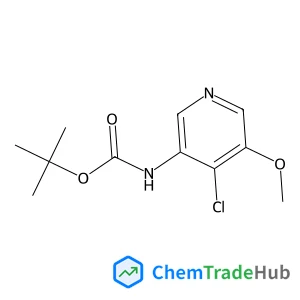
tert-Butyl 4-chloro-5-methoxypyridin-3-ylcarbamate
CAS Number:
1045858-17-0
Molecular Formula:
C11H15ClN2O3
Recommended Suppliers





Disclaimer
This page provides academic journal information for reference and research purposes only. We are not affiliated with any journal publishers and do not handle publication submissions. For publication-related inquiries, please contact the respective journal publishers directly.
If you notice any inaccuracies in the information displayed, please contact us at support@chemtradehub.com. We will promptly review and address your concerns.