












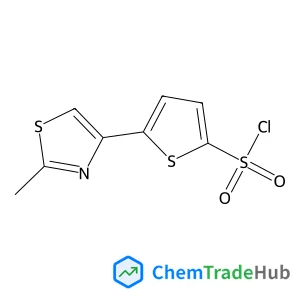
5-(2-Methyl-1,3-thiazol-4-yl)-2-thiophenesulfonyl chloride
CAS Number:
215434-25-6
Molecular Formula:
C8H6ClNO2S3
Yiwei Liu, Luyi Zhou, Ying Dong, Rui Wang, Ying Pan, Shuze Zhuang, Dong Liu, Jianqiang Liu
With increasing pathogenic bacterial infection that is occurring worldwide, antibacterial therapy has become an important research field. There is great antimicrobial potential in the nanomaterial-based metal–organic framework (MOF) platform because it is highly biocompatible, biodegradable, and nontoxic, and it is now widely used in the anticancer agent industry and in the production of medical products. This review summarizes the possible mechanisms of representative MOF-based nanomaterials, and recounts recent progress in the design and development of MOF-based antibacterial materials for the remedy of postoperative infection. The existing shortcomings and future perspectives of the rapidly growing field of antimicrobial therapy addressing patient quality of life issues are also briefly discussed. Because of their wide applicability, further studies on the use of different MOF antimicrobial therapies will be of great interest.
Wanyu Zhang, Lihua Jia, Rui Yang, Yu Zhang, Zhenlong Zhao
DOI: 10.1039/C9AN01953G
Madalena C. C. Areias, Kenichi Shimizu, Richard G. Compton
DOI: 10.1039/C6AN00550K
Dongpo Xu, Mingxia Gao, Chunhui Deng, Xiangmin Zhang
DOI: 10.1039/C6AN00361C
Xiao-xiao Niu, Qin-chao Xu, An-zhen Li, Yang-jie Li, Xiao-tai Zhang, Guo-wen Xing
DOI: 10.1039/C9AN01940E
Maowei Dou, Juan Lopez, Misael Rios, Oscar Garcia, Chuan Xiao, Michael Eastman, XiuJun Li
DOI: 10.1039/C6AN00370B
Liqing Gu, Renã A. S. Robinson
DOI: 10.1039/C6AN00417B
Bao-Ying Wen, Xi Jin, Yue Li, Ya-Hao Wang, Chao-Yu Li, Miao-Miao Liang, Rajapandiyan Panneerselvam, Qing-Chi Xu, De-Yin Wu, Zhi-Lin Yang, Jian-Feng Li, Zhong-Qun Tian
DOI: 10.1039/C6AN90033J
Tripti Ahuja, Atanu Ghosh, Sandip Mondal, Pallab Basuri, Shantha Kumar Jenifer, Pillalamarri Srikrishnarka, Jyoti Sarita Mohanty, Sandeep Bose, Thalappil Pradeep
DOI: 10.1039/C9AN01700C
Alienke van Pijkeren, Rainer Bischoff
DOI: 10.1039/C9AN01258C
Ishaan Maitra, Camilo L. M. Morais, Katherine M. Ashton, Ravindra S. Date, Francis L. Martin
DOI: 10.1039/C9AN01749F
Waste containing 6-Chloro-5-(2'-hydroxy-3'-methoxy-4-biphenylyl)-3-(3-methoxyphe...
(3alpha,5alpha)-3-Hydroxypregnane-11,20-dione is primarily used in the pharmaceu...
The market for 4-Amino-6-chloro-2-pyridinecarboxylic acid (CAS: 546141-56-4) is ...
Alternatives to (2-Benzoylethyl)trimethylammonium chloride (CAS: 24472-88-6) in ...
N-[4-Nitro-3-(trifluoromethyl)phenyl]acetamide (CAS: 393-12-4) is generally safe...
Alternative reagents such as other phosphates or similar functional groups can b...
There are alternatives to N,N'-Bis(3-aminopropyl)-1,3-propanediamine (CAS: 4605-...
When handling Aluminium trihexadecanoate, it is important to use appropriate per...
(1,1-Dioxido-3-oxo-1,2-benzothiazol-2(3H)-yl)acetic acid is a chemical compound ...
Several alternatives to 5,5-dimethyloxolan-2-one (CAS: 3123-97-5) can be used in...
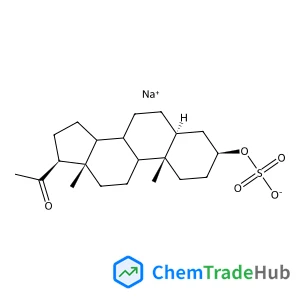
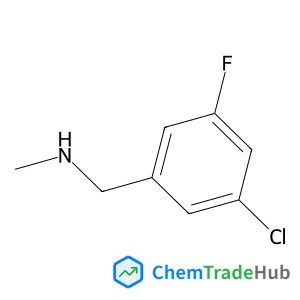
-1,2-cyclohexanediamine structure](https://static.chemtradehub.com/structs/928/928769-12-4-a4f0.webp "N,N'-Bis[3-(2-methoxyphenyl)-2-hydroxybenzyl](1R,2R)-1,2-cyclohexanediamine structure")



