


On the chemiluminescence emission of luminol: protic and aprotic solvents and encapsulation to improve the properties in aqueous solution
Literature Information
Publication Date
2020-11-18
DOI
10.1039/D0CP04571C
Impact Factor
3.676
Authors
Angelo Giussani, Mercedes Rubio, Daniel Roca-Sanjuán
View Original
Abstract
Luminol is a popular molecule that is currently gaining further interest due to its potential role for non-invasive cancer treatments. Design of more efficient derivatives in this context would benefit from a clear knowledge on the origin of the distinct intensity and spectroscopic properties in protic and aprotic solvents observed experimentally, which are still not rationalized. By efficiently combining molecular dynamics, quantum methodologies based on density functional theory and multiconfigurational quantum chemistry and hybrid approaches, and developing herein a computational approach for accurately determining “molar negative extinction (or gain) coefficients of emission”, we firstly demonstrate that the amino and imino forms of the 3-aminophthalate dianion are responsible for the chemiluminescence in protic and aprotic medium, respectively. Secondly, we show that the coupling between the adjacent amino and carboxylate groups of luminol existing in aprotic solvents must be kept in aqueous solution to increase the chemiexcitation and emission intensity. Thirdly, modifications of luminol are proposed and simulated showing improved performances as compared to the parent molecule (stronger emission electronic transition and longer emission wavelengths) under the physiological conditions of relevance in biological and medical applications.
Recommended Journals

European Journal of Organic Chemistry

Environmental Toxicology and Pharmacology

Green Chemistry

Contact Lens & Anterior Eye

Angewandte Chemie International Edition

Current Pharmaceutical Biotechnology

CrystEngComm

Faraday Discussions

Journal of Enzyme inhibition and Medicinal Chemistry

Photochemical & Photobiological Sciences
Related Literature
The surprisingly high ligation energy of CO to ruthenium porphyrins
Niloufar Shafizadeh, Séverine Boyé-Péronne, Satchin Soorkia, Barbara K. Cunha de Miranda, Gustavo A. Garcia, Laurent Nahon, Shufeng Chen, Aurélien de la Lande, Lionel Poisson, Benoît Soep
2018-04-03
Paper
DOI: 10.1039/C8CP01190G
Can electrostatic catalysis of Diels–Alder reactions be harnessed with pH-switchable charged functional groups?
Heather M. Aitken, Michelle L. Coote
2017-11-30
Paper
DOI: 10.1039/C7CP07562F
Gas phase 1H NMR studies and kinetic modeling of dihydrogen isotope equilibration catalyzed by Ru-nanoparticles under normal conditions: dissociative vs. associative exchange
Hans-Heinrich Limbach, Tal Pery, Niels Rothermel, Bruno Chaudret, Torsten Gutmann, Gerd Buntkowsky
2017-12-19
Paper
DOI: 10.1039/C7CP07770J
How changes in interfacial pH lead to new voltammetric features: the case of the electrochemical oxidation of hydrazine
Antony Cyril Arulrajan, Christophe Renault, Stanley C. S. Lai
2018-04-06
Paper
DOI: 10.1039/C8CP01835A
A tethered bilayer lipid membrane that mimics microbial membranes
Jakob Andersson, Melanie A. Fuller, Kathleen Wood, Stephen A. Holt, Ingo Köper
2018-04-27
Paper
DOI: 10.1039/C8CP01346B
Effects of graphene/BN encapsulation, surface functionalization and molecular adsorption on the electronic properties of layered InSe: a first-principles study
Andrey A. Kistanov, Yongqing Cai, Kun Zhou, Yong-Wei Zhang
2018-04-14
Paper
DOI: 10.1039/C8CP01146J
Conformationally-restricted bicarbazoles with phenylene bridges displaying deep-blue emission and high triplet energies: systematic structure–property relationships
Andrei S. Batsanov, Andrew P. Monkman, Martin R. Bryce
2018-04-17
Paper
DOI: 10.1039/C8CP01636D
You might also like
Compound Q&A
What are the main uses of 1-(3-Aminophenyl)-3-[(3R)-1-(3,3-dimethyl-2-oxobutyl)-2-oxo-5-(2-pyridinyl)-2,3-dihydro-1H-1,4-benzodiazepin-3-yl]urea (CAS: 155412-88-7)?
This compound is mainly used as an intermediate in the synthesis of antipsychoti...
155412-88-71-(3-Aminophenyl)-3-...
Compound Q&A
How should waste containing 1-(D-Ribofuranosyl)-1,4-dihydro-3-pyridinecarboxamide (CAS: 19132-12-8) be handled?
Waste containing 1-(D-Ribofuranosyl)-1,4-dihydro-3-pyridinecarboxamide (CAS: 191...
19132-12-81-(D-Ribofuranosyl)-...
Compound Q&A
What regulatory guidelines apply to 2-Methyl-2-propanyl 3-bromo-3-(hydroxymethyl)-1-azetidinecarboxylate (CAS: 2007919-81-3)?
2-Methyl-2-propanyl 3-bromo-3-(hydroxymethyl)-1-azetidinecarboxylate (CAS: 20079...
2007919-81-32-Methyl-2-propanyl ...
Compound Q&A
What is N-(4-Chloro-2-pyridinyl)acetamide (CAS: 245056-66-0)?
N-(4-Chloro-2-pyridinyl)acetamide (CAS: 245056-66-0) is a chemical compound with...
245056-66-0N-(4-Chloro-2-pyridi...
Compound Q&A
What is 5-Chloro-2-hydroxybenzoic acid (CAS: 321-14-2)?
5-Chloro-2-hydroxybenzoic acid, also known as 5-chlorosalicylic acid, is an arom...
321-14-25-Chloro-2-hydroxybe...
Compound Q&A
What precautions should be taken when handling 1,1-Dichloro-1-fluoroethane (CAS: 1717-00-6)?
When handling 1,1-Dichloro-1-fluoroethane (CAS: 1717-00-6), it is important to u...
1717-00-61,1-Dichloro-1-fluor...
Compound Q&A
What are the physical and chemical properties of Fmoc-(2S,3R)-3-phenylpyrrolidine-2-carboxylic acid (CAS: 281655-32-1)?
Fmoc-(2S,3R)-3-phenylpyrrolidine-2-carboxylic acid is a white crystalline solid ...
281655-32-1Fmoc-(2S,3R)-3-pheny...
Compound Q&A
What are the main uses of 4-Amino-5-bromo-2-pyridinecarboxylic acid (CAS: 1363381-01-4)?
4-Amino-5-bromo-2-pyridinecarboxylic acid is primarily used as a precursor in th...
1363381-01-44-Amino-5-bromo-2-py...
Compound Q&A
What precautions should be taken when handling (S)-tert-butyl 2-((2-(4-bromophenyl)-2-oxoethyl)carbamoyl)pyrrolidine-1-carboxylate (CAS: 1007881-98-2)?
Handling this compound should be done with personal protective equipment (PPE) i...
1007881-98-2(S)-tert-butyl 2-((2...
Compound Q&A
What precautions should be taken when handling 8-bromo-2,2-dimethyl-3,4-dihydro-2H-1,4-benzoxazin-3-one (CAS: 688363-73-7)?
When handling 8-bromo-2,2-dimethyl-3,4-dihydro-2H-1,4-benzoxazin-3-one, use prop...
688363-73-78-bromo-2,2-dimethyl...
Source Journal
Physical Chemistry Chemical Physics

CiteScore:
5.5
Self-citation Rate:
10.3%
Articles per Year:
3036
Physical Chemistry Chemical Physics (PCCP) is an international journal co-owned by 19 physical chemistry and physics societies from around the world. This journal publishes original, cutting-edge research in physical chemistry, chemical physics and biophysical chemistry. To be suitable for publication in PCCP, articles must include significant innovation and/or insight into physical chemistry; this is the most important criterion that reviewers and Editors will judge against when evaluating submissions. The journal has a broad scope and welcomes contributions spanning experiment, theory, computation and data science. Topical coverage includes spectroscopy, dynamics, kinetics, statistical mechanics, thermodynamics, electrochemistry, catalysis, surface science, quantum mechanics, quantum computing and machine learning. Interdisciplinary research areas such as polymers and soft matter, materials, nanoscience, energy, surfaces/interfaces, and biophysical chemistry are welcomed if they demonstrate significant innovation and/or insight into physical chemistry. Joined experimental/theoretical studies are particularly appreciated when complementary and based on up-to-date approaches.
Recommended Compounds
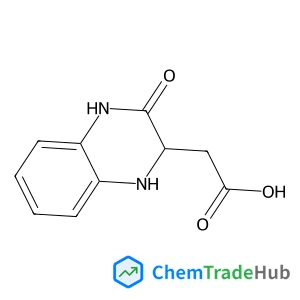
(3-Oxo-1,2,3,4-tetrahydro-2-quinoxalinyl)acetic acid
CAS Number:
136584-14-0
Molecular Formula:
C10H10N2O3
![2,6-Di(thiophen-2-yl)dithieno[3,2-b:2',3'-d]thiophene structure](https://static.chemtradehub.com/structs/910/910788-24-8-5b70.webp "2,6-Di(thiophen-2-yl)dithieno[3,2-b:2',3'-d]thiophene structure")
2,6-Di(thiophen-2-yl)dithieno[3,2-b:2',3'-d]thiophene
CAS Number:
910788-24-8
Molecular Formula:
C16H8S5
Recommended Suppliers





Disclaimer
This page provides academic journal information for reference and research purposes only. We are not affiliated with any journal publishers and do not handle publication submissions. For publication-related inquiries, please contact the respective journal publishers directly.
If you notice any inaccuracies in the information displayed, please contact us at support@chemtradehub.com. We will promptly review and address your concerns.