












![5'-Fluoro-[2,3'-biindolinylidene]-2',3-dione structure](https://static.chemtradehub.com/structs/251/251903-00-1-9cb1.webp "5'-Fluoro-[2,3'-biindolinylidene]-2',3-dione structure")
Theoretical study of the Coriolis effect in LiNa, LiK, and LiRb molecules
Literature Information
Publication Date
2021-02-12
DOI
10.1039/D0CP06487D
Impact Factor
3.676
Authors
I. Majewska, R. Moszynski
View Original
Abstract
The non-adiabatic electronic matrix elements, LΠΣ(R), that arise from the spin-conserving electron-rotational interactions between all mΣ+ and mΠ states, where multiplicity m = 1, 3, converging to the lowest three dissociation limits of Li-containing alkali diatomics, LiM (M = Na, K, Rb), were calculated ab initio up to large internuclear distances, R. The required electronic wavefunctions were obtained within the framework of the multi-reference configuration interaction treatment of the two-valence-electron problem constructed using small-core scalar-relativistic effective core potentials and l-independent core-polarization potentials. A least squares analysis of the ab initio functions at large internuclear distances in conjunction with long-range perturbation theory (LRPT) revealed three different asymptotic behaviors of the LΠΣ(R → +∞)-functions: const. + β[n]/Rn, characterized by n = −1, 3 and 6. The asymptotic coefficients β[n], extracted from the point-wise ab initio data, were found to be in agreement with their LRPT counterparts, which were evaluated analytically using the relevant atomic parameters. The mass dependence of the LΠΣ matrix elements was investigated analytically and numerically. To confirm the reliability of the LΠΣ(R)-functions and interatomic potentials at small and intermediate distances, the empirical q-factors available for the D1Π-states of all LiM molecules studied were compared with their theoretical counterparts derived from the present ab initio data.
Related Literature
Single-walled carbon nanotubes acquire a specific lectin-affinity through supramolecular wrapping with lactose-appended schizophyllan
Teruaki Hasegawa, Tomohisa Fujisawa, Munenori Numata, Mariko Umeda, Takahiro Matsumoto, Taro Kimura, Shiro Okumura, Kazuo Sakurai, Seiji Shinkai
2004-08-20
Communication
DOI: 10.1039/B407409B
Electronic and vibrational properties of a MOF-5 metal–organic framework: ZnO quantum dot behaviour
S. Bordiga, C. Lamberti, G. Ricchiardi, L. Regli, F. Bonino, A. Damin, K.-P. Lillerud, M. Bjorgen, A. Zecchina
2004-09-01
Communication
DOI: 10.1039/B407246D
A novel strategy for the preparation of arylhydroxylamines: chemoselective reduction of aromatic nitro compounds using bakers' yeast
Feng Li, Jingnan Cui, Rong Zhang
2004-09-07
Communication
DOI: 10.1039/B408566C
Reversible folding/unfolding of linear molecular strands into helical channel-like complexes upon proton-modulated binding and release of metal ions
Adrian-Mihail Stadler, Nathalie Kyritsakas, Jean-Marie Lehn
2004-08-11
Communication
DOI: 10.1039/B407168A
Self-oriented pseudoisocyanine J-aggregates in solution
Ken Takazawa, Yasutaka Kitahama, Yasuyuki Kimura
2004-09-07
Communication
DOI: 10.1039/B409690H
Mechanism of hydrogen transfer to imines from a hydroxycyclopentadienyl ruthenium hydride. Support for a stepwise mechanism
Joseph S. M. Samec, Alida H. Éll, Jan-E. Bäckvall
2004-10-06
Communication
DOI: 10.1039/B410698A
The first samarium(ii)-mediated aryl radical cyclisation onto an aromatic ring
Hiroaki Ohno, Hiroki Iwasaki, Toru Eguchi, Tetsuaki Tanaka
2004-08-23
Communication
DOI: 10.1039/B410457A
A robust, porous, cationic silver(i) 3,5-diphenyl-1,2,4-triazolate framework with a uninodal 49.66 net
Guang Yang, Raphael G. Raptis
2004-08-13
Communication
DOI: 10.1039/B404269G
Racemic d,l-asparagine causes enantiomeric excess of other coexisting racemic d,l-amino acids during recrystallization: a hypothesis accounting for the origin of l-amino acids in the biosphere
Shosuke Kojo, Hiromi Uchino, Mayu Yoshimura, Kyoko Tanaka
2004-09-07
Communication
DOI: 10.1039/B409941A
Metal-chelating nanoparticles as selective fluorescent sensor for Cu2+
Rachel Méallet-Renault, Robert Pansu, Sonia Amigoni-Gerbier, Chantal Larpent
2004-09-07
Communication
DOI: 10.1039/B407766K
You might also like
Compound Q&A
What is the market or research trend for N-(4-Methoxybenzyl)-2-pyridinamine (CAS: 52818-63-0)?
N-(4-Methoxybenzyl)-2-pyridinamine (CAS: 52818-63-0) is increasingly being used ...
52818-63-0N-(4-Methoxybenzyl)-...
Compound Q&A
What precautions should be taken when handling Ethyl 4-(2-chlorophenyl)-1,3-thiazole-2-carboxylate (CAS: 1050507-06-6)?
When handling Ethyl 4-(2-chlorophenyl)-1,3-thiazole-2-carboxylate, appropriate p...
1050507-06-6Ethyl 4-(2-chlorophe...
Compound Q&A
What regulatory guidelines apply to diethyldiselane (CAS: 628-39-7)?
Diethyldiselane (CAS: 628-39-7) is classified under the Globally Harmonized Syst...
628-39-7Diethyldiselane
Compound Q&A
What is the market or research trend for oxocopper (CAS: 12053-18-8)?
The market for oxocopper (CAS: 12053-18-8) is primarily driven by its use in cat...
12053-18-8oxocopper; oxo-(oxoc...
Compound Q&A
What is the market or research trend for 5-{[(2-Methyl-2-propanyl)oxy]carbonyl}-5-azaspiro[2.4]heptane-7-carboxylic acid?
The market for 5-{[(2-Methyl-2-propanyl)oxy]carbonyl}-5-azaspiro[2.4]heptane-7-c...
1268519-54-55-{[(2-Methyl-2-prop...
Compound Q&A
What is 2-(1-Pyrrolidinyl)-4-pyridinamine (CAS: 35981-63-6)?
2-(1-Pyrrolidinyl)-4-pyridinamine is a chemical compound with the CAS number 359...
35981-63-62-(1-Pyrrolidinyl)-4...
Compound Q&A
What are the physical and chemical properties of 2-(3-Pyridinyl)-1-azabicyclo[2.2.2]octane (CAS: 91556-75-1)?
2-(3-Pyridinyl)-1-azabicyclo[2.2.2]octane (CAS: 91556-75-1) is a crystalline sol...
91556-75-12-(3-Pyridinyl)-1-az...
Compound Q&A
How is (S)-Alpha-allyl-proline hydrochloride (CAS: 129704-91-2) typically synthesized?
(S)-Alpha-allyl-proline hydrochloride is usually synthesized via a Wittig reacti...
129704-91-2(S)-Alpha-allyl-prol...
Compound Q&A
What is 3-Methyl-1,2-oxazole-5-carboxylic acid (CAS: 4857-42-5)?
3-Methyl-1,2-oxazole-5-carboxylic acid (CAS: 4857-42-5) is an organic compound w...
4857-42-53-Methyl-1,2-oxazole...
Compound Q&A
How is Lys-SMCC-DM1 (CAS: 1281816-04-3) typically synthesized?
Lys-SMCC-DM1 is synthesized via a multi-step process involving the coupling of S...
1281816-04-3Lys-SMCC-DM1
Source Journal
Physical Chemistry Chemical Physics

CiteScore:
5.5
Self-citation Rate:
10.3%
Articles per Year:
3036
Physical Chemistry Chemical Physics (PCCP) is an international journal co-owned by 19 physical chemistry and physics societies from around the world. This journal publishes original, cutting-edge research in physical chemistry, chemical physics and biophysical chemistry. To be suitable for publication in PCCP, articles must include significant innovation and/or insight into physical chemistry; this is the most important criterion that reviewers and Editors will judge against when evaluating submissions. The journal has a broad scope and welcomes contributions spanning experiment, theory, computation and data science. Topical coverage includes spectroscopy, dynamics, kinetics, statistical mechanics, thermodynamics, electrochemistry, catalysis, surface science, quantum mechanics, quantum computing and machine learning. Interdisciplinary research areas such as polymers and soft matter, materials, nanoscience, energy, surfaces/interfaces, and biophysical chemistry are welcomed if they demonstrate significant innovation and/or insight into physical chemistry. Joined experimental/theoretical studies are particularly appreciated when complementary and based on up-to-date approaches.
Recommended Compounds
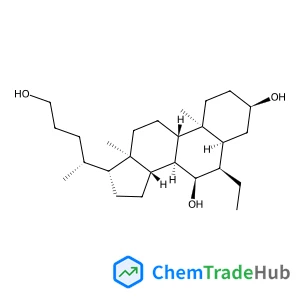
(3alpha,5beta,6alpha,7alpha)-6-Ethylcholane-3,7,24-triol
CAS Number:
1537866-49-1
Molecular Formula:
C26H46O3
![1-[6-(1H-Imidazol-1-yl)-3-pyridinyl]methanamine structure](https://static.chemtradehub.com/structs/914/914637-08-4-8825.webp "1-[6-(1H-Imidazol-1-yl)-3-pyridinyl]methanamine structure")
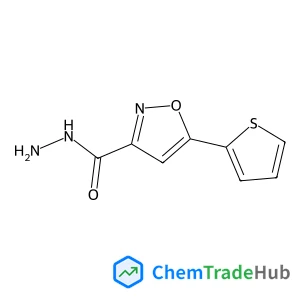
![1-oxaspiro[4.4]nonan-6-one structure](https://static.chemtradehub.com/structs/134/134179-01-4-e051.webp "1-oxaspiro[4.4]nonan-6-one structure")
Recommended Suppliers








Disclaimer
This page provides academic journal information for reference and research purposes only. We are not affiliated with any journal publishers and do not handle publication submissions. For publication-related inquiries, please contact the respective journal publishers directly.
If you notice any inaccuracies in the information displayed, please contact us at support@chemtradehub.com. We will promptly review and address your concerns.