












![1-[6-(1H-Imidazol-1-yl)-3-pyridinyl]methanamine structure](https://static.chemtradehub.com/structs/914/914637-08-4-8825.webp "1-[6-(1H-Imidazol-1-yl)-3-pyridinyl]methanamine structure")
Intrinsic enhancement of the rate capability and suppression of the phase transition via p-type doping in Fe–Mn based P2-type cathodes used for sodium ion batteries
Literature Information
Publication Date
2021-02-05
DOI
10.1039/D0CP06483A
Impact Factor
3.676
Authors
Taesoon Hwang, Rye-Gyeong Oh, Woosuk Cho, Maenghyo Cho, Kyeongjae Cho
View Original
Abstract
In this study, we present improved power characteristics and suppressed phase transition by incorporating elemental doping into a P2-type cathode of sodium ion batteries. A Cu-doped Fe–Mn based P2-type Na0.67Cu0.125Fe0.375Mn0.5O2 cathode was designed based on the calculations of the electronic structure and then examined experimentally. Using first principles, we introduced instrinsic p-type conductivity by elemental doping with Cu. Introduction of Cu generated electron holes above the Fermi level in the electronic structure, which is typical of p-type semiconductors. Charge analyses suggested that the hole generation was driven primarily by the greater reduced characteristics of Cu as compared with those of Fe and Mn. In addition, introduction of Cu retaining high reduced property also suppressed phase transition from the P2 to Z phase by Fe migration to empty Na layers mainly. Electrochemical experiments revealed improved power characteristics upon the introduction of p-type conductivity. This could be attributed to the increase in the electronic conductivity by hole generation in the valence band. This study suggests that the introduction of p-type conductivity could be a rational tactic for the development of promising cathode materials for high performance sodium ion batteries.
Related Literature
Water-in-water mesophases for templating inorganics
Andreas Taubert, Ernst Furrer, Wolfgang Meier
2004-09-02
Communication
DOI: 10.1039/B405610H
Supramolecular isomerism in spin crossover networks with aurophilic interactions
Ana Galet, M. Carmen Muñoz, Víctor Martínez, José Antonio Real
2004-09-07
Communication
DOI: 10.1039/B409974E
Novel Pt/CeO2/C catalysts for electrooxidation of alcohols in alkaline media
Changwei Xu, Pei Kang Shen
2004-08-25
Communication
DOI: 10.1039/B408589B
A new organic superconductor β-(meso-DMBEDT-TTF)2PF6
Tadashi Kawamoto, Takehiko Mori, Hiroshi Moriyama, Yutaka Nishio, Koji Kajita
2004-09-21
Communication
DOI: 10.1039/B409631B
Nanoporosity of an interpenetrated NbO-type molecular framework studied by single crystal X-ray diffraction
Prasad V. Ganesan, Cameron J. Kepert
2004-09-01
Communication
DOI: 10.1039/B409543J
Chiral amplification by polypeptides and its relevance to prebiotic catalysis
David R. Kelly, Alastair Meek, Stanley M. Roberts
2004-08-25
Communication
DOI: 10.1039/B404379K
Role of pore curvature on the thermal stability of gold nanoparticles in mesoporous silica
Mangesh T. Bore, Hien N. Pham, Timothy L. Ward, Abhaya K. Datye
2004-10-04
Communication
DOI: 10.1039/B407575G
The anion sequence in the phase transformation of mesostructures templated by non-ionic block copolymers
Jiawei Tang, Chengzhong Yu, Xufeng Zhou, Xiaoxia Yan, Dongyuan Zhao
2004-08-25
Communication
DOI: 10.1039/B408100E
A samarium cyclooctatetraene complex as catalyst for hydroamination/cyclisation catalysis
Agustino Zulys, Tarun K. Panda, Michael T. Gamer, Peter W. Roesky
2004-09-30
Communication
DOI: 10.1039/B410918J
Intramolecular nucleophilic carbonyl trapping of α-ketenyl radicals by an amino group
Mami Tojino, Yoshitaka Uenoyama, Takahide Fukuyama, Ilhyong Ryu
2004-09-14
Communication
DOI: 10.1039/B408746A
You might also like
Compound Q&A
What is the market or research trend for N-(4-Methoxybenzyl)-2-pyridinamine (CAS: 52818-63-0)?
N-(4-Methoxybenzyl)-2-pyridinamine (CAS: 52818-63-0) is increasingly being used ...
52818-63-0N-(4-Methoxybenzyl)-...
Compound Q&A
What precautions should be taken when handling Ethyl 4-(2-chlorophenyl)-1,3-thiazole-2-carboxylate (CAS: 1050507-06-6)?
When handling Ethyl 4-(2-chlorophenyl)-1,3-thiazole-2-carboxylate, appropriate p...
1050507-06-6Ethyl 4-(2-chlorophe...
Compound Q&A
What regulatory guidelines apply to diethyldiselane (CAS: 628-39-7)?
Diethyldiselane (CAS: 628-39-7) is classified under the Globally Harmonized Syst...
628-39-7Diethyldiselane
Compound Q&A
What is the market or research trend for oxocopper (CAS: 12053-18-8)?
The market for oxocopper (CAS: 12053-18-8) is primarily driven by its use in cat...
12053-18-8oxocopper; oxo-(oxoc...
Compound Q&A
What is the market or research trend for 5-{[(2-Methyl-2-propanyl)oxy]carbonyl}-5-azaspiro[2.4]heptane-7-carboxylic acid?
The market for 5-{[(2-Methyl-2-propanyl)oxy]carbonyl}-5-azaspiro[2.4]heptane-7-c...
1268519-54-55-{[(2-Methyl-2-prop...
Compound Q&A
What is 2-(1-Pyrrolidinyl)-4-pyridinamine (CAS: 35981-63-6)?
2-(1-Pyrrolidinyl)-4-pyridinamine is a chemical compound with the CAS number 359...
35981-63-62-(1-Pyrrolidinyl)-4...
Compound Q&A
What are the physical and chemical properties of 2-(3-Pyridinyl)-1-azabicyclo[2.2.2]octane (CAS: 91556-75-1)?
2-(3-Pyridinyl)-1-azabicyclo[2.2.2]octane (CAS: 91556-75-1) is a crystalline sol...
91556-75-12-(3-Pyridinyl)-1-az...
Compound Q&A
How is (S)-Alpha-allyl-proline hydrochloride (CAS: 129704-91-2) typically synthesized?
(S)-Alpha-allyl-proline hydrochloride is usually synthesized via a Wittig reacti...
129704-91-2(S)-Alpha-allyl-prol...
Compound Q&A
What is 3-Methyl-1,2-oxazole-5-carboxylic acid (CAS: 4857-42-5)?
3-Methyl-1,2-oxazole-5-carboxylic acid (CAS: 4857-42-5) is an organic compound w...
4857-42-53-Methyl-1,2-oxazole...
Compound Q&A
How is Lys-SMCC-DM1 (CAS: 1281816-04-3) typically synthesized?
Lys-SMCC-DM1 is synthesized via a multi-step process involving the coupling of S...
1281816-04-3Lys-SMCC-DM1
Source Journal
Physical Chemistry Chemical Physics

CiteScore:
5.5
Self-citation Rate:
10.3%
Articles per Year:
3036
Physical Chemistry Chemical Physics (PCCP) is an international journal co-owned by 19 physical chemistry and physics societies from around the world. This journal publishes original, cutting-edge research in physical chemistry, chemical physics and biophysical chemistry. To be suitable for publication in PCCP, articles must include significant innovation and/or insight into physical chemistry; this is the most important criterion that reviewers and Editors will judge against when evaluating submissions. The journal has a broad scope and welcomes contributions spanning experiment, theory, computation and data science. Topical coverage includes spectroscopy, dynamics, kinetics, statistical mechanics, thermodynamics, electrochemistry, catalysis, surface science, quantum mechanics, quantum computing and machine learning. Interdisciplinary research areas such as polymers and soft matter, materials, nanoscience, energy, surfaces/interfaces, and biophysical chemistry are welcomed if they demonstrate significant innovation and/or insight into physical chemistry. Joined experimental/theoretical studies are particularly appreciated when complementary and based on up-to-date approaches.
Recommended Compounds
![N-{15-[(2,5-Dioxo-1-pyrrolidinyl)oxy]-15-oxo-3,6,9,12-tetraoxapentadec-1-yl}-2-(2-propyn-1-yloxy)acetamide structure](https://static.chemtradehub.com/structs/210/2101206-92-0-2eb5.webp "N-{15-[(2,5-Dioxo-1-pyrrolidinyl)oxy]-15-oxo-3,6,9,12-tetraoxapentadec-1-yl}-2-(2-propyn-1-yloxy)acetamide structure")
N-{15-[(2,5-Dioxo-1-pyrrolidinyl)oxy]-15-oxo-3,6,9,12-tetraoxapentadec-1-yl}-2-(2-propyn-1-yloxy)acetamide
CAS Number:
2101206-92-0
Molecular Formula:
C20H30N2O10
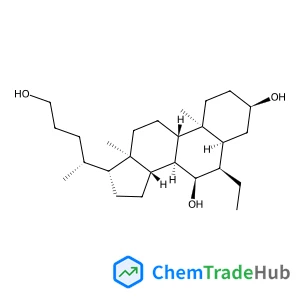
(3alpha,5beta,6alpha,7alpha)-6-Ethylcholane-3,7,24-triol
CAS Number:
1537866-49-1
Molecular Formula:
C26H46O3
Recommended Suppliers






Disclaimer
This page provides academic journal information for reference and research purposes only. We are not affiliated with any journal publishers and do not handle publication submissions. For publication-related inquiries, please contact the respective journal publishers directly.
If you notice any inaccuracies in the information displayed, please contact us at support@chemtradehub.com. We will promptly review and address your concerns.