












Magnetization reversal on different time-scales for ErFeO3 and NdFeO3 single crystals
Literature Information
Publication Date
2021-02-10
DOI
10.1039/D0CP06354A
Impact Factor
3.676
Authors
Mohanad H. Mohammed, Zhenxiang Cheng, Shixun Cao, Joseph Horvat
View Original
Abstract
The dynamics of the magnetic moment reversal is studied for ErFeO3 and NdFeO3 single crystals. The reversal occurs at 41 and 5.1 K for ErFeO3 and NdFeO3, respectively, at a field of 300 Oe. The dynamics of the magnetization reversal process depends on the temperature at which the reversal occurs. The reversal is abrupt if the thermal energy is far higher than the energy of Zeeman splitting of the rare earth ion levels by internal fields, as observed for ErFeO3. A gradual magnetization reversal occurs for NdFeO3 over 64 s, when the thermal energy at the temperature of the reversal is well below the Zeeman splitting energy of Nd3+ spins. A mechanism for this gradual magnetization reversal is proposed in terms of the thermal re-population of Zeeman doublets of Nd3+ ions, the splitting energy of which continuously changes during the magnetization reversal.
Related Literature
Direct measurements of the total rate constant of the reaction NCN + H and implications for the product branching ratio and the enthalpy of formation of NCN
Nancy Faßheber, Johannes Dammeier, Gernot Friedrichs
2014-04-29
Paper
DOI: 10.1039/C4CP01107D
Capture of heliophobic atoms by 4He nanodroplets: the case of cesium
Antonio Leal, David Mateo, Alberto Hernando, Martí Pi, Manuel Barranco
2014-09-22
Paper
DOI: 10.1039/C4CP03297G
Probing the dynamics of plasmon-excited hexanethiol-capped gold nanoparticles by picosecond X-ray absorption spectroscopy
Thomas J. Penfold, Maarten Nachtegaal, Chris J. Milne, Majed Chergui
2014-09-18
Paper
DOI: 10.1039/C4CP03301A
Physicochemical properties of pentaglyme–sodium bis(trifluoromethanesulfonyl)amide solvate ionic liquid
Shoshi Terada, Toshihiko Mandai, Risa Nozawa, Kazuki Yoshida, Kazuhide Ueno, Seiji Tsuzuki, Masayoshi Watanabe
2014-04-25
Paper
DOI: 10.1039/C4CP00746H
Quasi-perpetual discharge behaviour in p-type Ge–air batteries
Joey D. Ocon, Jin Won Kim, Graniel Harne A. Abrenica, Jae Kwang Lee
2014-06-20
Paper
DOI: 10.1039/C4CP02134G
Photochemistry of aldehyde clusters: cross-molecular versus unimolecular reaction dynamics
Dorit Shemesh, Sandra L. Blair, Sergey A. Nizkorodov
2014-09-16
Paper
DOI: 10.1039/C4CP03130J
On subthreshold ionization of helium droplets, ejection of He+, and the role of anions
Michael Renzler, Matthias Daxner, Nikolaus Weinberger, Stephan Denifl, Paul Scheier
2014-09-12
Communication
DOI: 10.1039/C4CP03236E
Characterization of C60 fullerene complexation with antibiotic doxorubicin
Yu. I. Prylutskyy, I. S. Pashkova, D. Wyrzykowski, A. Woziwodzka, G. Gołuński, J. Piosik, V. V. Cherepanov, U. Ritter
2014-09-03
Paper
DOI: 10.1039/C4CP03367A
Hydrogen-bond memory and water-skin supersolidity resolving the Mpemba paradox
Yongli Huang, Zengsheng Ma, Yichun Zhou, Ji Zhou, Weitao Zheng, Qing Jiang, Chang Q. Sun
2014-09-09
Paper
DOI: 10.1039/C4CP03669G
The relationship between photoluminescence (PL) decay and crystal growth kinetics in thioglycolic acid (TGA) capped CdTe quantum dots (QDs)
Xiangying Lv, Xiaogang Xue, Yang Huang, Zanyong Zhuang, Zhang Lin
2014-04-28
Paper
DOI: 10.1039/C4CP00765D
You might also like
Compound Q&A
What is the market or research trend for N-(4-Methoxybenzyl)-2-pyridinamine (CAS: 52818-63-0)?
N-(4-Methoxybenzyl)-2-pyridinamine (CAS: 52818-63-0) is increasingly being used ...
52818-63-0N-(4-Methoxybenzyl)-...
Compound Q&A
What precautions should be taken when handling Ethyl 4-(2-chlorophenyl)-1,3-thiazole-2-carboxylate (CAS: 1050507-06-6)?
When handling Ethyl 4-(2-chlorophenyl)-1,3-thiazole-2-carboxylate, appropriate p...
1050507-06-6Ethyl 4-(2-chlorophe...
Compound Q&A
What regulatory guidelines apply to diethyldiselane (CAS: 628-39-7)?
Diethyldiselane (CAS: 628-39-7) is classified under the Globally Harmonized Syst...
628-39-7Diethyldiselane
Compound Q&A
What is the market or research trend for oxocopper (CAS: 12053-18-8)?
The market for oxocopper (CAS: 12053-18-8) is primarily driven by its use in cat...
12053-18-8oxocopper; oxo-(oxoc...
Compound Q&A
What is the market or research trend for 5-{[(2-Methyl-2-propanyl)oxy]carbonyl}-5-azaspiro[2.4]heptane-7-carboxylic acid?
The market for 5-{[(2-Methyl-2-propanyl)oxy]carbonyl}-5-azaspiro[2.4]heptane-7-c...
1268519-54-55-{[(2-Methyl-2-prop...
Compound Q&A
What is 2-(1-Pyrrolidinyl)-4-pyridinamine (CAS: 35981-63-6)?
2-(1-Pyrrolidinyl)-4-pyridinamine is a chemical compound with the CAS number 359...
35981-63-62-(1-Pyrrolidinyl)-4...
Compound Q&A
What are the physical and chemical properties of 2-(3-Pyridinyl)-1-azabicyclo[2.2.2]octane (CAS: 91556-75-1)?
2-(3-Pyridinyl)-1-azabicyclo[2.2.2]octane (CAS: 91556-75-1) is a crystalline sol...
91556-75-12-(3-Pyridinyl)-1-az...
Compound Q&A
How is (S)-Alpha-allyl-proline hydrochloride (CAS: 129704-91-2) typically synthesized?
(S)-Alpha-allyl-proline hydrochloride is usually synthesized via a Wittig reacti...
129704-91-2(S)-Alpha-allyl-prol...
Compound Q&A
What is 3-Methyl-1,2-oxazole-5-carboxylic acid (CAS: 4857-42-5)?
3-Methyl-1,2-oxazole-5-carboxylic acid (CAS: 4857-42-5) is an organic compound w...
4857-42-53-Methyl-1,2-oxazole...
Compound Q&A
How is Lys-SMCC-DM1 (CAS: 1281816-04-3) typically synthesized?
Lys-SMCC-DM1 is synthesized via a multi-step process involving the coupling of S...
1281816-04-3Lys-SMCC-DM1
Source Journal
Physical Chemistry Chemical Physics

CiteScore:
5.5
Self-citation Rate:
10.3%
Articles per Year:
3036
Physical Chemistry Chemical Physics (PCCP) is an international journal co-owned by 19 physical chemistry and physics societies from around the world. This journal publishes original, cutting-edge research in physical chemistry, chemical physics and biophysical chemistry. To be suitable for publication in PCCP, articles must include significant innovation and/or insight into physical chemistry; this is the most important criterion that reviewers and Editors will judge against when evaluating submissions. The journal has a broad scope and welcomes contributions spanning experiment, theory, computation and data science. Topical coverage includes spectroscopy, dynamics, kinetics, statistical mechanics, thermodynamics, electrochemistry, catalysis, surface science, quantum mechanics, quantum computing and machine learning. Interdisciplinary research areas such as polymers and soft matter, materials, nanoscience, energy, surfaces/interfaces, and biophysical chemistry are welcomed if they demonstrate significant innovation and/or insight into physical chemistry. Joined experimental/theoretical studies are particularly appreciated when complementary and based on up-to-date approaches.
Recommended Compounds
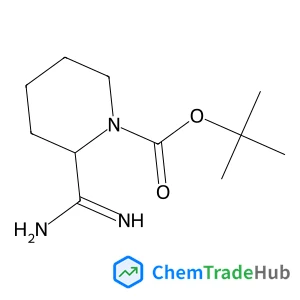
2-Methyl-2-propanyl 2-carbamimidoyl-1-piperidinecarboxylate
CAS Number:
1258640-98-0
Molecular Formula:
C11H21N3O2
![1-[6-(1H-Imidazol-1-yl)-3-pyridinyl]methanamine structure](https://static.chemtradehub.com/structs/914/914637-08-4-8825.webp "1-[6-(1H-Imidazol-1-yl)-3-pyridinyl]methanamine structure")
![1-oxaspiro[4.4]nonan-6-one structure](https://static.chemtradehub.com/structs/134/134179-01-4-e051.webp "1-oxaspiro[4.4]nonan-6-one structure")
Recommended Suppliers






Disclaimer
This page provides academic journal information for reference and research purposes only. We are not affiliated with any journal publishers and do not handle publication submissions. For publication-related inquiries, please contact the respective journal publishers directly.
If you notice any inaccuracies in the information displayed, please contact us at support@chemtradehub.com. We will promptly review and address your concerns.