












Relationship between liquid nanoscale structure in solvents and the strength of the Hofmeister effect in extraction experiments
Literature Information
Publication Date
2021-02-26
DOI
10.1039/D0CP05973K
Impact Factor
3.676
Authors
Dmytro Nykypanchuk, Camiel H. C. Janssen
View Original
Abstract
In this study, we used mixtures of carboxylic acids and amines as solvents for the liquid–liquid extraction of copper salts with various anions from aqueous phase, and systematically varied the acid/amine ratio to determine its influence on extraction efficiency. The organic phases resulting from these extraction experiments were studied using small-angle X-ray scattering (SAXS), establishing a connection between the extraction process and the liquid structure. A relationship is found between the extent of extraction for the metal salt, the strength of the Hofmeister effect of the anions of the salt, and the characteristic lengthscale of the observed liquid nanoscale structure before and after extraction.
Related Literature
Like-charge ion pairs of hydronium and hydroxide in aqueous solution?
Manik Kumer Ghosh, Tae Hoon Choi, Cheol Ho Choi
2015-05-26
Communication
DOI: 10.1039/C5CP02182K
Electrochemical and spectroscopic study of Zn(ii) coordination and Zn electrodeposition in three ionic liquids with the trifluoromethylsulfonate anion, different imidazolium ions and their mixtures with water
Zhen Liu, Frank Endres
2015-06-01
Paper
DOI: 10.1039/C5CP01472G
Photocatalytic decomposition of graphene over a ZnO surface under UV irradiation
Dae-Hwa Mun, Hyun Jung Lee, Sukang Bae
2015-05-12
Communication
DOI: 10.1039/C5CP01670C
Native silica nanoparticles are powerful membrane disruptors
Nan Li, Rémy Berthier, Maurits R. R. de Planque
2015-01-19
Paper
DOI: 10.1039/C4CP05882H
Effects of electronic structure on the hydration of PbNO3+ and SrNO3+ ion pairs
Richard J. Cooper, Sven Heiles, Evan R. Williams
2015-05-27
Paper
DOI: 10.1039/C5CP01859E
Mechanical and molecular basis for the symmetrical division of the fission yeast nuclear envelope
Bojan Božič
2015-05-13
Paper
DOI: 10.1039/C5CP01243K
Temperature-dependent energy levels and size-independent thermodynamics
2015-05-18
Communication
DOI: 10.1039/C5CP02332G
Direct force measurements between silica particles in aqueous solutions of ionic liquids containing 1-butyl-3-methylimidazolium (BMIM)
Valentina Valmacco, Gregor Trefalt, Plinio Maroni, Michal Borkovec
2015-06-01
Paper
DOI: 10.1039/C5CP02292D
Release of proteins and enzymes from vesicular compartments by alternating magnetic fields
Yue Lin, Julie E. Gough
2015-03-06
Paper
DOI: 10.1039/C4CP05872K
Challenging lanthanide relaxation theory: erbium and thulium complexes that show NMR relaxation rates faster than dysprosium and terbium analogues
Alexander M. Funk, Peter Harvey, Katie-Louise N. A. Finney, Mark A. Fox, Alan M. Kenwright, Nicola J. Rogers, P. Kanthi Senanayake, David Parker
2015-06-02
Paper
DOI: 10.1039/C5CP02210J
You might also like
Compound Q&A
How should waste containing 6-Chloro-5-(2'-hydroxy-3'-methoxy-4-biphenylyl)-3-(3-methoxyphenyl)-1H-pyrrolo[3,2-d]pyrimidine-2,4(3H,5H)-dione (CAS: 1346607-05-3) be handled?
Waste containing 6-Chloro-5-(2'-hydroxy-3'-methoxy-4-biphenylyl)-3-(3-methoxyphe...
1346607-05-36-Chloro-5-(2'-hydro...
Compound Q&A
What are the main uses of (3alpha,5alpha)-3-Hydroxypregnane-11,20-dione (CAS: 23930-19-0)?
(3alpha,5alpha)-3-Hydroxypregnane-11,20-dione is primarily used in the pharmaceu...
23930-19-0(3alpha,5alpha)-3-Hy...
Compound Q&A
What is the market or research trend for 4-Amino-6-chloro-2-pyridinecarboxylic acid (CAS: 546141-56-4)?
The market for 4-Amino-6-chloro-2-pyridinecarboxylic acid (CAS: 546141-56-4) is ...
546141-56-44-Amino-6-chloro-2-p...
Compound Q&A
Are there alternatives to (2-Benzoylethyl)trimethylammonium chloride (CAS: 24472-88-6) in synthesis?
Alternatives to (2-Benzoylethyl)trimethylammonium chloride (CAS: 24472-88-6) in ...
24472-88-6(2-Benzoylethyl)trim...
Compound Q&A
Is N-[4-Nitro-3-(trifluoromethyl)phenyl]acetamide (CAS: 393-12-4) safe?
N-[4-Nitro-3-(trifluoromethyl)phenyl]acetamide (CAS: 393-12-4) is generally safe...
393-12-4N-[4-Nitro-3-(triflu...
Compound Q&A
Are there alternatives to [(4R,5R,6S)-5-hydroxy-10-imino-3,7-dioxa-1,9-diazatricyclo[6.4.0.02,6]dodeca-8,11-dien-4-yl]methyl dihydrogen phosphate (CAS: 39679-56-6) in synthesis?
Alternative reagents such as other phosphates or similar functional groups can b...
39679-56-6[(4R,5R,6S)-5-hydrox...
Compound Q&A
Are there alternatives to N,N'-Bis(3-aminopropyl)-1,3-propanediamine (CAS: 4605-14-5) in synthesis?
There are alternatives to N,N'-Bis(3-aminopropyl)-1,3-propanediamine (CAS: 4605-...
4605-14-5N,N'-Bis(3-aminoprop...
Compound Q&A
What precautions should be taken when handling Aluminium trihexadecanoate (CAS: 555-35-1)?
When handling Aluminium trihexadecanoate, it is important to use appropriate per...
555-35-1Aluminium trihexadec...
Compound Q&A
What is (1,1-Dioxido-3-oxo-1,2-benzothiazol-2(3H)-yl)acetic acid (CAS: 52188-11-1)?
(1,1-Dioxido-3-oxo-1,2-benzothiazol-2(3H)-yl)acetic acid is a chemical compound ...
52188-11-1(1,1-Dioxido-3-oxo-1...
Compound Q&A
Are there alternatives to 5,5-dimethyloxolan-2-one (CAS: 3123-97-5) in synthesis?
Several alternatives to 5,5-dimethyloxolan-2-one (CAS: 3123-97-5) can be used in...
3123-97-55,5-dimethyloxolan-2...
Source Journal
Physical Chemistry Chemical Physics

CiteScore:
5.5
Self-citation Rate:
10.3%
Articles per Year:
3036
Physical Chemistry Chemical Physics (PCCP) is an international journal co-owned by 19 physical chemistry and physics societies from around the world. This journal publishes original, cutting-edge research in physical chemistry, chemical physics and biophysical chemistry. To be suitable for publication in PCCP, articles must include significant innovation and/or insight into physical chemistry; this is the most important criterion that reviewers and Editors will judge against when evaluating submissions. The journal has a broad scope and welcomes contributions spanning experiment, theory, computation and data science. Topical coverage includes spectroscopy, dynamics, kinetics, statistical mechanics, thermodynamics, electrochemistry, catalysis, surface science, quantum mechanics, quantum computing and machine learning. Interdisciplinary research areas such as polymers and soft matter, materials, nanoscience, energy, surfaces/interfaces, and biophysical chemistry are welcomed if they demonstrate significant innovation and/or insight into physical chemistry. Joined experimental/theoretical studies are particularly appreciated when complementary and based on up-to-date approaches.
Recommended Compounds
![N-{15-[(2,5-Dioxo-1-pyrrolidinyl)oxy]-15-oxo-3,6,9,12-tetraoxapentadec-1-yl}-2-(2-propyn-1-yloxy)acetamide structure](https://static.chemtradehub.com/structs/210/2101206-92-0-2eb5.webp "N-{15-[(2,5-Dioxo-1-pyrrolidinyl)oxy]-15-oxo-3,6,9,12-tetraoxapentadec-1-yl}-2-(2-propyn-1-yloxy)acetamide structure")
N-{15-[(2,5-Dioxo-1-pyrrolidinyl)oxy]-15-oxo-3,6,9,12-tetraoxapentadec-1-yl}-2-(2-propyn-1-yloxy)acetamide
CAS Number:
2101206-92-0
Molecular Formula:
C20H30N2O10
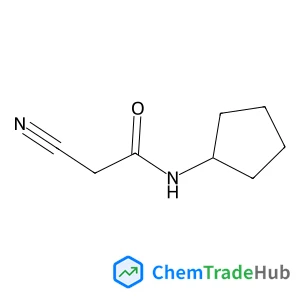
![1-[6-(1H-Imidazol-1-yl)-3-pyridinyl]methanamine structure](https://static.chemtradehub.com/structs/914/914637-08-4-8825.webp "1-[6-(1H-Imidazol-1-yl)-3-pyridinyl]methanamine structure")
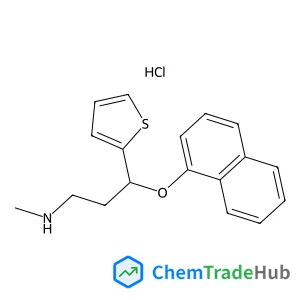
N-Methyl-3-(1-naphthyloxy)-3-(2-thienyl)-1-propanamine hydrochloride (1:1)
CAS Number:
1188266-11-6
Molecular Formula:
C18H20ClNOS
Recommended Suppliers







Disclaimer
This page provides academic journal information for reference and research purposes only. We are not affiliated with any journal publishers and do not handle publication submissions. For publication-related inquiries, please contact the respective journal publishers directly.
If you notice any inaccuracies in the information displayed, please contact us at support@chemtradehub.com. We will promptly review and address your concerns.