












![[4-(Isobutyrylamino)phenyl]boronic acid structure](https://static.chemtradehub.com/structs/874/874219-50-8-6ab5.webp "[4-(Isobutyrylamino)phenyl]boronic acid structure")
Investigating the mapping of chromophore excitations onto the electron detachment spectrum: photodissociation spectroscopy of iodide ion–thiouracil clusters
Literature Information
Publication Date
2021-01-05
DOI
10.1039/D0CP05920J
Impact Factor
3.676
Authors
Kelechi O. Uleanya, Caroline E. H. Dessent
View Original
Abstract
Laser photodissociation spectroscopy (3.1–5.7 eV) has been applied to iodide complexes of the non-native nucleobases, 2-thiouracil (2-TU), 4-thiouracil (4-TU) and 2,4-thiouracil (2,4-TU), to probe the excited states and intracluster electron transfer as a function of sulphur atom substitution. Photodepletion is strong for all clusters (I−·2-TU, I−·4-TU and I−·2,4-TU) and is dominated by electron detachment processes. For I−·4-TU and I−·2,4-TU, photodecay is accompanied by formation of the respective molecular anions, 4-TU− and 2,4-TU−, behaviour that is not found for other nucleobases. Notably, the I−·2TU complex does not fragment with formation of its molecular anion. We attribute the novel formation of 4-TU− and 2,4-TU− to the fact that these valence anions are significantly more stable than 2-TU−. We observe further similar behaviour for I−·4-TU and I−·2,4-TU relating to the general profile of their photodepletion spectra, since both strongly resemble the intrinsic absorption spectra of the respective uncomplexed thiouracil molecule. This indicates that the nucleobase chromophore excitations are determining the clusters’ spectral profile. In contrast, the I−·2-TU photodepletion spectrum is dominated by the electron detachment profile, with the near-threshold dipole-bound excited state being the only distinct spectral feature. We discuss these observations in the context of differences in the dipole moments of the thionucleobases, and their impact on the coupling of nucleobase-centred transitions onto the electron detachment spectrum.
Recommended Journals
Related Literature
Simple linear asymmetrical complexes of silver(i): NC–Ag–NH3 and Br–Ag–NH3
Ann M. Chippindale, Laura E. Head, Simon J. Hibble
2008-05-14
Communication
DOI: 10.1039/B803500H
Hydrogen bond assisted helical self-assembly into [n]catenane
Yanhua Zhang, Jiaqi He, Jin-Pei Cheng
2007-04-12
Communication
DOI: 10.1039/B703591H
Photophysical properties and tunable colour changes of silica single layers doped with lanthanide(iii) complexes
Lidia Armelao, Gregorio Bottaro, Silvio Quici, Marco Cavazzini, Maria Concetta Raffo, Francesco Barigelletti, Gianluca Accorsi
2007-03-23
Communication
DOI: 10.1039/B702238G
Transition metal-catalyzed three-component coupling of allenes and the related allylation reactions
Masilamani Jeganmohan, Chien-Hong Cheng
2008-05-15
Feature Article
DOI: 10.1039/B800440D
Gold nanoparticles become stable to cyanide etch when coated with hybrid lipid bilayers
Sarita Sitaula, Marilyn R. Mackiewicz, Scott M. Reed
2008-05-15
Communication
DOI: 10.1039/B801525B
One-step synthesis of ordered mesoporous carbonaceous spheres by an aerosol-assisted self-assembly
Yan Yan, Fuqiang Zhang, Yan Meng, Bo Tu, Dongyuan Zhao
2007-04-25
Communication
DOI: 10.1039/B702232H
G-quadruplex recognition by bis-indole carboxamides
Jyotirmayee Dash, Pravin S. Shirude, Shankar Balasubramanian
2008-06-05
Communication
DOI: 10.1039/B806042H
Oxygen-assisted reduction of Au species on Au/SiO2catalyst in room temperature CO oxidation
Zili Wu, Shenghu Zhou, Haoguo Zhu, Sheng Dai, Steven H. Overbury
2008-06-05
Communication
DOI: 10.1039/B803834A
A hierarchical self-similar structure of oriented calcite with association of an agar gel matrix: inheritance of crystal habit from nanoscale
Yuya Oaki, Shinichiro Hayashi, Hiroaki Imai
2007-04-30
Communication
DOI: 10.1039/B704129B
You might also like
Compound Q&A
Are there alternatives to 1-(4-Chlorophenyl)-N-hydroxymethanimine (CAS: 3848-36-0) in synthesis?
When considering alternatives to 1-(4-Chlorophenyl)-N-hydroxymethanimine (CAS: 3...
3848-36-01-(4-Chlorophenyl)-N...
Compound Q&A
How should (1R,9S,10S,12S,14E,16S,19R,20R,21S,22R)-3,9,21-Trihydroxy-5,10,12,14,16,20,22-heptamethyl-23,24-dioxatetracyclo[17.3.1.1~6,9~.0~2,7~]tetracosa-2,5,7,14-tetraen-4-one (CAS: 183202-73-5) be stored?
This compound should be stored in a cool, dry place away from direct sunlight. I...
183202-73-5(1R,9S,10S,12S,14E,1...
Compound Q&A
How is 3-(4-Bromophenyl)-5-(2-fluorophenyl)-1,2,4-oxadiazole (CAS: 419553-16-5) typically synthesized?
3-(4-Bromophenyl)-5-(2-fluorophenyl)-1,2,4-oxadiazole is synthesized through a m...
419553-16-53-(4-Bromophenyl)-5-...
Compound Q&A
How is 5-Chloro-2-(4-chlorophenyl)-4-methyl-6-[3-(1-piperidinyl)propoxy]pyrimidine (CAS: 1639220-19-1) typically synthesized?
5-Chloro-2-(4-chlorophenyl)-4-methyl-6-[3-(1-piperidinyl)propoxy]pyrimidine (CAS...
1639220-19-15-Chloro-2-(4-chloro...
Compound Q&A
What industries use 2-Chloro-4-(difluoromethoxy)pyridine (CAS: 1206978-15-5)?
2-Chloro-4-(difluoromethoxy)pyridine is used in the pharmaceutical industry for ...
1206978-15-52-Chloro-4-(difluoro...
Compound Q&A
What regulatory guidelines apply to 3-Chloro-6-methylpyridazine (CAS: 1121-79-5)?
3-Chloro-6-methylpyridazine (CAS: 1121-79-5) is classified under the Globally Ha...
1121-79-53-Chloro-6-methylpyr...
Compound Q&A
Are there alternatives to Methyl 4,5-dimethyl-2-nitrobenzoate in synthesis?
Several alternatives can be used in the synthesis of Methyl 4,5-dimethyl-2-nitro...
90922-74-0Methyl 4,5-dimethyl-...
Compound Q&A
Are there alternatives to (2E,2'E)-3,3'-(1,4-Phenylene)bisacrylaldehyde in synthesis?
Alternatives to (2E,2'E)-3,3'-(1,4-Phenylene)bisacrylaldehyde include other acry...
63405-68-5(2E,2'E)-3,3'-(1,4-P...
Compound Q&A
What is 3-Amino-5-chloropyridin-2-ol hydrochloride (CAS: 1261906-29-9)?
3-Amino-5-chloropyridin-2-ol hydrochloride is an organic compound with the CAS n...
1261906-29-93-Amino-5-chloropyri...
Compound Q&A
What precautions should be taken when handling 6,7-Difluoro-2,3-dihydro-4H-chromen-4-one (CAS: 1092349-93-3)?
When handling 6,7-Difluoro-2,3-dihydro-4H-chromen-4-one, it is essential to wear...
1092349-93-36,7-Difluoro-2,3-dih...
Source Journal
Physical Chemistry Chemical Physics

CiteScore:
5.5
Self-citation Rate:
10.3%
Articles per Year:
3036
Physical Chemistry Chemical Physics (PCCP) is an international journal co-owned by 19 physical chemistry and physics societies from around the world. This journal publishes original, cutting-edge research in physical chemistry, chemical physics and biophysical chemistry. To be suitable for publication in PCCP, articles must include significant innovation and/or insight into physical chemistry; this is the most important criterion that reviewers and Editors will judge against when evaluating submissions. The journal has a broad scope and welcomes contributions spanning experiment, theory, computation and data science. Topical coverage includes spectroscopy, dynamics, kinetics, statistical mechanics, thermodynamics, electrochemistry, catalysis, surface science, quantum mechanics, quantum computing and machine learning. Interdisciplinary research areas such as polymers and soft matter, materials, nanoscience, energy, surfaces/interfaces, and biophysical chemistry are welcomed if they demonstrate significant innovation and/or insight into physical chemistry. Joined experimental/theoretical studies are particularly appreciated when complementary and based on up-to-date approaches.
Recommended Compounds
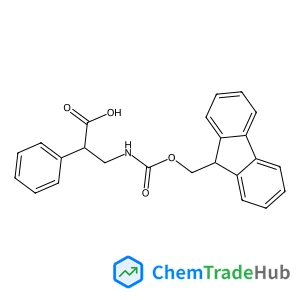
(S)-3-((((9H-Fluoren-9-yl)methoxy)carbonyl)amino)-2-phenylpropanoic acid
CAS Number:
1217663-60-9
Molecular Formula:
C24H21NO4
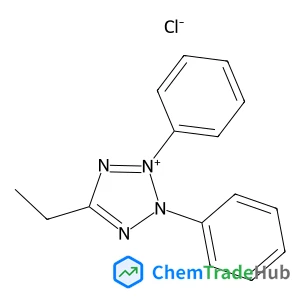
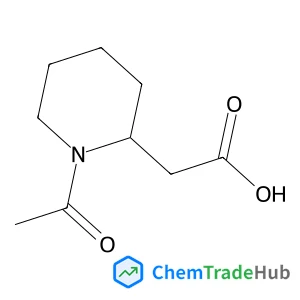
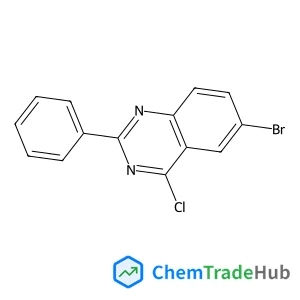
Recommended Suppliers






Disclaimer
This page provides academic journal information for reference and research purposes only. We are not affiliated with any journal publishers and do not handle publication submissions. For publication-related inquiries, please contact the respective journal publishers directly.
If you notice any inaccuracies in the information displayed, please contact us at support@chemtradehub.com. We will promptly review and address your concerns.