












The role of platinum on the NOx storage and desorption behavior of ceria: an online FT-IR study combined with in situ Raman and UV-vis spectroscopy
Literature Information
Publication Date
2020-12-16
DOI
10.1039/D0CP05800A
Impact Factor
3.676
Authors
Anastasia Filtschew, Pablo Beato, Søren B. Rasmussen, Christian Hess
View Original
Abstract
The role of platinum on the room temperature NOx storage mechanism and the NOx desorption behavior of ceria was investigated by combining online FT-IR gas-phase analysis with in situ Raman and UV-vis spectroscopy. The type of pretreatment, leading to the presence of different platinum states (Pt0, and mixed Pt0/Pt2+), is shown to have a major effect on the NOx storage and desorption properties. Upon loading of ceria with platinum (1 wt%), NOx storage capacities decrease except for reductively pretreated Pt/CeO2, enabling new reaction pathways via activation of gas-phase oxygen. In the absence of oxygen, NO is reduced by metallic platinum leading to N2O and N2 formation. In situ Raman spectra provide mechanistic information, by monitoring changes in ceria surface and subsurface oxygen, as well as PtOx during NOx storage. In the presence of gas-phase oxygen, NOx storage is related to the consumption of (sub)surface oxygen and PtOx, and proposed to involve NO2 or [NO + O2] intermediates reacting with surface oxygen. The NOx desorption behavior is shown to be strongly related to the stored NOx species. Oxidative pretreatment of ceria resulted in the largest amount of stored nitrates, consistent with NOx being mostly desorbed at elevated temperatures, i.e., within 300–500 °C. Reductive pretreatment and/or addition of platinum significantly increased the fraction of stored nitrite, thereby shifting the main NOx desorption temperature to values <300 °C. Storage and subsequent desorption of NOx in PtOx/CeO2 was associated with PtOx reduction and reoxidation, as monitored by in situ UV-vis and Raman spectra. Through detailed analysis we were able to elucidate the influence of platinum on NOx storage/desorption and demonstrate the participation of different platinum states in room temperature NOx storage, with each platinum state opening a distinct new reaction pathway.
Related Literature
Apollony photonic sponge based photoelectrochemical solar cells
Fernando Ramiro-Manzano, Pedro Atienzar, Isabelle Rodriguez, Francisco Meseguer, Hermenegildo Garcia, Avelino Corma
2006-10-27
Communication
DOI: 10.1039/B613422J
Nano-patterning of solid substrates by adsorbed dendrimers
Ramon Pericet-Camara, Brian P. Cahill, Georg Papastavrou, Michal Borkovec
2006-10-25
Communication
DOI: 10.1039/B612249C
Fluorescent CXCR4 chemokine receptor antagonists: metal activated binding
Abid Khan, Jon D. Silversides, Leigh Madden, John Greenman, Stephen J. Archibald
2006-12-04
Communication
DOI: 10.1039/B614557D
Synthesis of poly(para-phenylene)(2-isocyano-2-tosylpropane-1,3-diyl), poly(para-phenylene)(2-oxopropane-1,3-diyl) and oligo(cyclopentadienones) via carbonylative coupling of α,α′-dibromoxylene
Robert G. Potter, Thomas S. Hughes
2007-09-24
Communication
DOI: 10.1039/B706807G
Turbidimetric detection of ATP using polymeric micelles and DNA aptamers
Daisuke Miyamoto, Zhonglan Tang, Tohru Takarada, Mizuo Maeda
2007-09-04
Communication
DOI: 10.1039/B709775A
Formation of cage-like hollow spherical silicavia a mesoporous structure by calcination of lysozyme–silica hybrid particles
Tatsuo Tsunoda, Akiko Kawai, Fujio Mizukami, Kengo Sakaguchi
2007-08-21
Communication
DOI: 10.1039/B709534A
Synthesis of Cp*CH2PPh2 and its use as a ligand for the nickel-catalysed cross-coupling reaction of alkyl halides with aryl Grignard reagents
Minoru Uemura, Hideki Yorimitsu, Koichiro Oshima
2006-09-28
Communication
DOI: 10.1039/B612173J
Crystallization-driven constitutional changes of dynamic polymers in response to neat/solution conditions
Cheuk-Fai Chow, Jean-Marie Lehn
2007-10-04
Communication
DOI: 10.1039/B713413D
Highly efficient plastic substrate dye-sensitized solar cells using a compression method for preparation of TiO2 photoelectrodes
Takeshi Yamaguchi, Nobuyuki Tobe, Daisuke Matsumoto, Hironori Arakawa
2007-09-03
Communication
DOI: 10.1039/B709911H
Reversible photochromism of a ferrocenylazobenzene monolayer controllable by a single green light source
Kosuke Namiki, Aiko Sakamoto, Masaki Murata, Shoko Kume, Hiroshi Nishihara
2007-10-16
Communication
DOI: 10.1039/B713107K
You might also like
Compound Q&A
How is Ethyl 4-chlorothieno[2,3-b]pyridine-5-carboxylate (CAS: 59713-58-5) typically synthesized?
Ethyl 4-chlorothieno[2,3-b]pyridine-5-carboxylate (CAS: 59713-58-5) can be synth...
59713-58-5Ethyl 4-chlorothieno...
Compound Q&A
What regulatory guidelines apply to 5-Methyl-1H-indole-3-carbaldehyde (CAS: 52562-50-2)?
5-Methyl-1H-indole-3-carbaldehyde (CAS: 52562-50-2) is subject to various regula...
52562-50-25-Methyl-1H-indole-3...
Compound Q&A
What are the physical and chemical properties of (1,3-Dimethyl-2,4-dioxo-1,2,3,4-tetrahydro-5-pyrimidinyl)boronic acid (CAS: 223418-73-3)?
(1,3-Dimethyl-2,4-dioxo-1,2,3,4-tetrahydro-5-pyrimidinyl)boronic acid is a white...
223418-73-3(1,3-Dimethyl-2,4-di...
Compound Q&A
How should waste containing Sulfocostunolide A (CAS: 1016983-51-9) be handled?
Waste containing Sulfocostunolide A (CAS: 1016983-51-9) should be handled with c...
1016983-51-9Sulfocostunolide A
Compound Q&A
What precautions should be taken when handling Murraxocin (CAS: 88478-44-8)?
When handling Murraxocin (CAS: 88478-44-8), ensure proper personal protective eq...
88478-44-8Murraxocin
Compound Q&A
What are the physical and chemical properties of Formvar (CAS: 63148-64-1)?
Formvar (CAS: 63148-64-1) is an alkyd resin characterized by a high molecular we...
63148-64-1Formvar(R)
Compound Q&A
Is (S)-4-benzyl-2-((benzyloxy)methyl)morpholine (CAS: 205242-66-6) safe?
(S)-4-benzyl-2-((benzyloxy)methyl)morpholine is generally safe when handled with...
205242-66-6(S)-4-benzyl-2-((ben...
Compound Q&A
What industries use Methyl 1-(5-bromo-2-pyrimidinyl)cyclopropanecarboxylate (CAS: 1447607-69-3)?
Methyl 1-(5-bromo-2-pyrimidinyl)cyclopropanecarboxylate (CAS: 1447607-69-3) is p...
1447607-69-3Methyl 1-(5-bromo-2-...
Compound Q&A
Is 2-Methyl-1-phenyl-1-propanamine hydrochloride (CAS: 24290-47-9) safe?
2-Methyl-1-phenyl-1-propanamine hydrochloride (CAS: 24290-47-9) is generally con...
24290-47-92-Methyl-1-phenyl-1-...
Compound Q&A
How is 3-(4-Bromophenyl)-2-methylpropanoic acid (CAS: 66735-01-1) typically synthesized?
3-(4-Bromophenyl)-2-methylpropanoic acid is synthesized through a multi-step pro...
66735-01-13-(4-Bromophenyl)-2-...
Source Journal
Physical Chemistry Chemical Physics

CiteScore:
5.5
Self-citation Rate:
10.3%
Articles per Year:
3036
Physical Chemistry Chemical Physics (PCCP) is an international journal co-owned by 19 physical chemistry and physics societies from around the world. This journal publishes original, cutting-edge research in physical chemistry, chemical physics and biophysical chemistry. To be suitable for publication in PCCP, articles must include significant innovation and/or insight into physical chemistry; this is the most important criterion that reviewers and Editors will judge against when evaluating submissions. The journal has a broad scope and welcomes contributions spanning experiment, theory, computation and data science. Topical coverage includes spectroscopy, dynamics, kinetics, statistical mechanics, thermodynamics, electrochemistry, catalysis, surface science, quantum mechanics, quantum computing and machine learning. Interdisciplinary research areas such as polymers and soft matter, materials, nanoscience, energy, surfaces/interfaces, and biophysical chemistry are welcomed if they demonstrate significant innovation and/or insight into physical chemistry. Joined experimental/theoretical studies are particularly appreciated when complementary and based on up-to-date approaches.
Recommended Compounds

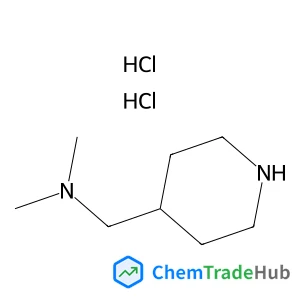
N,N-dimethyl(piperidin-4-yl)methanamine hydrochloride
CAS Number:
172281-72-0
Molecular Formula:
C8H20Cl2N2

Recommended Suppliers





Disclaimer
This page provides academic journal information for reference and research purposes only. We are not affiliated with any journal publishers and do not handle publication submissions. For publication-related inquiries, please contact the respective journal publishers directly.
If you notice any inaccuracies in the information displayed, please contact us at support@chemtradehub.com. We will promptly review and address your concerns.