












Differential hysteresis scanning of non-templated monomodal amorphous aerogels
Literature Information
Publication Date
2021-02-25
DOI
10.1039/D0CP05520D
Impact Factor
3.676
Authors
Poroshat Taheri, John C. Lang, Jeffrey Kenvin, Peter Kroll
View Original
Abstract
We perform Differential Hysteresis Scanning (DHS) Porosimetry of amorphous silicon oxycarbide aerogels to quantify hierarchical connectivity in these porous materials. We contrast high-resolution argon sorption scanning isotherms of samples obtained through a non-templated synthesis using different solvents, and characterize respective changes after calcination at 1000 °C. The multi-scan DHS data sets are analyzed through non-negative least-squares deconvolution using a kernel of theoretically derived isotherms for a selection of hierarchical geometries using non-local density functional theory (NL-DFT). We obtain two-dimensional contour plots that characterize mesopores according to the ratio between pore diameter and its connecting window. Combined information from DHS and complementary BET and BJH approaches reveals one system with monomodal distribution both in pore diameters and in window diameters. Hence, this amorphous material exhibits a uniformity usually only observed for crystalline systems. We demonstrate that DHS analysis provides quantitative data analyzing the hierarchical structure of mesoporous materials and unlocks pathways towards tailored materials with control of surface heterogeneity, localization, and sequential accessibility – even for amorphous systems.
Related Literature
First principles study on stability and hydrogen adsorption properties of Mg/Ti interface
J. H. Dai, R. W. Xie, Y. Y. Chen, Y. Song
2015-05-27
Paper
DOI: 10.1039/C5CP02005K
Photocatalytic decomposition of graphene over a ZnO surface under UV irradiation
Dae-Hwa Mun, Hyun Jung Lee, Sukang Bae
2015-05-12
Communication
DOI: 10.1039/C5CP01670C
Optical extinction efficiency measurements on fine and accumulation mode aerosol using single particle cavity ring-down spectroscopy
Michael I. Cotterell, Bernard J. Mason, Thomas C. Preston, Andrew J. Orr-Ewing, Jonathan P. Reid
2015-05-21
Paper
DOI: 10.1039/C5CP00252D
Electrochemical and spectroscopic study of Zn(ii) coordination and Zn electrodeposition in three ionic liquids with the trifluoromethylsulfonate anion, different imidazolium ions and their mixtures with water
Zhen Liu, Frank Endres
2015-06-01
Paper
DOI: 10.1039/C5CP01472G
Bioinspired nanoreactors for the biomineralisation of metallic-based nanoparticles for nanomedicine
Jennifer Bain, Sarah S Staniland
2015-04-02
Perspective
DOI: 10.1039/C5CP00375J
Interplay of donor–acceptor interactions in stabilizing boron nitride compounds: insights from theory
Mohammad R. Momeni, Lisa Shulman, Eric Rivard, Alex Brown
2015-05-27
Paper
DOI: 10.1039/C5CP01993A
Protein synthesis in artificial cells: using compartmentalisation for spatial organisation in vesicle bioreactors
2015-05-01
Communication
DOI: 10.1039/C4CP05933F
Temperature-dependent energy levels and size-independent thermodynamics
2015-05-18
Communication
DOI: 10.1039/C5CP02332G
You might also like
Compound Q&A
How should waste containing 6-Chloro-5-(2'-hydroxy-3'-methoxy-4-biphenylyl)-3-(3-methoxyphenyl)-1H-pyrrolo[3,2-d]pyrimidine-2,4(3H,5H)-dione (CAS: 1346607-05-3) be handled?
Waste containing 6-Chloro-5-(2'-hydroxy-3'-methoxy-4-biphenylyl)-3-(3-methoxyphe...
1346607-05-36-Chloro-5-(2'-hydro...
Compound Q&A
What are the main uses of (3alpha,5alpha)-3-Hydroxypregnane-11,20-dione (CAS: 23930-19-0)?
(3alpha,5alpha)-3-Hydroxypregnane-11,20-dione is primarily used in the pharmaceu...
23930-19-0(3alpha,5alpha)-3-Hy...
Compound Q&A
What is the market or research trend for 4-Amino-6-chloro-2-pyridinecarboxylic acid (CAS: 546141-56-4)?
The market for 4-Amino-6-chloro-2-pyridinecarboxylic acid (CAS: 546141-56-4) is ...
546141-56-44-Amino-6-chloro-2-p...
Compound Q&A
Are there alternatives to (2-Benzoylethyl)trimethylammonium chloride (CAS: 24472-88-6) in synthesis?
Alternatives to (2-Benzoylethyl)trimethylammonium chloride (CAS: 24472-88-6) in ...
24472-88-6(2-Benzoylethyl)trim...
Compound Q&A
Is N-[4-Nitro-3-(trifluoromethyl)phenyl]acetamide (CAS: 393-12-4) safe?
N-[4-Nitro-3-(trifluoromethyl)phenyl]acetamide (CAS: 393-12-4) is generally safe...
393-12-4N-[4-Nitro-3-(triflu...
Compound Q&A
Are there alternatives to [(4R,5R,6S)-5-hydroxy-10-imino-3,7-dioxa-1,9-diazatricyclo[6.4.0.02,6]dodeca-8,11-dien-4-yl]methyl dihydrogen phosphate (CAS: 39679-56-6) in synthesis?
Alternative reagents such as other phosphates or similar functional groups can b...
39679-56-6[(4R,5R,6S)-5-hydrox...
Compound Q&A
Are there alternatives to N,N'-Bis(3-aminopropyl)-1,3-propanediamine (CAS: 4605-14-5) in synthesis?
There are alternatives to N,N'-Bis(3-aminopropyl)-1,3-propanediamine (CAS: 4605-...
4605-14-5N,N'-Bis(3-aminoprop...
Compound Q&A
What precautions should be taken when handling Aluminium trihexadecanoate (CAS: 555-35-1)?
When handling Aluminium trihexadecanoate, it is important to use appropriate per...
555-35-1Aluminium trihexadec...
Compound Q&A
What is (1,1-Dioxido-3-oxo-1,2-benzothiazol-2(3H)-yl)acetic acid (CAS: 52188-11-1)?
(1,1-Dioxido-3-oxo-1,2-benzothiazol-2(3H)-yl)acetic acid is a chemical compound ...
52188-11-1(1,1-Dioxido-3-oxo-1...
Compound Q&A
Are there alternatives to 5,5-dimethyloxolan-2-one (CAS: 3123-97-5) in synthesis?
Several alternatives to 5,5-dimethyloxolan-2-one (CAS: 3123-97-5) can be used in...
3123-97-55,5-dimethyloxolan-2...
Source Journal
Physical Chemistry Chemical Physics

CiteScore:
5.5
Self-citation Rate:
10.3%
Articles per Year:
3036
Physical Chemistry Chemical Physics (PCCP) is an international journal co-owned by 19 physical chemistry and physics societies from around the world. This journal publishes original, cutting-edge research in physical chemistry, chemical physics and biophysical chemistry. To be suitable for publication in PCCP, articles must include significant innovation and/or insight into physical chemistry; this is the most important criterion that reviewers and Editors will judge against when evaluating submissions. The journal has a broad scope and welcomes contributions spanning experiment, theory, computation and data science. Topical coverage includes spectroscopy, dynamics, kinetics, statistical mechanics, thermodynamics, electrochemistry, catalysis, surface science, quantum mechanics, quantum computing and machine learning. Interdisciplinary research areas such as polymers and soft matter, materials, nanoscience, energy, surfaces/interfaces, and biophysical chemistry are welcomed if they demonstrate significant innovation and/or insight into physical chemistry. Joined experimental/theoretical studies are particularly appreciated when complementary and based on up-to-date approaches.
Recommended Compounds
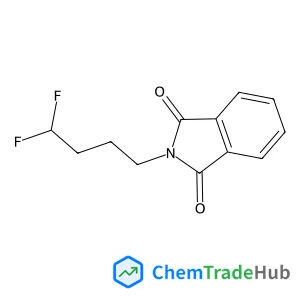
2-(4,4-Difluorobutyl)-1H-isoindole-1,3(2H)-dione
CAS Number:
1265341-14-7
Molecular Formula:
C12H11F2NO2
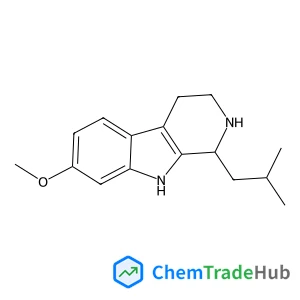
1-Isobutyl-7-methoxy-2,3,4,9-tetrahydro-1H-beta-carboline
CAS Number:
175975-76-5
Molecular Formula:
C16H22N2O
Recommended Suppliers



Disclaimer
This page provides academic journal information for reference and research purposes only. We are not affiliated with any journal publishers and do not handle publication submissions. For publication-related inquiries, please contact the respective journal publishers directly.
If you notice any inaccuracies in the information displayed, please contact us at support@chemtradehub.com. We will promptly review and address your concerns.