


Half metallicity and ferromagnetism of vanadium nitride nanoribbons: a first-principles study
Literature Information
Publication Date
2020-12-10
DOI
10.1039/D0CP05221C
Impact Factor
3.676
Authors
Atish Ghosh, Moumita Kar, Chiranjib Majumder, Pranab Sarkar
View Original
Abstract
Half metallic materials with intrinsic ferromagnetism are identified as the pillar of next generation spintronic devices. In search of new low-dimensional materials with these excellent properties, herein we systematically study the electronic and magnetic properties of edge dependent (armchair (ac) and zigzag (zz)) vanadium nitride nanoribbons (VNNRs) using density functional theory (DFT) based calculations. Both the ac and zz VNNRs show robust ferromagnetism and extensive half-metallicity with large band gaps (3.9–4.3 eV for ac and 2.5–3.0 eV for zz VNNRs) for the down spin channel. Interestingly, even with the application of uniaxial strain (both tensile and compressive) along the axis of the ribbons, VNNRs retain their extensive half metallicity with a large spin band gap and robust ferromagnetic behavior. Spin dependent electronic transport reveals the 100% spin filtering efficiency of nanoribbons, in both the free state and under applied strain, which support the robust half metallicity of VNNRs. Our study of VNNRs on a MoS2 substrate also shows half metallicity along with high stability, indicating the usage of MoS2 as a substrate for the synthesis of VNNRs. All these results guide the potential application of VNNRs in spintronic devices.
Recommended Journals

Russian Journal of Organic Chemistry

Current Opinion in Colloid & Interface Science

Russian Journal of Bioorganic Chemistry

Journal of Natural Medicines

Nature Medicine

Saudi Pharmaceutical Journal

Current Opinion in Solid State & Materials Science

Acta Materialia

New Journal of Chemistry

Drug Discovery Today
Related Literature
Design, synthesis and DNA-cleaving efficiency of photoswitchable dimeric azobenzene-based C2-symmetric enediynes
Amit Basak, Debarati Mitra, Moumita Kar, Kumar Biradha
2008-04-25
Communication
DOI: 10.1039/B801644E
An azido–CuII–triazolate complex with utp-type topological network, showing spin-canted antiferromagnetism
Jian-Rong Li, Qun Yu, E. Carolina Sañudo, Ying Tao, Xian-He Bu
2007-04-12
Communication
DOI: 10.1039/B702988H
Templated fabrication of sub-100 nm periodic nanostructures
Chih-Hung Sun, Wei-Lun Min, Peng Jiang
2008-05-07
Communication
DOI: 10.1039/B804182B
Synthesis and supramolecular assembly of clicked anionic dendritic polymers into polyion complex micelles‡
Ana Sousa-Herves, Eduardo Fernandez-Megia, Ricardo Riguera
2008-05-12
Communication
DOI: 10.1039/B805208E
Exploiting domino enyne metathesismechanisms for skeletal diversity generation‡
Richard J. Spandl, Hèléne Rudyk, David R. Spring
2008-06-03
Communication
DOI: 10.1039/B807278G
Synthetic studies and biosynthetic speculation on marine alkaloid chartelline
Shigeo Kajii, Toshio Nishikawa, Minoru Isobe
2008-05-09
Communication
DOI: 10.1039/B803797C
G-quadruplex recognition by bis-indole carboxamides
Jyotirmayee Dash, Pravin S. Shirude, Shankar Balasubramanian
2008-06-05
Communication
DOI: 10.1039/B806042H
Rescue of the streptomycin antibiotic activity by using streptidine as a “decoy acceptor” for the aminoglycoside-inactivating enzyme adenyl transferase
Montserrat Latorre, Pablo Peñalver, Julia Revuelta, Juan Luis Asensio, Eduardo García-Junceda, Agatha Bastida
2007-06-13
Communication
DOI: 10.1039/B704785A
You might also like
Compound Q&A
Are there alternatives to 1-(4-Chlorophenyl)-N-hydroxymethanimine (CAS: 3848-36-0) in synthesis?
When considering alternatives to 1-(4-Chlorophenyl)-N-hydroxymethanimine (CAS: 3...
3848-36-01-(4-Chlorophenyl)-N...
Compound Q&A
How should (1R,9S,10S,12S,14E,16S,19R,20R,21S,22R)-3,9,21-Trihydroxy-5,10,12,14,16,20,22-heptamethyl-23,24-dioxatetracyclo[17.3.1.1~6,9~.0~2,7~]tetracosa-2,5,7,14-tetraen-4-one (CAS: 183202-73-5) be stored?
This compound should be stored in a cool, dry place away from direct sunlight. I...
183202-73-5(1R,9S,10S,12S,14E,1...
Compound Q&A
How is 3-(4-Bromophenyl)-5-(2-fluorophenyl)-1,2,4-oxadiazole (CAS: 419553-16-5) typically synthesized?
3-(4-Bromophenyl)-5-(2-fluorophenyl)-1,2,4-oxadiazole is synthesized through a m...
419553-16-53-(4-Bromophenyl)-5-...
Compound Q&A
How is 5-Chloro-2-(4-chlorophenyl)-4-methyl-6-[3-(1-piperidinyl)propoxy]pyrimidine (CAS: 1639220-19-1) typically synthesized?
5-Chloro-2-(4-chlorophenyl)-4-methyl-6-[3-(1-piperidinyl)propoxy]pyrimidine (CAS...
1639220-19-15-Chloro-2-(4-chloro...
Compound Q&A
What industries use 2-Chloro-4-(difluoromethoxy)pyridine (CAS: 1206978-15-5)?
2-Chloro-4-(difluoromethoxy)pyridine is used in the pharmaceutical industry for ...
1206978-15-52-Chloro-4-(difluoro...
Compound Q&A
What regulatory guidelines apply to 3-Chloro-6-methylpyridazine (CAS: 1121-79-5)?
3-Chloro-6-methylpyridazine (CAS: 1121-79-5) is classified under the Globally Ha...
1121-79-53-Chloro-6-methylpyr...
Compound Q&A
Are there alternatives to Methyl 4,5-dimethyl-2-nitrobenzoate in synthesis?
Several alternatives can be used in the synthesis of Methyl 4,5-dimethyl-2-nitro...
90922-74-0Methyl 4,5-dimethyl-...
Compound Q&A
Are there alternatives to (2E,2'E)-3,3'-(1,4-Phenylene)bisacrylaldehyde in synthesis?
Alternatives to (2E,2'E)-3,3'-(1,4-Phenylene)bisacrylaldehyde include other acry...
63405-68-5(2E,2'E)-3,3'-(1,4-P...
Compound Q&A
What is 3-Amino-5-chloropyridin-2-ol hydrochloride (CAS: 1261906-29-9)?
3-Amino-5-chloropyridin-2-ol hydrochloride is an organic compound with the CAS n...
1261906-29-93-Amino-5-chloropyri...
Compound Q&A
What precautions should be taken when handling 6,7-Difluoro-2,3-dihydro-4H-chromen-4-one (CAS: 1092349-93-3)?
When handling 6,7-Difluoro-2,3-dihydro-4H-chromen-4-one, it is essential to wear...
1092349-93-36,7-Difluoro-2,3-dih...
Source Journal
Physical Chemistry Chemical Physics

CiteScore:
5.5
Self-citation Rate:
10.3%
Articles per Year:
3036
Physical Chemistry Chemical Physics (PCCP) is an international journal co-owned by 19 physical chemistry and physics societies from around the world. This journal publishes original, cutting-edge research in physical chemistry, chemical physics and biophysical chemistry. To be suitable for publication in PCCP, articles must include significant innovation and/or insight into physical chemistry; this is the most important criterion that reviewers and Editors will judge against when evaluating submissions. The journal has a broad scope and welcomes contributions spanning experiment, theory, computation and data science. Topical coverage includes spectroscopy, dynamics, kinetics, statistical mechanics, thermodynamics, electrochemistry, catalysis, surface science, quantum mechanics, quantum computing and machine learning. Interdisciplinary research areas such as polymers and soft matter, materials, nanoscience, energy, surfaces/interfaces, and biophysical chemistry are welcomed if they demonstrate significant innovation and/or insight into physical chemistry. Joined experimental/theoretical studies are particularly appreciated when complementary and based on up-to-date approaches.
Recommended Compounds
![(2S)-2-{[(9H-Fluoren-9-ylmethoxy)carbonyl]amino}-4-(methylselanyl)butanoic acid structure](https://static.chemtradehub.com/structs/121/1217852-49-7-f252.webp "(2S)-2-{[(9H-Fluoren-9-ylmethoxy)carbonyl]amino}-4-(methylselanyl)butanoic acid structure")
(2S)-2-{[(9H-Fluoren-9-ylmethoxy)carbonyl]amino}-4-(methylselanyl)butanoic acid
CAS Number:
1217852-49-7
Molecular Formula:
C20H21NO4Se
![4-[(3-Chloro-2-fluorophenyl)amino]-7-methoxy-6-quinazolinyl acetate structure](https://static.chemtradehub.com/structs/740/740081-22-5-f58f.webp "4-[(3-Chloro-2-fluorophenyl)amino]-7-methoxy-6-quinazolinyl acetate structure")
4-[(3-Chloro-2-fluorophenyl)amino]-7-methoxy-6-quinazolinyl acetate
CAS Number:
740081-22-5
Molecular Formula:
C17H13ClFN3O3
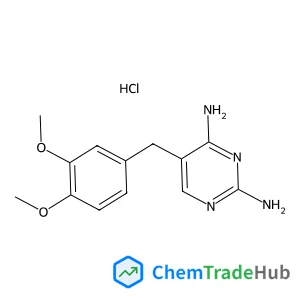
5-(3,4-Dimethoxybenzyl)-2,4-pyrimidinediamine hydrochloride (1:1)
CAS Number:
2507-23-5
Molecular Formula:
C13H17ClN4O2
Recommended Suppliers




Disclaimer
This page provides academic journal information for reference and research purposes only. We are not affiliated with any journal publishers and do not handle publication submissions. For publication-related inquiries, please contact the respective journal publishers directly.
If you notice any inaccuracies in the information displayed, please contact us at support@chemtradehub.com. We will promptly review and address your concerns.