


Rotational spectra of van der Waals complexes: pyrrole–Ne and pyrrole–Ne2
Literature Information
Publication Date
2020-10-26
DOI
10.1039/D0CP04580B
Impact Factor
3.676
Authors
Isabel Peña, Carlos Cabezas
View Original
Abstract
The van der Waals 1 : 1 and 1 : 2 adducts between the aromatic molecule pyrrole (Pyr) and the rare gas atom neon (Ne) have been investigated using a combination of chirped pulse Fourier transform microwave spectroscopy and quantum-chemical calculations. Rotational spectra of two and three isotopologues of Pyr–Ne and Pyr–Ne2, respectively, arising from the combinations of the 20Ne and 22Ne isotopes, were identified and a partial rs structure determined. Unusual spectral intensities have been observed with a significant enrichment of heavier isotopic species in the jet molecular expansion. The observed rotational constants of Pyr–Ne are consistent with a nearly symmetric prolate top with the Ne atom located above the plane of pyrrole. The trimer presents C2v symmetry with the Ne atoms located one on each side of the ring plane. The experimental 14N nuclear quadrupole coupling constants have been determined for all the isotopologues of Pyr–Ne and Pyr–Ne2 complexes. Similar values to those of isolated pyrrole have been found, which suggests that the electrical gradient field of pyrrole does not change much upon complexation. The observed spectroscopic parameters have been compared with those of other aromatic-rare gas complexes.
Recommended Journals

Electroanalysis

Heteroatom Chemistry

Critical Reviews in Solid State and Materials Sciences

Journal of Asian Natural Products Research

Polycyclic Aromatic Compounds

Atomization and Sprays

Colloid Journal

Bioorganic & Medicinal Chemistry Letters

Acta Metallurgica Sinica-English Letters

Bioorganic & Medicinal Chemistry
Related Literature
Quantification of the adhesion strength of fibroblastcells on ethylene glycol terminated self-assembled monolayers by a microfluidic shear force assay
Christof Christophis
2010-03-03
Paper
DOI: 10.1039/B924304F
Surface-enhanced IR–visible sum frequency generation vibrational spectroscopy
Qifeng Li, Chiung Wen Kuo, Zheng Yang, Peilin Chen, Keng C. Chou
2009-02-25
Paper
DOI: 10.1039/B821045D
Protein stability modulated by a conformational effector: effects of trifluoroethanol on bovine serum albumin
Rita Carrotta, Mauro Manno, Francesco Maria Giordano, Alessandro Longo, Giuseppe Portale, Vincenzo Martorana, Pier Luigi San Biagio
2009-03-05
Paper
DOI: 10.1039/B818687A
In situ investigation of molecular kinetics and particle formation of water-dispersible titania nanocrystals
G. Garnweitner, C. Grote
2009-04-02
Paper
DOI: 10.1039/B821973G
Thermally stable ordered mesoporous CeO2/TiO2 visible-light photocatalysts
Guisheng Li, Dieqing Zhang, Jimmy C. Yu
2009-02-25
Paper
DOI: 10.1039/B819167K
Shape control of iron oxide nanoparticles
Alexey Shavel, Luis M. Liz-Marzán
2009-03-03
Paper
DOI: 10.1039/B822733K
Linear viscoelasticity and thermorheological simplicity of n-hexadecane fluids under oscillatory shear via non-equilibrium molecular dynamics simulations
Huan-Chang Tseng, Jiann-Shing Wu, Rong-Yeu Chang
2010-03-09
Paper
DOI: 10.1039/B919672B
Ligand dynamics on the surface of zirconium oxo clusters
Philip Walther, Michael Puchberger, F. Rene Kogler, Karlheinz Schwarz, Ulrich Schubert
2009-03-26
Paper
DOI: 10.1039/B820731C
Influence of OHgroups on charge transport across organic–organic interfaces: a systematic approach employing an “ideal” device
Zhi-Hong Wang, Daniel Käfer, Asif Bashir, Jan Götzen, Alexander Birkner, Gregor Witte, Christof Wöll
2010-02-03
Paper
DOI: 10.1039/B924230A
You might also like
Compound Q&A
How should waste containing 2-Ethyl-4-Methyl-1H-Imidazole-5-Carbaldehyde (CAS: 88634-80-4) be handled?
Waste containing 2-Ethyl-4-Methyl-1H-Imidazole-5-Carbaldehyde (CAS: 88634-80-4) ...
88634-80-42-Ethyl-4-Methyl-1H-...
Compound Q&A
What industries use Triethoxy(octyl)silane (CAS: 1385031-14-0)?
Triethoxy(octyl)silane (CAS: 1385031-14-0) is widely used in the pharmaceuticals...
1385031-14-0Triethoxy(octyl)sila...
Compound Q&A
Are there alternatives to 3-iodo-7-nitro-1H-indazole (CAS: 864724-64-1) in synthesis?
Several alternatives to 3-iodo-7-nitro-1H-indazole (CAS: 864724-64-1) exist in t...
864724-64-13-iodo-7-nitro-1H-in...
Compound Q&A
Are there alternatives to Benzene, bis[(trimethoxysilyl)ethyl] (CAS: 266317-71-9) in synthesis?
Yes, there are alternatives to Benzene, bis[(trimethoxysilyl)ethyl] (CAS: 266317...
266317-71-9Benzene, bis[(trimet...
Compound Q&A
Is Isothiazole-3-carbonitrile (CAS: 1452-17-1) safe?
Isothiazole-3-carbonitrile (CAS: 1452-17-1) is generally considered safe when us...
1452-17-1Isothiazole-3-carbon...
Compound Q&A
Is (3-Chlorophenyl)methanol (CAS: 873-63-2) safe?
(3-Chlorophenyl)methanol (CAS: 873-63-2) is considered low to moderately toxic. ...
873-63-2(3-Chlorophenyl)meth...
Compound Q&A
How is (2S,3S)-2-Hydroxy-3-({[(2-methyl-2-propanyl)oxy]carbonyl}amino)-3-(2-naphthyl)propanoic acid (CAS: 959583-98-3) typically synthesized?
(2S,3S)-2-Hydroxy-3-({[(2-methyl-2-propanyl)oxy]carbonyl}amino)-3-(2-naphthyl)pr...
959583-98-3(2S,3S)-2-Hydroxy-3-...
Compound Q&A
What precautions should be taken when handling Methyl 2-(bromomethyl)-5-methoxybenzoate (CAS: 788081-99-2)?
Proper handling of methyl 2-(bromomethyl)-5-methoxybenzoate requires the use of ...
788081-99-2Methyl 2-(bromomethy...
Compound Q&A
What is 6,8-Dibromoimidazo[1,2-a]pyridine-2-carboxylic acid (CAS: 904805-36-3)?
6,8-Dibromoimidazo[1,2-a]pyridine-2-carboxylic acid (CAS: 904805-36-3) is an aro...
904805-36-36,8-Dibromoimidazo[1...
Compound Q&A
Is 3-Amino-5-bromo-2-pyridinecarbonitrile (CAS: 573675-27-1) safe?
3-Amino-5-bromo-2-pyridinecarbonitrile is considered safe when handled under pro...
573675-27-13-Amino-5-bromo-2-py...
Source Journal
Physical Chemistry Chemical Physics

CiteScore:
5.5
Self-citation Rate:
10.3%
Articles per Year:
3036
Physical Chemistry Chemical Physics (PCCP) is an international journal co-owned by 19 physical chemistry and physics societies from around the world. This journal publishes original, cutting-edge research in physical chemistry, chemical physics and biophysical chemistry. To be suitable for publication in PCCP, articles must include significant innovation and/or insight into physical chemistry; this is the most important criterion that reviewers and Editors will judge against when evaluating submissions. The journal has a broad scope and welcomes contributions spanning experiment, theory, computation and data science. Topical coverage includes spectroscopy, dynamics, kinetics, statistical mechanics, thermodynamics, electrochemistry, catalysis, surface science, quantum mechanics, quantum computing and machine learning. Interdisciplinary research areas such as polymers and soft matter, materials, nanoscience, energy, surfaces/interfaces, and biophysical chemistry are welcomed if they demonstrate significant innovation and/or insight into physical chemistry. Joined experimental/theoretical studies are particularly appreciated when complementary and based on up-to-date approaches.
Recommended Compounds
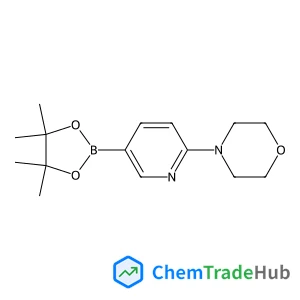
4-(5-(4,4,5,5-tetramethyl-1,3,2-dioxaborolan-2-yl)pyridin-2-yl)morpholine
CAS Number:
485799-04-0
Molecular Formula:
C15H23BN2O3
Recommended Suppliers






Disclaimer
This page provides academic journal information for reference and research purposes only. We are not affiliated with any journal publishers and do not handle publication submissions. For publication-related inquiries, please contact the respective journal publishers directly.
If you notice any inaccuracies in the information displayed, please contact us at support@chemtradehub.com. We will promptly review and address your concerns.