


Accurate equilibrium structure of 3-aminophthalimide from gas electron diffraction and coupled-cluster computations and diverse structural effects due to electron density transfer
Literature Information
Publication Date
2020-11-12
DOI
10.1039/D0CP04423G
Impact Factor
3.676
Authors
Nina I. Giricheva, Georgiy V. Girichev
View Original
Abstract
For the first time, the molecular structure of 3-aminophthalimide has been determined by the gas electron diffraction (GED) method supported by a mass-spectrometric analysis of the gas phase and results of quantum-chemical computations up to coupled-cluster level of theory, CCSD(T). The semiexperimental equilibrium structure, rsee, has been derived from the GED data by taking into account harmonic and anharmonic vibrational corrections estimated from the quantum-chemical force field (up to cubic terms). High accuracy structures have been exploited for the observation of fine structural effects arising due the presence of the electron-donating amino group and the formation of a hydrogen bond. Natural bond orbital (NBO) analysis and quantum theory of atoms in molecules (QTAIM) have been applied to explain these effects.
Recommended Journals

Russian Journal of Applied Chemistry

Acta Materialia

Drug Discovery Today

Chemical Communications

Journal of Saudi Chemical Society

Journal of Peptide Science

Current Opinion in Solid State & Materials Science

New Journal of Chemistry

Chemistry Education Research and Practice

Russian Journal of Organic Chemistry
Related Literature
Asymmetric multifunctional organocatalytic Michael addition of nitroalkanes to α,β-unsaturated ketones
Pengfei Li, Yongcan Wang, Jinxing Ye
2008-05-16
Communication
DOI: 10.1039/B804540B
Synthetic studies and biosynthetic speculation on marine alkaloid chartelline
Shigeo Kajii, Toshio Nishikawa, Minoru Isobe
2008-05-09
Communication
DOI: 10.1039/B803797C
G-quadruplex recognition by bis-indole carboxamides
Jyotirmayee Dash, Pravin S. Shirude, Shankar Balasubramanian
2008-06-05
Communication
DOI: 10.1039/B806042H
Novel neutral imidazole-lipophosphoramides for transfection assays
Mathieu Mével, Cécile Neveu, Cristine Gonçalves, Jean-Jacques Yaouanc, Chantal Pichon, Paul-Alain Jaffrès, Patrick Midoux
2008-06-16
Communication
DOI: 10.1039/B805226C
Light-fluorous safety-catch arylgermanes – exceptionally robust, photochemically activated precursors for biaryl synthesis by Pd(0) catalysed cross-coupling
Alan C. Spivey, Chih-Chung Tseng, Joseph P. Hannah, Christopher J. G. Gripton, Paul de Fraine, Nigel J. Parr, Jan J. Scicinski
2007-06-21
Communication
DOI: 10.1039/B707517K
Sulfonated N-heterocyclic carbenes for Suzuki coupling in water
Christoph Fleckenstein, Sutapa Roy, Steffen Leuthäußer, Herbert Plenio
2007-05-02
Communication
DOI: 10.1039/B703658B
The relationships between oxidase and synthase activities of flavin dependent thymidylate synthase (FDTS)
Anatoly Chernyshev, Todd Fleischmann, Eric M. Koehn, Scott A. Lesley, Amnon Kohen
2007-04-25
Communication
DOI: 10.1039/B700977A
A new molybdenum-oxide-based organic–inorganic hybrid framework templated by double-Keggin anions
Yang-Guang Li, Yong-Hui Wang, Xin-Long Wang, En-Bo Wang, Zhong-Min Su, Lin Xu
2007-04-11
Communication
DOI: 10.1039/B700511C
A multi-stage growth model leading to high-yield production of carbon nanotubes
Yajun Tian, Huaixin Yang, Shuanglin Zhan, Yunfa Chen
2008-05-16
Communication
DOI: 10.1039/B801966E
You might also like
Compound Q&A
Are there alternatives to 1-(4-Chlorophenyl)-N-hydroxymethanimine (CAS: 3848-36-0) in synthesis?
When considering alternatives to 1-(4-Chlorophenyl)-N-hydroxymethanimine (CAS: 3...
3848-36-01-(4-Chlorophenyl)-N...
Compound Q&A
How should (1R,9S,10S,12S,14E,16S,19R,20R,21S,22R)-3,9,21-Trihydroxy-5,10,12,14,16,20,22-heptamethyl-23,24-dioxatetracyclo[17.3.1.1~6,9~.0~2,7~]tetracosa-2,5,7,14-tetraen-4-one (CAS: 183202-73-5) be stored?
This compound should be stored in a cool, dry place away from direct sunlight. I...
183202-73-5(1R,9S,10S,12S,14E,1...
Compound Q&A
How is 3-(4-Bromophenyl)-5-(2-fluorophenyl)-1,2,4-oxadiazole (CAS: 419553-16-5) typically synthesized?
3-(4-Bromophenyl)-5-(2-fluorophenyl)-1,2,4-oxadiazole is synthesized through a m...
419553-16-53-(4-Bromophenyl)-5-...
Compound Q&A
How is 5-Chloro-2-(4-chlorophenyl)-4-methyl-6-[3-(1-piperidinyl)propoxy]pyrimidine (CAS: 1639220-19-1) typically synthesized?
5-Chloro-2-(4-chlorophenyl)-4-methyl-6-[3-(1-piperidinyl)propoxy]pyrimidine (CAS...
1639220-19-15-Chloro-2-(4-chloro...
Compound Q&A
What industries use 2-Chloro-4-(difluoromethoxy)pyridine (CAS: 1206978-15-5)?
2-Chloro-4-(difluoromethoxy)pyridine is used in the pharmaceutical industry for ...
1206978-15-52-Chloro-4-(difluoro...
Compound Q&A
What regulatory guidelines apply to 3-Chloro-6-methylpyridazine (CAS: 1121-79-5)?
3-Chloro-6-methylpyridazine (CAS: 1121-79-5) is classified under the Globally Ha...
1121-79-53-Chloro-6-methylpyr...
Compound Q&A
Are there alternatives to Methyl 4,5-dimethyl-2-nitrobenzoate in synthesis?
Several alternatives can be used in the synthesis of Methyl 4,5-dimethyl-2-nitro...
90922-74-0Methyl 4,5-dimethyl-...
Compound Q&A
Are there alternatives to (2E,2'E)-3,3'-(1,4-Phenylene)bisacrylaldehyde in synthesis?
Alternatives to (2E,2'E)-3,3'-(1,4-Phenylene)bisacrylaldehyde include other acry...
63405-68-5(2E,2'E)-3,3'-(1,4-P...
Compound Q&A
What is 3-Amino-5-chloropyridin-2-ol hydrochloride (CAS: 1261906-29-9)?
3-Amino-5-chloropyridin-2-ol hydrochloride is an organic compound with the CAS n...
1261906-29-93-Amino-5-chloropyri...
Compound Q&A
What precautions should be taken when handling 6,7-Difluoro-2,3-dihydro-4H-chromen-4-one (CAS: 1092349-93-3)?
When handling 6,7-Difluoro-2,3-dihydro-4H-chromen-4-one, it is essential to wear...
1092349-93-36,7-Difluoro-2,3-dih...
Source Journal
Physical Chemistry Chemical Physics

CiteScore:
5.5
Self-citation Rate:
10.3%
Articles per Year:
3036
Physical Chemistry Chemical Physics (PCCP) is an international journal co-owned by 19 physical chemistry and physics societies from around the world. This journal publishes original, cutting-edge research in physical chemistry, chemical physics and biophysical chemistry. To be suitable for publication in PCCP, articles must include significant innovation and/or insight into physical chemistry; this is the most important criterion that reviewers and Editors will judge against when evaluating submissions. The journal has a broad scope and welcomes contributions spanning experiment, theory, computation and data science. Topical coverage includes spectroscopy, dynamics, kinetics, statistical mechanics, thermodynamics, electrochemistry, catalysis, surface science, quantum mechanics, quantum computing and machine learning. Interdisciplinary research areas such as polymers and soft matter, materials, nanoscience, energy, surfaces/interfaces, and biophysical chemistry are welcomed if they demonstrate significant innovation and/or insight into physical chemistry. Joined experimental/theoretical studies are particularly appreciated when complementary and based on up-to-date approaches.
Recommended Compounds
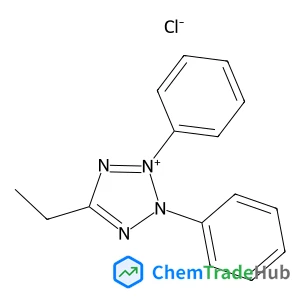


(E)-2-methyl-4-(4,4,5,5-tetramethyl-1,3,2-dioxaborolan-2-yl)but-3-en-2-ol
CAS Number:
581802-26-8
Molecular Formula:
C11H21BO3
Recommended Suppliers




Disclaimer
This page provides academic journal information for reference and research purposes only. We are not affiliated with any journal publishers and do not handle publication submissions. For publication-related inquiries, please contact the respective journal publishers directly.
If you notice any inaccuracies in the information displayed, please contact us at support@chemtradehub.com. We will promptly review and address your concerns.