












Self-assembled monolayers of polar molecules on Au(111) surfaces: distributing the dipoles
Literature Information
Publication Date
2010-02-25
DOI
10.1039/B924238B
Impact Factor
3.676
Authors
David A. Egger, Ferdinand Rissner, Gerold M. Rangger, Oliver T. Hofmann, Lukas Wittwer, Georg Heimel, Egbert Zojer
View Original
Abstract
Quantum-mechanical calculations are performed to investigate the interface between Au(111) surfaces and self-assembled monolayers (SAMs) of organic thiols. Dipolar pyrimidine units act as building blocks to systematically tune the molecular dipole moments via the number of repeat units. The resulting work-function modifications and the energetic alignment of the frontier electronic states in the SAM with the Fermi level are analyzed. Compared to SAMs where strong dipole moments are realized only by end-group substitutions on otherwise non-polar molecules, an entirely different evolution with backbone length is found for the present systems, where dipoles are built directly into the backbone. In particular, the achievable work-function modifications depend on peculiarities in the relative alignment of the energy levels in the SAM and in the metal. We thus introduce an additional degree of freedom for tuning surface and interface electronic properties with functional self-assembled monolayers.
Related Literature
Infrared multiple photon dissociation action spectroscopy of protonated glycine, histidine, lysine, and arginine complexed with 18-crown-6 ether
Christopher P. McNary, Y.-W. Nei, Philippe Maitre, M. T. Rodgers, P. B. Armentrout
2019-05-20
Paper
DOI: 10.1039/C9CP02265A
Triplet–triplet annihilation based photon up-conversion in hybrid molecule–semiconductor nanocrystal systems
Alessandra Ronchi, Paolo Brazzo, Mauro Sassi, Luca Beverina, Jacopo Pedrini, Francesco Meinardi, Angelo Monguzzi
2019-05-13
Paper
DOI: 10.1039/C9CP01692A
Elusive hypervalent phosphorus⋯π interactions: evidence for paradigm transformation from hydrogen to phosphorus bonding at low temperatures
P. K. Sruthi, Shubhra Sarkar, N. Ramanathan, K. Sundararajan
2019-05-14
Paper
DOI: 10.1039/C9CP01925A
Strategies for the analysis of the elemental metal fraction of Ir and Ru oxides via XRD, XANES, and EXAFS
Anita Hamar Reksten, Andrea E. Russell, Peter W. Richardson, Stephen J. Thompson, Karina Mathisen, Frode Seland, Svein Sunde
2019-05-25
Paper
DOI: 10.1039/C9CP01758E
Depletion of atmospheric organic trace gases due to their uptake by an ensemble of aqueous aerosols evolving via concurrent condensation and chemical aging
Yuri S. Djikaev, Eli Ruckenstein
2019-05-28
Paper
DOI: 10.1039/C9CP01386E
Dynamical fluxionality, multiplicity of structural forms, and electronic properties of the B3Si11 cluster: anion photoelectron spectroscopy and theoretical calculations
Sheng-Jie Lu, Li-Shun Wu, Bao-Hua Yin, Feng Lin, Ming-Yong Chao
2019-05-10
Paper
DOI: 10.1039/C9CP01752F
Effects and distribution of Zr introduced in Ni-based cathode material for Li-ion batteries
2019-05-23
Paper
DOI: 10.1039/C9CP01850F
Chemical equilibria of aqueous ammonium–carboxylate systems in aqueous bulk, close to and at the water–air interface
Yina Salamanca Blanco, Önder Topel, Éva G. Bajnóczi, Olle Björneholm, Ingmar Persson
2019-05-22
Paper
DOI: 10.1039/C9CP02449B
Structure and dynamics of gold nanoparticles decorated with chitosan–gentamicin conjugates: ReaxFF molecular dynamics simulations to disclose drug delivery
Susanna Monti, Jiya Jose, Athira Sahajan, Nandakumar Kalarikkal, Sabu Thomas
2019-05-30
Paper
DOI: 10.1039/C9CP02357G
Inelastic scattering dynamics of ortho and para hydronium ions, o-H3O+ and p-H3O+, with He at low temperature
Houda El Hanini, Faouzi Najar, Manel Naouai, Nejm-Eddine Jaidane
2019-05-07
Paper
DOI: 10.1039/C9CP01889A
You might also like
Compound Q&A
How should waste containing 2-Ethyl-4-Methyl-1H-Imidazole-5-Carbaldehyde (CAS: 88634-80-4) be handled?
Waste containing 2-Ethyl-4-Methyl-1H-Imidazole-5-Carbaldehyde (CAS: 88634-80-4) ...
88634-80-42-Ethyl-4-Methyl-1H-...
Compound Q&A
What industries use Triethoxy(octyl)silane (CAS: 1385031-14-0)?
Triethoxy(octyl)silane (CAS: 1385031-14-0) is widely used in the pharmaceuticals...
1385031-14-0Triethoxy(octyl)sila...
Compound Q&A
Are there alternatives to 3-iodo-7-nitro-1H-indazole (CAS: 864724-64-1) in synthesis?
Several alternatives to 3-iodo-7-nitro-1H-indazole (CAS: 864724-64-1) exist in t...
864724-64-13-iodo-7-nitro-1H-in...
Compound Q&A
Are there alternatives to Benzene, bis[(trimethoxysilyl)ethyl] (CAS: 266317-71-9) in synthesis?
Yes, there are alternatives to Benzene, bis[(trimethoxysilyl)ethyl] (CAS: 266317...
266317-71-9Benzene, bis[(trimet...
Compound Q&A
Is Isothiazole-3-carbonitrile (CAS: 1452-17-1) safe?
Isothiazole-3-carbonitrile (CAS: 1452-17-1) is generally considered safe when us...
1452-17-1Isothiazole-3-carbon...
Compound Q&A
Is (3-Chlorophenyl)methanol (CAS: 873-63-2) safe?
(3-Chlorophenyl)methanol (CAS: 873-63-2) is considered low to moderately toxic. ...
873-63-2(3-Chlorophenyl)meth...
Compound Q&A
How is (2S,3S)-2-Hydroxy-3-({[(2-methyl-2-propanyl)oxy]carbonyl}amino)-3-(2-naphthyl)propanoic acid (CAS: 959583-98-3) typically synthesized?
(2S,3S)-2-Hydroxy-3-({[(2-methyl-2-propanyl)oxy]carbonyl}amino)-3-(2-naphthyl)pr...
959583-98-3(2S,3S)-2-Hydroxy-3-...
Compound Q&A
What precautions should be taken when handling Methyl 2-(bromomethyl)-5-methoxybenzoate (CAS: 788081-99-2)?
Proper handling of methyl 2-(bromomethyl)-5-methoxybenzoate requires the use of ...
788081-99-2Methyl 2-(bromomethy...
Compound Q&A
What is 6,8-Dibromoimidazo[1,2-a]pyridine-2-carboxylic acid (CAS: 904805-36-3)?
6,8-Dibromoimidazo[1,2-a]pyridine-2-carboxylic acid (CAS: 904805-36-3) is an aro...
904805-36-36,8-Dibromoimidazo[1...
Compound Q&A
Is 3-Amino-5-bromo-2-pyridinecarbonitrile (CAS: 573675-27-1) safe?
3-Amino-5-bromo-2-pyridinecarbonitrile is considered safe when handled under pro...
573675-27-13-Amino-5-bromo-2-py...
Source Journal
Physical Chemistry Chemical Physics

CiteScore:
5.5
Self-citation Rate:
10.3%
Articles per Year:
3036
Physical Chemistry Chemical Physics (PCCP) is an international journal co-owned by 19 physical chemistry and physics societies from around the world. This journal publishes original, cutting-edge research in physical chemistry, chemical physics and biophysical chemistry. To be suitable for publication in PCCP, articles must include significant innovation and/or insight into physical chemistry; this is the most important criterion that reviewers and Editors will judge against when evaluating submissions. The journal has a broad scope and welcomes contributions spanning experiment, theory, computation and data science. Topical coverage includes spectroscopy, dynamics, kinetics, statistical mechanics, thermodynamics, electrochemistry, catalysis, surface science, quantum mechanics, quantum computing and machine learning. Interdisciplinary research areas such as polymers and soft matter, materials, nanoscience, energy, surfaces/interfaces, and biophysical chemistry are welcomed if they demonstrate significant innovation and/or insight into physical chemistry. Joined experimental/theoretical studies are particularly appreciated when complementary and based on up-to-date approaches.
Recommended Compounds

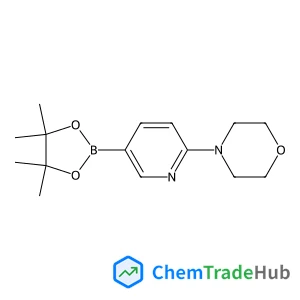
4-(5-(4,4,5,5-tetramethyl-1,3,2-dioxaborolan-2-yl)pyridin-2-yl)morpholine
CAS Number:
485799-04-0
Molecular Formula:
C15H23BN2O3
Recommended Suppliers





Disclaimer
This page provides academic journal information for reference and research purposes only. We are not affiliated with any journal publishers and do not handle publication submissions. For publication-related inquiries, please contact the respective journal publishers directly.
If you notice any inaccuracies in the information displayed, please contact us at support@chemtradehub.com. We will promptly review and address your concerns.