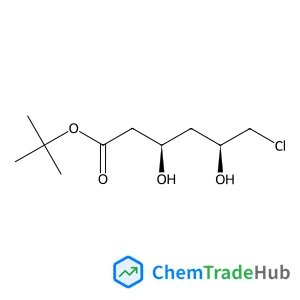
2-Methyl-2-propanyl (3R,5S)-6-chloro-3,5-dihydroxyhexanoate
CAS Number:
154026-93-4
Molecular Formula:
C10H19ClO4
Using the linear combination of atomic orbitals real-time-propagation rt-TDDFT technique (LCAO-rt-TDDFT) and transition contribution maps, we study the optical and plasmonic features of a metal nanoring (made up of sodium atoms) with respect to the modulation in the ring thickness from a sharp edge (one-atom-thick) to a flat edge (four-atoms-thick). The birth of the localized surface plasmon resonance was accessed by many factors including the number of contributing electron–hole transitions, the relative strengths of these contributions, and the nature of the induced charge density oscillation. We reveal that the occurrence of a large number of contributing electron–hole transitions to an absorption peak cannot be treated as an indicator of plasmonicity. Nonetheless, plasmonicity can be accessed from the transition contribution map (occurrence of many spots with strong contributions and distributed on a large domain of energy) and from the profile of the induced charge density. Our results are useful for designing ultra-small plasmonic devices based on metal nanorings as building blocks.
Susana Figueroa-Gerstenmaier, Simona Giudice, Luigi Cavallo, Giuseppe Milano
DOI: 10.1039/B900176J
Ilko Bald, Sigrid Weigelt, Xiaojing Ma, Pengyang Xie, Ramesh Subramani, Mingdong Dong, Chen Wang, Wael Mamdouh, Jianguo Wang, Flemming Besenbacher
DOI: 10.1039/B924098E
Miguel A. San-Miguel, P. Mark Rodger
DOI: 10.1039/B920945J
Iwona Olejniczak, Bolesław Barszcz, Anna Szutarska, Andrzej Graja, Roman Wojciechowski, John A. Schlueter, Aaron N. Hata, Brian H. Ward
DOI: 10.1039/B822253C
G. Garnweitner, C. Grote
DOI: 10.1039/B821973G
Patricio F. Provasi, Stephan P. A. Sauer
DOI: 10.1039/B819376B
Patrick Bultinck, David L. Cooper, Dimitri Van Neck
DOI: 10.1039/B821734C
Waste containing 2-Ethyl-4-Methyl-1H-Imidazole-5-Carbaldehyde (CAS: 88634-80-4) ...
Triethoxy(octyl)silane (CAS: 1385031-14-0) is widely used in the pharmaceuticals...
Several alternatives to 3-iodo-7-nitro-1H-indazole (CAS: 864724-64-1) exist in t...
Yes, there are alternatives to Benzene, bis[(trimethoxysilyl)ethyl] (CAS: 266317...
Isothiazole-3-carbonitrile (CAS: 1452-17-1) is generally considered safe when us...
(3-Chlorophenyl)methanol (CAS: 873-63-2) is considered low to moderately toxic. ...
(2S,3S)-2-Hydroxy-3-({[(2-methyl-2-propanyl)oxy]carbonyl}amino)-3-(2-naphthyl)pr...
Proper handling of methyl 2-(bromomethyl)-5-methoxybenzoate requires the use of ...
6,8-Dibromoimidazo[1,2-a]pyridine-2-carboxylic acid (CAS: 904805-36-3) is an aro...
3-Amino-5-bromo-2-pyridinecarbonitrile is considered safe when handled under pro...

Physical Chemistry Chemical Physics (PCCP) is an international journal co-owned by 19 physical chemistry and physics societies from around the world. This journal publishes original, cutting-edge research in physical chemistry, chemical physics and biophysical chemistry. To be suitable for publication in PCCP, articles must include significant innovation and/or insight into physical chemistry; this is the most important criterion that reviewers and Editors will judge against when evaluating submissions. The journal has a broad scope and welcomes contributions spanning experiment, theory, computation and data science. Topical coverage includes spectroscopy, dynamics, kinetics, statistical mechanics, thermodynamics, electrochemistry, catalysis, surface science, quantum mechanics, quantum computing and machine learning. Interdisciplinary research areas such as polymers and soft matter, materials, nanoscience, energy, surfaces/interfaces, and biophysical chemistry are welcomed if they demonstrate significant innovation and/or insight into physical chemistry. Joined experimental/theoretical studies are particularly appreciated when complementary and based on up-to-date approaches.