












S-Vacancy induced indirect-to-direct band gap transition in multilayer MoS2
Literature Information
Publication Date
2020-10-21
DOI
10.1039/D0CP04201C
Impact Factor
3.676
Authors
Bingyu Zhu, Junyu Lang
View Original
Abstract
Two-dimensional (2D) MoS2 has various potential applications due to its attractive band gap of 1.29–1.90 eV and unique photoelectric properties. Furthermore, it is well-known that multilayer and bulk MoS2 structures possess an indirect band gap. In this paper, however, our first-principles calculations demonstrated that the creation of S vacancies in the multilayer and bulk MoS2 structures can achieve indirect-to-direct band gap transition, leading to a decrease in the band gap energies from 0.984–1.542 eV to 0.629–0.971 eV. Although the generation of Mo vacancies cannot cause such indirect-to-direct band gap transition, the Mo vacancies also decrease the band gap energies of the multilayer and bulk MoS2 structures to 0.369–0.460 eV. Furthermore, the band gap energy of the vacancy-defected multilayer MoS2 decreases with the increasing number of layers. Optical properties are also remarkably affected by atomic vacancies, that is, the absorption edges in the defect structures of MoS2 present a redshift and significantly enhance the visible light absorption compared to the corresponding pristine structures. These findings provide a novel approach to tuning the electronic structure and dielectric properties of MoS2 for specific future applications.
Related Literature
Recent advances of hydrogels as smart dressings for diabetic wounds
Xu Wang, Yuhan Yang, Weifeng Zhao, Zhou Zhu, Xibo Pei
2024-01-11
Review Article
DOI: 10.1039/D3TB02355A
Electrochemical aminotrifluoromethylation of unactivated alkenes with Langlois’ reagent as the CF3 source
Tongshun An, Xiaowen Qin, Chenwei Liu, Weiheng Yuan, Tanyu Song, Zhiping Yin
2023-12-26
Paper
DOI: 10.1039/D3NJ04705A
Estimation and photocatalytic reduction of toxic chromium metal ions from environmental samples by zinc-based nanocomposite
Manviri Rani, Jyoti Yadav, Uma Shanker
2023-12-15
Paper
DOI: 10.1039/D3NJ04966C
Emerging disorder in Gd2(Ti1−xZrx)2O7 pyrochlores matrices for radioactive waste disposal: symmetry lowering versus defect clustering
Armando di Biase, Carlo Castellano, Giorgia Confalonieri, Patrizia Fumagalli, Simone Tumiati, Davide Ceresoli
2023-10-26
Paper
DOI: 10.1039/D3TA04847K
Natural ten-membered lactones: sources, structural diversity, biological activity, and intriguing future
Vsevolod Dubovik, Anna Dalinova, Alexander Berestetskiy
2023-10-27
Review Article
DOI: 10.1039/D3NP00013C
The preparation and performance evaluation of flame-retardant antistatic composites based on polyurethane
Zhaoshun Zhan, Qixing Shi, Lei Wang, Jinfeng Shen, Tianyou Bao, Lixin Li, Fanna Meng
2024-01-02
Paper
DOI: 10.1039/D3NJ04981G
A low cost Zn2+/I− redox active electrolyte for a high energy and long cycle-life zinc hybrid battery–capacitor
Balamurugan Selvaraj, Balaji Sambandam, Sungjin Kim, Vinod Mathew, Sehong Seo, Moonsu Song, Jaekook Kim
2023-11-01
Paper
DOI: 10.1039/D3TA03912A
You might also like
Compound Q&A
How should waste containing N-Methoxy-N-methyl-1,3-thiazole-5-carboxamide (CAS: 898825-89-3) be handled?
Waste containing N-Methoxy-N-methyl-1,3-thiazole-5-carboxamide (CAS: 898825-89-3...
898825-89-3N-Methoxy-N-methyl-1...
Compound Q&A
How should N-(4-Biphenylyl)dibenzo[b,d]furan-4-amine (CAS: 1318338-47-4) be stored?
N-(4-Biphenylyl)dibenzo[b,d]furan-4-amine should be stored in a tightly sealed c...
1318338-47-4N-(4-Biphenylyl)dibe...
Compound Q&A
What is the market or research trend for 3-Acetamido-5-amino-2,4,6-triiodobenzoic acid (CAS: 1713-07-1)?
The market for 3-Acetamido-5-amino-2,4,6-triiodobenzoic acid (CAS: 1713-07-1) is...
1713-07-13-Acetamido-5-amino-...
Compound Q&A
How should Benzyl 2-O-acetyl-3,4,6-tri-O-benzyl-beta-D-galactopyranoside (CAS: 61820-03-9) be stored?
Benzyl 2-O-acetyl-3,4,6-tri-O-benzyl-beta-D-galactopyranoside (CAS: 61820-03-9) ...
61820-03-9Benzyl 2-O-acetyl-3,...
Compound Q&A
What regulatory guidelines apply to 2-Ethylpiperazine dihydrochloride (CAS: 438050-52-3)?
2-Ethylpiperazine dihydrochloride (CAS: 438050-52-3) is regulated under the Glob...
438050-52-32-Ethylpiperazine di...
Compound Q&A
What regulatory guidelines apply to 1,1'-[1,3-Phenylenebis(methylene)]bis(3-methyl-1H-pyrrole-2,5-dione) (CAS: 119462-56-5)?
1,1'-[1,3-Phenylenebis(methylene)]bis(3-methyl-1H-pyrrole-2,5-dione) (CAS: 11946...
119462-56-51,1'-[1,3-Phenyleneb...
Compound Q&A
Are there alternatives to 5-Fluoro-2-(1-pyrrolidinyl)pyridine (CAS: 1287217-79-1) in synthesis?
Several alternatives can be used in the synthesis of 5-Fluoro-2-(1-pyrrolidinyl)...
1287217-79-15-Fluoro-2-(1-pyrrol...
Compound Q&A
What precautions should be taken when handling 1-((2R,3R,4R,5R)-5-((bis(4-methoxyphenyl)(phenyl)methoxy)methyl)-4-hydroxy-3-methoxytetrahydrofuran-2-yl)-5-methylpyrimidine-2,4(1H,3H)-dione (CAS: 153631-19-7)?
Proper personal protective equipment (PPE) must be worn when handling this compo...
153631-19-71-((2R,3R,4R,5R)-5-(...
Compound Q&A
What precautions should be taken when handling 6-Bromoimidazo[1,2-a]pyridin-8-amine (CAS: 676371-00-9)?
When handling 6-Bromoimidazo[1,2-a]pyridin-8-amine, it is important to wear appr...
676371-00-96-Bromoimidazo[1,2-a...
Compound Q&A
Are there alternatives to (2S,4R)-4-(4-Nitrobenzyl)pyrrolidine-2-carboxylic acid hydrochloride (CAS: 1049740-22-8) in synthesis?
Alternatives to (2S,4R)-4-(4-Nitrobenzyl)pyrrolidine-2-carboxylic acid hydrochlo...
1049740-22-8(2S,4R)-4-(4-Nitrobe...
Source Journal
Physical Chemistry Chemical Physics

CiteScore:
5.5
Self-citation Rate:
10.3%
Articles per Year:
3036
Physical Chemistry Chemical Physics (PCCP) is an international journal co-owned by 19 physical chemistry and physics societies from around the world. This journal publishes original, cutting-edge research in physical chemistry, chemical physics and biophysical chemistry. To be suitable for publication in PCCP, articles must include significant innovation and/or insight into physical chemistry; this is the most important criterion that reviewers and Editors will judge against when evaluating submissions. The journal has a broad scope and welcomes contributions spanning experiment, theory, computation and data science. Topical coverage includes spectroscopy, dynamics, kinetics, statistical mechanics, thermodynamics, electrochemistry, catalysis, surface science, quantum mechanics, quantum computing and machine learning. Interdisciplinary research areas such as polymers and soft matter, materials, nanoscience, energy, surfaces/interfaces, and biophysical chemistry are welcomed if they demonstrate significant innovation and/or insight into physical chemistry. Joined experimental/theoretical studies are particularly appreciated when complementary and based on up-to-date approaches.
Recommended Compounds
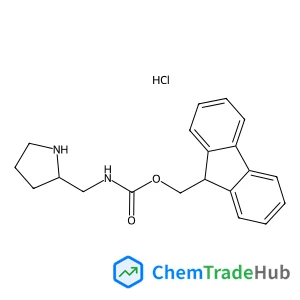
(S)-(9H-Fluoren-9-yl)methyl (pyrrolidin-2-ylmethyl)carbamate hydrochloride
CAS Number:
1217813-15-4
Molecular Formula:
C20H23ClN2O2

Recommended Suppliers







Disclaimer
This page provides academic journal information for reference and research purposes only. We are not affiliated with any journal publishers and do not handle publication submissions. For publication-related inquiries, please contact the respective journal publishers directly.
If you notice any inaccuracies in the information displayed, please contact us at support@chemtradehub.com. We will promptly review and address your concerns.