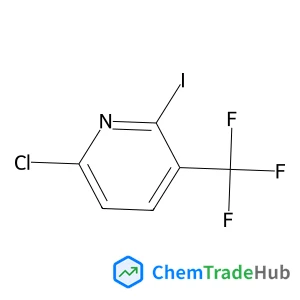
![[5-fluoro-2-(morpholine-4-carbonyl)phenyl]boronic acid structure](https://static.chemtradehub.com/structs/121/1217501-26-2-505c.webp "[5-fluoro-2-(morpholine-4-carbonyl)phenyl]boronic acid structure")
[5-fluoro-2-(morpholine-4-carbonyl)phenyl]boronic acid
CAS Number:
1217501-26-2
Molecular Formula:
C11H13BFNO4
Manviri Rani, Jyoti Yadav, Uma Shanker
Hexavalent chromium (Cr(VI)) is a major water pollutant and suspected carcinogen with high persistence. Therefore, advanced and fast processes based on low-cost and highly proficient nanomaterials are required for its reduction. Ecological concern about this emerging contaminant calls for low-cost and efficient removal practices. Recently, doped or coupled nanomaterials with advanced characteristics have fascinated researchers. Therefore, we have synthesized a crystalline ZnO@ZnHCC nanocomposite using a plant extract of A. indica and subsequently used it for the reduction of Cr(VI). The reduction of Cr(VI) in simulated water (94%) and soil (86%) samples was then accomplished using the nanocomposite. Diffusion is slowed when the organic matter in soil and sediment interacts with Cr(VI), which may explain why these contaminants degrade more slowly. Under sunlight, a rapid initial exponential decrease in the concentration of Cr(VI) over time revealed the high photoactivity of doped ZnO@ZnHCC because of its remarkably improved surface area (118.15 m2 g−1) and bandgap energy (1.7 eV). At the optimum catalyst dose (25 mg) and neutral pH, photoreduction of Cr(VI) followed first-order kinetics and Langmuir adsorption isotherms. Moreover, the t1/2 value of Cr(VI) (0.9 h) was reduced greatly compared to that of ZnO (t1/2 = 1.3 h) and ZnHCC (t1/2 = 1.1 h) nanoparticles. The photocatalytic reduction was probed using radical-scavenger analysis. A charge separation mechanism was supported by photoluminescence and UV reflectance studies. Overall, due to its greater surface activity, stability, reusability for up to ten cycles, and charge separation (e−/h+ pairs), which led to the promotion of large amounts of charge carriers, ZnO@ZnHCC might be expected to represent a promising photocatalyst for industrial applications with a bright future. To summarize, the ZnO@ZnHCC nanocomposite is believed to be a promising photocatalyst for environmental protection by virtue of its greater amount of active sites, high surface activity, low bandgap with charge separation, and semiconducting nature.
Ainhoa Oliden-Sánchez, Rebeca Sola-Llano, Joaquín Pérez-Pariente, Luis Gómez-Hortigüela, Virginia Martínez-Martínez
DOI: 10.1039/D3CP02625F
Qifeng Mu, Jian Hu
DOI: 10.1039/D3CP04160C
Robert Tirawat, Mengjin Yang, Severin N. Habisreutinger, Soňa Uličná, Ross A. Kerner, Kai Zhu, Laura T. Schelhas, Axel F. Palmstrom
DOI: 10.1039/D3SE01268A
Bayram Deviren, Seyma Akkaya Deviren, Tevfik Fikret Yagmuroglu
DOI: 10.1039/D3CP04785G
Hao Jiang, Ulf Ryde
DOI: 10.1039/D3CP05181A
Siqi Wang, Mingmin Zhong, Haibo Liu, Meng Ju
DOI: 10.1039/D3CP03678B
Miaomiao Zhang, Cunyuan Pei, Qiqi Xiang, Lintao Liu, Zhongxu Dai, Huijuan Ma, Shibing Ni
DOI: 10.1039/D3CP04952C
Meng Xia, Xinyao Liu, Zhaorong Shang, Fuqiang Fan
DOI: 10.1039/D3CP03879C
Yi-Rong Liu, Yan Jiang
DOI: 10.1039/D3CP04702D
Waste containing N-Methoxy-N-methyl-1,3-thiazole-5-carboxamide (CAS: 898825-89-3...
N-(4-Biphenylyl)dibenzo[b,d]furan-4-amine should be stored in a tightly sealed c...
The market for 3-Acetamido-5-amino-2,4,6-triiodobenzoic acid (CAS: 1713-07-1) is...
Benzyl 2-O-acetyl-3,4,6-tri-O-benzyl-beta-D-galactopyranoside (CAS: 61820-03-9) ...
2-Ethylpiperazine dihydrochloride (CAS: 438050-52-3) is regulated under the Glob...
1,1'-[1,3-Phenylenebis(methylene)]bis(3-methyl-1H-pyrrole-2,5-dione) (CAS: 11946...
Several alternatives can be used in the synthesis of 5-Fluoro-2-(1-pyrrolidinyl)...
Proper personal protective equipment (PPE) must be worn when handling this compo...
When handling 6-Bromoimidazo[1,2-a]pyridin-8-amine, it is important to wear appr...
Alternatives to (2S,4R)-4-(4-Nitrobenzyl)pyrrolidine-2-carboxylic acid hydrochlo...

NJC (New Journal of Chemistry) is a broad-based primary journal encompassing all branches of chemistry and its sub-disciplines. It contains full research articles, communications, perspectives and focus articles. This well-established journal, owned by the Centre National de la Recherche Scientifique (CNRS) of France, has been co-published with the Royal Society of Chemistry since January 1998. NJC is the forum for the publication of high-quality, original and significant work that opens new directions in chemistry or other scientific disciplines. In addition to having a significant chemical component, work published in NJC must demonstrate that it will have an impact on areas of research other than that of the reported work.

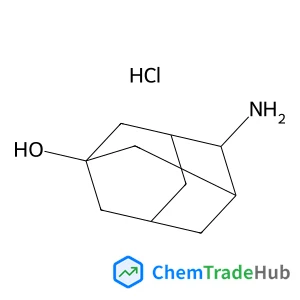
![tert-Butyl 6-chloro-4-oxospiro[chroman-2,4'-piperidine]-1'-carboxylate structure](https://static.chemtradehub.com/structs/101/1011482-37-3-88a5.webp "tert-Butyl 6-chloro-4-oxospiro[chroman-2,4'-piperidine]-1'-carboxylate structure")