












Surface chemistry effects on work function, ionization potential and electronic affinity of Si(100), Ge(100) surfaces and SiGe heterostructures
Literature Information
Publication Date
2020-10-30
DOI
10.1039/D0CP04013D
Impact Factor
3.676
Authors
Michele Amato, Matteo Bertocchi, Andrea Ferretti, Daniele Varsano
View Original
Abstract
We combine density functional theory and many body perturbation theory to investigate the electronic properties of Si(100) and Ge(100) surfaces terminated with halogen atoms (–I, –Br, –Cl, –F) and other chemical functionalizations (–H, –OH, –CH3) addressing the absolute values of their work function, electronic affinity and ionization potential. Our results point out that electronic properties of functionalized surfaces strongly depend on the chemisorbed species and much less on the surface crystal orientation. The presence of halogens at the surface always leads to an increment of the work function, ionization potential and electronic affinity with respect to fully hydrogenated surfaces. On the contrary, the presence of polar –OH and –CH3 groups at the surface leads to a reduction of the aforementioned quantities with respect to the H-terminated system. Starting from the work functions calculated for the Si and Ge passivated surfaces, we apply a simple model to estimate the properties of functionalized SiGe surfaces. The possibility of modulating the work function by changing the chemisorbed species and composition is predicted. The effects induced by different terminations on the band energy line-up profile of SiGe surfaces are then analyzed. Interestingly, our calculations predict a type-II band offset for the H-terminated systems and a type-I band offset for the other cases.
Related Literature
Spectral relative standard deviation: a practical benchmark in metabolomics
Helen M. Parsons, Drew R. Ekman, Timothy W. Collette
2008-12-02
Paper
DOI: 10.1039/B808986H
Imaging mass spectrometry using chemical inkjet printing reveals differential protein expression in human oral squamous cell carcinoma
Soyab A. Patel, Alan Barnes, Neil Loftus, Rachel Martin, Philip Sloan, Nalin Thakker, Royston Goodacre
2008-10-22
Paper
DOI: 10.1039/B812533C
Gold nanoparticle-based immunoassay by using non-stripping chemiluminescence detection
Chun-Feng Duan, Yu-Qi Yu, Hua Cui
2008-07-28
Paper
DOI: 10.1039/B807163B
Detection of pathological aortic tissues by infrared multispectral imaging and chemometrics
F. Bonnier, D. Bertrand, L. Ventéo, M. Pluot, B. Baehrel, M. Manfait, G. D. Sockalingum
2008-03-13
Paper
DOI: 10.1039/B717164A
Integrated strong cation exchange/capillary reversed-phase liquid chromatography/on-target digestion coupled with mass spectrometry for identification of intact human liver tissue proteins‡
Mingxia Gao, Wenjia Yu, Yang Zhang, Guoquan Yan, Chunhui Deng, Xiangmin Zhang
2008-07-30
Paper
DOI: 10.1039/B803388A
Electronic integrated multisensor tongue applied to grape juice and wine analysis
Lia Moreno i Codinachs, Antoni Baldi, Andrey Ipatov, Andrey Bratov, Cecilia Jiménez-Jorquera
2008-07-25
Paper
DOI: 10.1039/B801228H
Plasmon-controlled fluorescence: a new paradigm in fluorescence spectroscopy
Joseph R. Lakowicz, Krishanu Ray, Mustafa Chowdhury, Henryk Szmacinski, Yi Fu, Jian Zhang, Kazimierz Nowaczyk
2008-07-16
Critical Review
DOI: 10.1039/B802918K
Preparation and characterization of silica confined ionic liquids as chromatographic stationary phases through surface radical chain-transfer reaction
Hongdeng Qiu, Licheng Wang, Xia Liu, Shengxiang Jiang
2008-11-27
Paper
DOI: 10.1039/B809125K
Sequence-specific electrochemical detection of Alicyclobacillus acidoterrestrisDNA using electroconductive polymer-modified fluorine tin oxide electrodes
Katlin Ivon Barrios Eguiluz, Giancarlo Richard Salazar-Banda, Maribel Elizabeth Funes-Huacca, Juliana Vieira Alberice, Emanuel Carrilho, Sergio Antonio Spinola Machado, Luis Alberto Avaca
2008-10-29
Paper
DOI: 10.1039/B809080G
You might also like
Compound Q&A
Are there alternatives to 1-(4-Chlorophenyl)-N-hydroxymethanimine (CAS: 3848-36-0) in synthesis?
When considering alternatives to 1-(4-Chlorophenyl)-N-hydroxymethanimine (CAS: 3...
3848-36-01-(4-Chlorophenyl)-N...
Compound Q&A
How should (1R,9S,10S,12S,14E,16S,19R,20R,21S,22R)-3,9,21-Trihydroxy-5,10,12,14,16,20,22-heptamethyl-23,24-dioxatetracyclo[17.3.1.1~6,9~.0~2,7~]tetracosa-2,5,7,14-tetraen-4-one (CAS: 183202-73-5) be stored?
This compound should be stored in a cool, dry place away from direct sunlight. I...
183202-73-5(1R,9S,10S,12S,14E,1...
Compound Q&A
How is 3-(4-Bromophenyl)-5-(2-fluorophenyl)-1,2,4-oxadiazole (CAS: 419553-16-5) typically synthesized?
3-(4-Bromophenyl)-5-(2-fluorophenyl)-1,2,4-oxadiazole is synthesized through a m...
419553-16-53-(4-Bromophenyl)-5-...
Compound Q&A
How is 5-Chloro-2-(4-chlorophenyl)-4-methyl-6-[3-(1-piperidinyl)propoxy]pyrimidine (CAS: 1639220-19-1) typically synthesized?
5-Chloro-2-(4-chlorophenyl)-4-methyl-6-[3-(1-piperidinyl)propoxy]pyrimidine (CAS...
1639220-19-15-Chloro-2-(4-chloro...
Compound Q&A
What industries use 2-Chloro-4-(difluoromethoxy)pyridine (CAS: 1206978-15-5)?
2-Chloro-4-(difluoromethoxy)pyridine is used in the pharmaceutical industry for ...
1206978-15-52-Chloro-4-(difluoro...
Compound Q&A
What regulatory guidelines apply to 3-Chloro-6-methylpyridazine (CAS: 1121-79-5)?
3-Chloro-6-methylpyridazine (CAS: 1121-79-5) is classified under the Globally Ha...
1121-79-53-Chloro-6-methylpyr...
Compound Q&A
Are there alternatives to Methyl 4,5-dimethyl-2-nitrobenzoate in synthesis?
Several alternatives can be used in the synthesis of Methyl 4,5-dimethyl-2-nitro...
90922-74-0Methyl 4,5-dimethyl-...
Compound Q&A
Are there alternatives to (2E,2'E)-3,3'-(1,4-Phenylene)bisacrylaldehyde in synthesis?
Alternatives to (2E,2'E)-3,3'-(1,4-Phenylene)bisacrylaldehyde include other acry...
63405-68-5(2E,2'E)-3,3'-(1,4-P...
Compound Q&A
What is 3-Amino-5-chloropyridin-2-ol hydrochloride (CAS: 1261906-29-9)?
3-Amino-5-chloropyridin-2-ol hydrochloride is an organic compound with the CAS n...
1261906-29-93-Amino-5-chloropyri...
Compound Q&A
What precautions should be taken when handling 6,7-Difluoro-2,3-dihydro-4H-chromen-4-one (CAS: 1092349-93-3)?
When handling 6,7-Difluoro-2,3-dihydro-4H-chromen-4-one, it is essential to wear...
1092349-93-36,7-Difluoro-2,3-dih...
Source Journal
Physical Chemistry Chemical Physics

CiteScore:
5.5
Self-citation Rate:
10.3%
Articles per Year:
3036
Physical Chemistry Chemical Physics (PCCP) is an international journal co-owned by 19 physical chemistry and physics societies from around the world. This journal publishes original, cutting-edge research in physical chemistry, chemical physics and biophysical chemistry. To be suitable for publication in PCCP, articles must include significant innovation and/or insight into physical chemistry; this is the most important criterion that reviewers and Editors will judge against when evaluating submissions. The journal has a broad scope and welcomes contributions spanning experiment, theory, computation and data science. Topical coverage includes spectroscopy, dynamics, kinetics, statistical mechanics, thermodynamics, electrochemistry, catalysis, surface science, quantum mechanics, quantum computing and machine learning. Interdisciplinary research areas such as polymers and soft matter, materials, nanoscience, energy, surfaces/interfaces, and biophysical chemistry are welcomed if they demonstrate significant innovation and/or insight into physical chemistry. Joined experimental/theoretical studies are particularly appreciated when complementary and based on up-to-date approaches.
Recommended Compounds
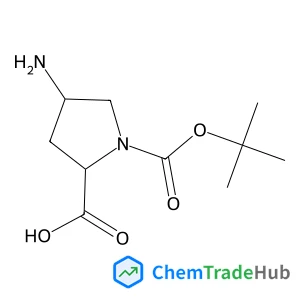
(2R,4R)-1-Boc-4-Aminopyrrolidine-2-carboxylic acid
CAS Number:
132622-98-1
Molecular Formula:
C10H18N2O4

tert-Butyl 4-(2-(p-Tolylsulfonyl)hydrazono)piperidine-1-carboxylate
CAS Number:
1046478-89-0
Molecular Formula:
C17H25N3O4S
Recommended Suppliers




Disclaimer
This page provides academic journal information for reference and research purposes only. We are not affiliated with any journal publishers and do not handle publication submissions. For publication-related inquiries, please contact the respective journal publishers directly.
If you notice any inaccuracies in the information displayed, please contact us at support@chemtradehub.com. We will promptly review and address your concerns.