












End-capped group manipulation of non-fullerene acceptors for efficient organic photovoltaic solar cells: a DFT study
Literature Information
Publication Date
2020-09-25
DOI
10.1039/D0CP03814H
Impact Factor
3.676
Authors
Shahnaz Ahmed, Dhruba Jyoti Kalita
View Original
Abstract
A series of acceptors, S1–S5, has been designed based on the acceptor–π–donor–π–acceptor (A–π–D–π–A) architecture by incorporating a phenothiazine unit as the central donor unit. Density functional theory (DFT) and time-dependent density functional theory (TD-DFT) methods have been employed to study the effect of various end-capped groups on the geometric, electronic, optical and charge transport properties of the designed acceptor molecules. The results reveal that on increasing the electron-withdrawing nature of the end-capped groups, the performance of the acceptor molecules increases. It is also observed that on increasing the flexibility of the end-capped groups, the planarity of the molecules gets destroyed and, as a result, the performance of the acceptor molecules decreases. The investigated molecules exhibit high electron affinity (EA) and low reorganization energy for electrons (λ−), indicating the electron acceptor nature of the designed molecules. The absorption properties of the molecules manifest that compounds S2–S4 possess high values of the maximum wavelength (λmax) of absorption. We have also studied the properties of a D/A active layer by considering PffBT4T-2OD as the electron donor and arranging PffBT4T-2OD/S1–S5 molecules in a face to face manner. Properties of the D/A blend indicate that molecules S2–S4 have capacity to promote charge carrier separation at the D/A active layer. Our results provide guidelines for further designing of acceptors to enhance the performance of organic solar cells (OSCs).
Related Literature
Switchover from singlet oxygen to superoxide radical through a photoinduced two-step sequential energy transfer process
Shengsheng Yu, Rong-Xin Zhu, Kai-Kai Niu, Ning Han, Hui Liu, Ling-Bao Xing
2024-01-05
Edge Article
DOI: 10.1039/D3SC05820D
A triad molecular conductor: simultaneous control of charge and molecular arrangements
Naoya Kinoshita, Atsuya Maruyama
2023-10-10
Communication
DOI: 10.1039/D3CC03198E
Transient absorption spectroscopy reveals that slow bimolecular recombination in SrTiO3 underpins its efficient photocatalytic performance
Anna A. Wilson, Lucy Hart, Thomas Shalvey, Michael Sachs, Weidong Xu, Benjamin Moss, Eva Mazzolini, Asim Mumtaz
2023-10-25
Communication
DOI: 10.1039/D3CC04616H
Strengthening Pt/WOx interfacial interactions to increase the CO tolerance of Pt for hydrogen oxidation reaction
Lin Guo, Jinyu Zheng
2023-10-09
Communication
DOI: 10.1039/D3CC03990K
Total biosynthesis of fungal tetraketide pyrones
Yunlong Sun, Dongsong Tian, Eric Kuhnert, Geraldine Le Goff, Guillaume Arcile, Jamal Ouazzani, Russell J. Cox
2023-10-23
Communication
DOI: 10.1039/D3CC04758J
A new dual functional H2S donor for fluorescence imaging and anti-inflammatory application
Shumei Huang, Zejun Li, Wenhui You, Guansheng Zheng, Huatang Zhang, Yin Jiang
2023-10-24
Communication
DOI: 10.1039/D3CC03881E
Carborane-based heteromolecular extended networks driven by directional C–Te⋯N chalcogen bonding interactions
Maxime Beau, Olivier Jeannin, Marc Fourmigué, Emmanuel Aubert, Enrique Espinosa, Sunhee Lee, Won-Sik Han, Ie-Rang Jeon
2023-10-17
Communication
DOI: 10.1039/D3CC04338J
You might also like
Compound Q&A
What are the main uses of (5-Sulfamoyl-3-pyridinyl)boronic acid (CAS: 951233-61-7)?
(5-Sulfamoyl-3-pyridinyl)boronic acid is primarily used in chemical synthesis, p...
951233-61-7(5-Sulfamoyl-3-pyrid...
Compound Q&A
How is Benzyl 2-methyl-2-(methylsulfonyl)-4-pentenoate (CAS: 1942858-50-5) typically synthesized?
Benzyl 2-methyl-2-(methylsulfonyl)-4-pentenoate is typically synthesized via est...
1942858-50-5Benzyl 2-methyl-2-(m...
Compound Q&A
What precautions should be taken when handling 8-Fluoroquinolin-6-ol (CAS: 209353-22-0)?
When handling 8-Fluoroquinolin-6-ol (CAS: 209353-22-0), it is important to use p...
209353-22-08-Fluoroquinolin-6-o...
Compound Q&A
What are the physical and chemical properties of 1,3-Dibromo-5-(2-methyl-2-propanyl)benzene (CAS: 129316-09-2)?
1,3-Dibromo-5-(2-methyl-2-propanyl)benzene (CAS: 129316-09-2) is a crystalline c...
129316-09-21,3-Dibromo-5-(2-met...
Compound Q&A
What industries use Ethyl 7-chloro-4-oxo-1-(1,3-thiazol-2-yl)-1,4-dihydro-1,8-naphthyridine-3-carboxylate (CAS: 174726-87-5)?
Ethyl 7-chloro-4-oxo-1-(1,3-thiazol-2-yl)-1,4-dihydro-1,8-naphthyridine-3-carbox...
174726-87-5Ethyl 7-chloro-4-oxo...
Compound Q&A
What precautions should be taken when handling Delta-7-Avenasterol (CAS: 23290-26-8)?
When handling Delta-7-Avenasterol (CAS: 23290-26-8), it is important to wear app...
23290-26-8Delta-7-Avenasterol
Compound Q&A
What precautions should be taken when handling N-({(5R)-3-[3-Fluoro-4-(4-morpholinyl)phenyl]-2-oxo-1,3-oxazolidin-5-yl}methyl)acetamide (CAS: 872992-20-6)?
Proper handling involves the use of personal protective equipment such as gloves...
872992-20-6N-({(5R)-3-[3-Fluoro...
Compound Q&A
What precautions should be taken when handling 2-Methyl-2-proanyl 4-[(2-aminophenyl)amino]-1-piperidinecarboxylate (CAS: 79099-00-6)?
When handling 2-Methyl-2-proanyl 4-[(2-aminophenyl)amino]-1-piperidinecarboxylat...
79099-00-62-Methyl-2-propanyl ...
Compound Q&A
What is N-Methyl-4-chlorobenzylamine hydrochloride (CAS: 65542-24-7)?
N-Methyl-4-chlorobenzylamine hydrochloride (CAS: 65542-24-7) is a organic compou...
65542-24-7N-Methyl-4-chloroben...
Compound Q&A
Is [2-(Dodecyloxy)ethoxy]acetic acid (CAS: 27306-90-7) safe?
[2-(Dodecyloxy)ethoxy]acetic acid (CAS: 27306-90-7) is generally considered safe...
27306-90-7[2-(Dodecyloxy)ethox...
Source Journal
Physical Chemistry Chemical Physics

CiteScore:
5.5
Self-citation Rate:
10.3%
Articles per Year:
3036
Physical Chemistry Chemical Physics (PCCP) is an international journal co-owned by 19 physical chemistry and physics societies from around the world. This journal publishes original, cutting-edge research in physical chemistry, chemical physics and biophysical chemistry. To be suitable for publication in PCCP, articles must include significant innovation and/or insight into physical chemistry; this is the most important criterion that reviewers and Editors will judge against when evaluating submissions. The journal has a broad scope and welcomes contributions spanning experiment, theory, computation and data science. Topical coverage includes spectroscopy, dynamics, kinetics, statistical mechanics, thermodynamics, electrochemistry, catalysis, surface science, quantum mechanics, quantum computing and machine learning. Interdisciplinary research areas such as polymers and soft matter, materials, nanoscience, energy, surfaces/interfaces, and biophysical chemistry are welcomed if they demonstrate significant innovation and/or insight into physical chemistry. Joined experimental/theoretical studies are particularly appreciated when complementary and based on up-to-date approaches.
Recommended Compounds
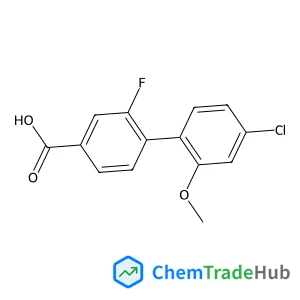
4-(4-Chloro-2-methoxyphenyl)-3-fluorobenzoic acid
CAS Number:
1261970-23-3
Molecular Formula:
C14H10ClFO3
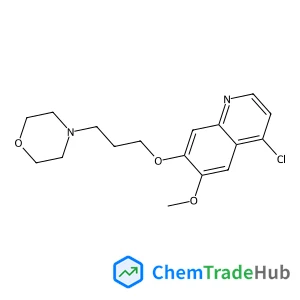
4-(3-((4-Chloro-6-methoxyquinolin-7-yl)oxy)propyl)morpholine
CAS Number:
205448-32-4
Molecular Formula:
C17H21ClN2O3
Recommended Suppliers




Disclaimer
This page provides academic journal information for reference and research purposes only. We are not affiliated with any journal publishers and do not handle publication submissions. For publication-related inquiries, please contact the respective journal publishers directly.
If you notice any inaccuracies in the information displayed, please contact us at support@chemtradehub.com. We will promptly review and address your concerns.