












Photothermal structural modification of porous gold nanoshells via pulsed-laser irradiation: effects of laser wavelengths and surface conditions
Literature Information
Publication Date
2020-10-12
DOI
10.1039/D0CP03734F
Impact Factor
3.676
Authors
Tae-Hyeon Park, Dong-Won Jeong, Du-Jeon Jang
View Original
Abstract
Pulsed lasers are promising candidates for fabricating plasmonic nanoparticles having unique structures, and there is a strong need for studies on the detailed effects of various experimental conditions on laser-induced fabrications. In this work, we demonstrate the effects of laser wavelengths and nanoparticle surface conditions, as well as laser fluences, in the structural modification of porous gold nanoshells induced by picosecond pulse irradiation. Laser wavelengths play a critical role in the modification because irradiating laser pulses excite not only porous gold nanoshells but also gold nanospheres, which have been produced via the melting of irradiated porous gold nanoshells. Significantly different localized surface plasmon resonances of gold nanospheres and porous gold nanoshells make the effect of laser wavelengths noticeable. The polyvinylpyrrolidone (PVP) concentration of colloid containing porous gold nanoshells also modifies the deformation of the structures. Gold nanostructures become positively charged by the irradiation, strengthening gold–PVP attraction. The stronger binding affinity of PVP is considered to reduce the deformation of irradiated porous gold nanoshells.
Related Literature
Oriented growth of the functionalized metal–organic framework CAU-1 on –OH- and –COOH-terminated self-assembled monolayers
Florian Hinterholzinger, Camilla Scherb, Tim Ahnfeldt, Norbert Stock, Thomas Bein
2010-04-13
Paper
DOI: 10.1039/B924657F
Templates for wax deposition?
Miguel A. San-Miguel, P. Mark Rodger
2010-02-24
Paper
DOI: 10.1039/B920945J
Shape control of iron oxide nanoparticles
Alexey Shavel, Luis M. Liz-Marzán
2009-03-03
Paper
DOI: 10.1039/B822733K
Heterogeneous films of ordered CeO2/Ni concentric nanostructures for fuelcell applications
Chunjuan Zhang, Jessica Grandner, Ran Liu, Bryan W. Eichhorn
2009-12-01
Paper
DOI: 10.1039/B918587A
Spectral shifts of matrix isolated species as criteria for acid–base interactions with solid Xe
Mark Rozenberg, Aharon Loewenschuss, Claus Jørgen Nielsen
2010-03-12
Paper
DOI: 10.1039/B922952C
A molecular model for H2 interactions in aliphatic and aromatic hydrocarbons
Susana Figueroa-Gerstenmaier, Simona Giudice, Luigi Cavallo, Giuseppe Milano
2009-04-17
Paper
DOI: 10.1039/B900176J
Computer simulations of micelle fission
Juanjuan Gao, Shuangyang Li, Xianren Zhang, Wenchuan Wang
2010-02-11
Paper
DOI: 10.1039/B918449J
Observation of oscillatory behavior during the dissolution of a pharmaceutical compound and evidence for the existence of an inverse Ostwald rule
2010-02-23
Paper
DOI: 10.1039/B917966F
You might also like
Compound Q&A
How should waste containing 2-Ethyl-4-Methyl-1H-Imidazole-5-Carbaldehyde (CAS: 88634-80-4) be handled?
Waste containing 2-Ethyl-4-Methyl-1H-Imidazole-5-Carbaldehyde (CAS: 88634-80-4) ...
88634-80-42-Ethyl-4-Methyl-1H-...
Compound Q&A
What industries use Triethoxy(octyl)silane (CAS: 1385031-14-0)?
Triethoxy(octyl)silane (CAS: 1385031-14-0) is widely used in the pharmaceuticals...
1385031-14-0Triethoxy(octyl)sila...
Compound Q&A
Are there alternatives to 3-iodo-7-nitro-1H-indazole (CAS: 864724-64-1) in synthesis?
Several alternatives to 3-iodo-7-nitro-1H-indazole (CAS: 864724-64-1) exist in t...
864724-64-13-iodo-7-nitro-1H-in...
Compound Q&A
Are there alternatives to Benzene, bis[(trimethoxysilyl)ethyl] (CAS: 266317-71-9) in synthesis?
Yes, there are alternatives to Benzene, bis[(trimethoxysilyl)ethyl] (CAS: 266317...
266317-71-9Benzene, bis[(trimet...
Compound Q&A
Is Isothiazole-3-carbonitrile (CAS: 1452-17-1) safe?
Isothiazole-3-carbonitrile (CAS: 1452-17-1) is generally considered safe when us...
1452-17-1Isothiazole-3-carbon...
Compound Q&A
Is (3-Chlorophenyl)methanol (CAS: 873-63-2) safe?
(3-Chlorophenyl)methanol (CAS: 873-63-2) is considered low to moderately toxic. ...
873-63-2(3-Chlorophenyl)meth...
Compound Q&A
How is (2S,3S)-2-Hydroxy-3-({[(2-methyl-2-propanyl)oxy]carbonyl}amino)-3-(2-naphthyl)propanoic acid (CAS: 959583-98-3) typically synthesized?
(2S,3S)-2-Hydroxy-3-({[(2-methyl-2-propanyl)oxy]carbonyl}amino)-3-(2-naphthyl)pr...
959583-98-3(2S,3S)-2-Hydroxy-3-...
Compound Q&A
What precautions should be taken when handling Methyl 2-(bromomethyl)-5-methoxybenzoate (CAS: 788081-99-2)?
Proper handling of methyl 2-(bromomethyl)-5-methoxybenzoate requires the use of ...
788081-99-2Methyl 2-(bromomethy...
Compound Q&A
What is 6,8-Dibromoimidazo[1,2-a]pyridine-2-carboxylic acid (CAS: 904805-36-3)?
6,8-Dibromoimidazo[1,2-a]pyridine-2-carboxylic acid (CAS: 904805-36-3) is an aro...
904805-36-36,8-Dibromoimidazo[1...
Compound Q&A
Is 3-Amino-5-bromo-2-pyridinecarbonitrile (CAS: 573675-27-1) safe?
3-Amino-5-bromo-2-pyridinecarbonitrile is considered safe when handled under pro...
573675-27-13-Amino-5-bromo-2-py...
Source Journal
Physical Chemistry Chemical Physics

CiteScore:
5.5
Self-citation Rate:
10.3%
Articles per Year:
3036
Physical Chemistry Chemical Physics (PCCP) is an international journal co-owned by 19 physical chemistry and physics societies from around the world. This journal publishes original, cutting-edge research in physical chemistry, chemical physics and biophysical chemistry. To be suitable for publication in PCCP, articles must include significant innovation and/or insight into physical chemistry; this is the most important criterion that reviewers and Editors will judge against when evaluating submissions. The journal has a broad scope and welcomes contributions spanning experiment, theory, computation and data science. Topical coverage includes spectroscopy, dynamics, kinetics, statistical mechanics, thermodynamics, electrochemistry, catalysis, surface science, quantum mechanics, quantum computing and machine learning. Interdisciplinary research areas such as polymers and soft matter, materials, nanoscience, energy, surfaces/interfaces, and biophysical chemistry are welcomed if they demonstrate significant innovation and/or insight into physical chemistry. Joined experimental/theoretical studies are particularly appreciated when complementary and based on up-to-date approaches.
Recommended Compounds
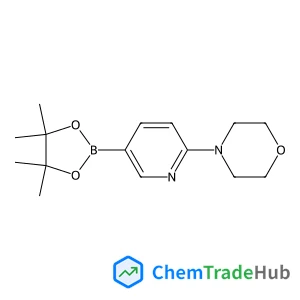
4-(5-(4,4,5,5-tetramethyl-1,3,2-dioxaborolan-2-yl)pyridin-2-yl)morpholine
CAS Number:
485799-04-0
Molecular Formula:
C15H23BN2O3

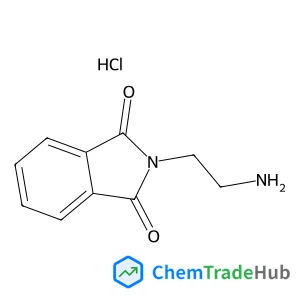
2-(2-Aminoethyl)-1H-isoindole-1,3(2H)-dione hydrochloride (1:1)
CAS Number:
30250-67-0
Molecular Formula:
C10H11ClN2O2
Recommended Suppliers





Disclaimer
This page provides academic journal information for reference and research purposes only. We are not affiliated with any journal publishers and do not handle publication submissions. For publication-related inquiries, please contact the respective journal publishers directly.
If you notice any inaccuracies in the information displayed, please contact us at support@chemtradehub.com. We will promptly review and address your concerns.