













Sulfur doped Li1.3Al0.3Ti1.7(PO4)3 solid electrolytes with enhanced ionic conductivity and a reduced activation energy barrier
Literature Information
Publication Date
2020-07-02
DOI
10.1039/D0CP03442H
Impact Factor
3.676
Authors
Mine Kırkbınar
View Original
Abstract
Recently, tailored synthesis of solid electrolytes satisfy multiple challenges, i.e. high ionic conductivity and wide (electro)chemical stability window is of great interest. Although both oxide- and sulfide-based solid electrolytes have distinguished merits for meeting such concerns separately, a new solid electrolyte having the excellent aspects of both materials is pursued. Herein, we report the synthesis of a sulfur-doped Li1.3Al0.3Ti1.7(PO4)3 (LATP) solid electrolyte with a NASICON crystal structure that combines elevated ionic conductivity with intrinsic stability against an ambient atmosphere. Sulfur doping was carried out using sulfur-amine chemistry and the system was characterized by XRD, Raman, XPS, ICP-OES, and EDS analyses. Bader charge analysis was carried out with the aid of density functional theory calculations to characterize charge accumulation in the local environment of the bare and sulfur doped LATP structures. Our results indicate that the partial replacement of oxygen with sulfur yields higher ionic conductivity due to the lower electronegativity of sulfur compared to oxygen, which reduces the attraction of lithium ions. The enhanced ionic conductivity of LATP is attributed to a decreased lithium ion diffusion activation energy barrier upon sulfur doping. Compared to bare LATP, the as-prepared sulfur doped LATP powders were shown to decrease the activation energy barrier by 10.1%. Moreover, an ionic conductivity of 5.21 × 10⁻⁴ S cm−1 was obtained for the sulfur doped LATP powders, whereas bare LATP had an ionic conductivity of 1.02 × 10⁻⁴ S cm−1 at 40 °C.
Recommended Journals
Related Literature
Interaction of CHX3 (X = F, Cl, Br) with HNO induces remarkable blue shifts of both C–H and N–H bonds
Tran Thanh Hue, Minh Tho Nguyen
2008-12-15
Paper
DOI: 10.1039/B816112G
Cross-diffusion and pattern formation in reaction–diffusion systems
Vladimir K. Vanag, Irving R. Epstein
2008-12-11
Perspective
DOI: 10.1039/B813825G
Volatile interface of biological oxidant and luminescent CdTequantum dots: implications in nanodiagnostics
Amiya Priyam, Subhash C. Bhattacharya, Abhijit Saha
2008-11-17
Paper
DOI: 10.1039/B813620C
Molecular imaging of polyimide formation
Matthias Treier, Roman Fasel, Neil R. Champness, Stephen Argent, Neville V. Richardson
2009-01-15
Paper
DOI: 10.1039/B815544P
Electron induced dissociation in condensed-phase nitromethane I: desorption of ionic fragments
Marc Bazin, Sylwia Ptasińska, Andrew D. Bass, Léon Sanche
2009-01-26
Paper
DOI: 10.1039/B814219J
Matrix isolation studies and DFT calculations on molecular alkali metal bromates
J. Steven Ogden, John T. Graham, Jon T. Joy, Francesco Ferrante
2008-11-11
Paper
DOI: 10.1039/B813021C
Size to density coupling of supported metallic clusters
Elad Gross, Micha Asscher
2008-11-26
Paper
DOI: 10.1039/B809355E
Blinking photoluminescence properties of single TiO2 nanodiscs: interfacial electron transfer dynamics
Seung-Do Oh, Yung Doug Suh, Hiroyuki Yoshikawa, Minjoong Yoon
2008-11-06
Paper
DOI: 10.1039/B812361F
You might also like
Compound Q&A
Are there alternatives to 1-(4-Chlorophenyl)-N-hydroxymethanimine (CAS: 3848-36-0) in synthesis?
When considering alternatives to 1-(4-Chlorophenyl)-N-hydroxymethanimine (CAS: 3...
3848-36-01-(4-Chlorophenyl)-N...
Compound Q&A
How should (1R,9S,10S,12S,14E,16S,19R,20R,21S,22R)-3,9,21-Trihydroxy-5,10,12,14,16,20,22-heptamethyl-23,24-dioxatetracyclo[17.3.1.1~6,9~.0~2,7~]tetracosa-2,5,7,14-tetraen-4-one (CAS: 183202-73-5) be stored?
This compound should be stored in a cool, dry place away from direct sunlight. I...
183202-73-5(1R,9S,10S,12S,14E,1...
Compound Q&A
How is 3-(4-Bromophenyl)-5-(2-fluorophenyl)-1,2,4-oxadiazole (CAS: 419553-16-5) typically synthesized?
3-(4-Bromophenyl)-5-(2-fluorophenyl)-1,2,4-oxadiazole is synthesized through a m...
419553-16-53-(4-Bromophenyl)-5-...
Compound Q&A
How is 5-Chloro-2-(4-chlorophenyl)-4-methyl-6-[3-(1-piperidinyl)propoxy]pyrimidine (CAS: 1639220-19-1) typically synthesized?
5-Chloro-2-(4-chlorophenyl)-4-methyl-6-[3-(1-piperidinyl)propoxy]pyrimidine (CAS...
1639220-19-15-Chloro-2-(4-chloro...
Compound Q&A
What industries use 2-Chloro-4-(difluoromethoxy)pyridine (CAS: 1206978-15-5)?
2-Chloro-4-(difluoromethoxy)pyridine is used in the pharmaceutical industry for ...
1206978-15-52-Chloro-4-(difluoro...
Compound Q&A
What regulatory guidelines apply to 3-Chloro-6-methylpyridazine (CAS: 1121-79-5)?
3-Chloro-6-methylpyridazine (CAS: 1121-79-5) is classified under the Globally Ha...
1121-79-53-Chloro-6-methylpyr...
Compound Q&A
Are there alternatives to Methyl 4,5-dimethyl-2-nitrobenzoate in synthesis?
Several alternatives can be used in the synthesis of Methyl 4,5-dimethyl-2-nitro...
90922-74-0Methyl 4,5-dimethyl-...
Compound Q&A
Are there alternatives to (2E,2'E)-3,3'-(1,4-Phenylene)bisacrylaldehyde in synthesis?
Alternatives to (2E,2'E)-3,3'-(1,4-Phenylene)bisacrylaldehyde include other acry...
63405-68-5(2E,2'E)-3,3'-(1,4-P...
Compound Q&A
What is 3-Amino-5-chloropyridin-2-ol hydrochloride (CAS: 1261906-29-9)?
3-Amino-5-chloropyridin-2-ol hydrochloride is an organic compound with the CAS n...
1261906-29-93-Amino-5-chloropyri...
Compound Q&A
What precautions should be taken when handling 6,7-Difluoro-2,3-dihydro-4H-chromen-4-one (CAS: 1092349-93-3)?
When handling 6,7-Difluoro-2,3-dihydro-4H-chromen-4-one, it is essential to wear...
1092349-93-36,7-Difluoro-2,3-dih...
Source Journal
Physical Chemistry Chemical Physics

CiteScore:
5.5
Self-citation Rate:
10.3%
Articles per Year:
3036
Physical Chemistry Chemical Physics (PCCP) is an international journal co-owned by 19 physical chemistry and physics societies from around the world. This journal publishes original, cutting-edge research in physical chemistry, chemical physics and biophysical chemistry. To be suitable for publication in PCCP, articles must include significant innovation and/or insight into physical chemistry; this is the most important criterion that reviewers and Editors will judge against when evaluating submissions. The journal has a broad scope and welcomes contributions spanning experiment, theory, computation and data science. Topical coverage includes spectroscopy, dynamics, kinetics, statistical mechanics, thermodynamics, electrochemistry, catalysis, surface science, quantum mechanics, quantum computing and machine learning. Interdisciplinary research areas such as polymers and soft matter, materials, nanoscience, energy, surfaces/interfaces, and biophysical chemistry are welcomed if they demonstrate significant innovation and/or insight into physical chemistry. Joined experimental/theoretical studies are particularly appreciated when complementary and based on up-to-date approaches.
Recommended Compounds
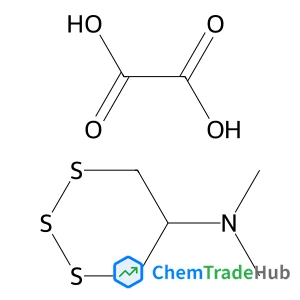
Oxalic acid compound with cyclohexylsulfamothioic O-acid (11)
CAS Number:
31895-22-4
Molecular Formula:
C7H13NO4S3

Recommended Suppliers





Disclaimer
This page provides academic journal information for reference and research purposes only. We are not affiliated with any journal publishers and do not handle publication submissions. For publication-related inquiries, please contact the respective journal publishers directly.
If you notice any inaccuracies in the information displayed, please contact us at support@chemtradehub.com. We will promptly review and address your concerns.