


A quantum cascade laser setup for studying irreversible photoreactions in H2O with nanosecond resolution and microlitre consumption
Literature Information
Publication Date
2020-11-09
DOI
10.1039/D0CP03164J
Impact Factor
3.676
Authors
Jessica L. Klocke
View Original
Abstract
Time-resolved infrared spectroscopy on irreversible reactions requires in general an exchange of sample for thousands of acquisitions leading to high sample consumption. Here, we present a setup employing a modern quantum cascade laser (QCL) as a probe light source to record time-resolved difference spectra of irreversible photoreactions in H2O. The combination of the focused QCL with a pressure-tolerant flow cell and a micrometre stage orthogonal to the flow allowed us to drastically reduce the sample consumption. We investigated the irreversible photoreduction of the cofactor flavin mononucleotide (FMN) in H2O, which is a common reaction taking place in biological photoreceptors. A broad time range from 20 nanoseconds to 1 second was accessible, because the approach minimized any signal drift by the flow. Kinetics were recorded at 46 selected wavenumbers consuming 12 microlitres for a complete dataset. The tuning range of 1490–1740 cm−1 included relevant carbonyl vibrations and the region of strong water absorption at around 1650 cm−1. A continuous dataset in the spectral dimension was generated by applying a fit with a sum of Lorentzians. Subsequent global analysis allowed us to resolve reference spectra and kinetics of the photoreaction proceeding from the triplet excited state via the intermediate flavin anion radical to the product, the fully reduced state of FMN. Accordingly, the neutral radical state is not populated in the disproportionation. The approach strongly facilitates the spectroscopic access to irreversible reactions of flavin-containing photoreceptors and photoenzymes with high time resolution and small sample consumption.
Recommended Journals

Chinese Journal of Chemistry

Herald of the Russian Academy of Sciences

Medicinal Chemistry Research

Atomization and Sprays

Bioorganic & Medicinal Chemistry Letters

Journal of Asian Natural Products Research

Biocatalysis and Biotransformation

Critical Reviews in Solid State and Materials Sciences

Topics in Catalysis

Acta Metallurgica Sinica-English Letters
Related Literature
Hydroxylamine-amplified gold nanoparticles for the naked eye and chemiluminescent detection of sequence-specific DNA with notable potential for single-nucleotide polymorphism discrimination
Aiping Fan, Choiwan Lau, Jianzhong Lu
2008-12-17
Paper
DOI: 10.1039/B817047A
Determination of total bile acid levels using a thick-film screen-printed Ir/C sensor for the detection of liver disease
Brandon Bartling, Lu Li, Chung-Chiun Liu
2009-03-02
Paper
DOI: 10.1039/B900266A
Renewable surface fluorescence sandwich immunoassay biosensor for rapid sensitive botulinum toxin detection in an automated fluidic format
Jay W. Grate, Marvin G. Warner, Richard M. Ozanich, Jr., Keith D. Miller, Heather A. Colburn, Brian Dockendorff, Kathryn C. Antolick, Norman C. Anheier Jr., Michael A. Lind, Jianlong Lou, James D. Marks, Cynthia J. Bruckner-Lea
2009-03-05
Paper
DOI: 10.1039/B900794F
Viral detection using DNA functionalized gold filaments
Jonas W. Perez, Frederick R. Haselton, David W. Wright
2009-05-15
Paper
DOI: 10.1039/B904191E
Spectral relative standard deviation: a practical benchmark in metabolomics
Helen M. Parsons, Drew R. Ekman, Timothy W. Collette
2008-12-02
Paper
DOI: 10.1039/B808986H
Aptamer-based electrochemical sensors that are not based on the target binding-induced conformational change of aptamers
Ying Lu, Ningning Zhu, Ping Yu, Lanqun Mao
2008-07-28
Paper
DOI: 10.1039/B807913G
Optimization and evaluation of networked single-wall carbon nanotubes as a NO2 gas sensing material
Isao Sasaki, Nobutsugu Minami, Annamalai Karthigeyan, Konstantin Iakoubovskii
2008-11-03
Paper
DOI: 10.1039/B813073F
Raman spectral imaging of single living cancer cells: a preliminary study
Florence Draux, Pierre Jeannesson, Abdelilah Beljebbar, Ali Tfayli, Nicolas Fourre, Michel Manfait, Josep Sulé-Suso, Ganesh D. Sockalingum
2008-12-02
Paper
DOI: 10.1039/B812610K
You might also like
Compound Q&A
Are there alternatives to 1-(4-Chlorophenyl)-N-hydroxymethanimine (CAS: 3848-36-0) in synthesis?
When considering alternatives to 1-(4-Chlorophenyl)-N-hydroxymethanimine (CAS: 3...
3848-36-01-(4-Chlorophenyl)-N...
Compound Q&A
How should (1R,9S,10S,12S,14E,16S,19R,20R,21S,22R)-3,9,21-Trihydroxy-5,10,12,14,16,20,22-heptamethyl-23,24-dioxatetracyclo[17.3.1.1~6,9~.0~2,7~]tetracosa-2,5,7,14-tetraen-4-one (CAS: 183202-73-5) be stored?
This compound should be stored in a cool, dry place away from direct sunlight. I...
183202-73-5(1R,9S,10S,12S,14E,1...
Compound Q&A
How is 3-(4-Bromophenyl)-5-(2-fluorophenyl)-1,2,4-oxadiazole (CAS: 419553-16-5) typically synthesized?
3-(4-Bromophenyl)-5-(2-fluorophenyl)-1,2,4-oxadiazole is synthesized through a m...
419553-16-53-(4-Bromophenyl)-5-...
Compound Q&A
How is 5-Chloro-2-(4-chlorophenyl)-4-methyl-6-[3-(1-piperidinyl)propoxy]pyrimidine (CAS: 1639220-19-1) typically synthesized?
5-Chloro-2-(4-chlorophenyl)-4-methyl-6-[3-(1-piperidinyl)propoxy]pyrimidine (CAS...
1639220-19-15-Chloro-2-(4-chloro...
Compound Q&A
What industries use 2-Chloro-4-(difluoromethoxy)pyridine (CAS: 1206978-15-5)?
2-Chloro-4-(difluoromethoxy)pyridine is used in the pharmaceutical industry for ...
1206978-15-52-Chloro-4-(difluoro...
Compound Q&A
What regulatory guidelines apply to 3-Chloro-6-methylpyridazine (CAS: 1121-79-5)?
3-Chloro-6-methylpyridazine (CAS: 1121-79-5) is classified under the Globally Ha...
1121-79-53-Chloro-6-methylpyr...
Compound Q&A
Are there alternatives to Methyl 4,5-dimethyl-2-nitrobenzoate in synthesis?
Several alternatives can be used in the synthesis of Methyl 4,5-dimethyl-2-nitro...
90922-74-0Methyl 4,5-dimethyl-...
Compound Q&A
Are there alternatives to (2E,2'E)-3,3'-(1,4-Phenylene)bisacrylaldehyde in synthesis?
Alternatives to (2E,2'E)-3,3'-(1,4-Phenylene)bisacrylaldehyde include other acry...
63405-68-5(2E,2'E)-3,3'-(1,4-P...
Compound Q&A
What is 3-Amino-5-chloropyridin-2-ol hydrochloride (CAS: 1261906-29-9)?
3-Amino-5-chloropyridin-2-ol hydrochloride is an organic compound with the CAS n...
1261906-29-93-Amino-5-chloropyri...
Compound Q&A
What precautions should be taken when handling 6,7-Difluoro-2,3-dihydro-4H-chromen-4-one (CAS: 1092349-93-3)?
When handling 6,7-Difluoro-2,3-dihydro-4H-chromen-4-one, it is essential to wear...
1092349-93-36,7-Difluoro-2,3-dih...
Source Journal
Physical Chemistry Chemical Physics

CiteScore:
5.5
Self-citation Rate:
10.3%
Articles per Year:
3036
Physical Chemistry Chemical Physics (PCCP) is an international journal co-owned by 19 physical chemistry and physics societies from around the world. This journal publishes original, cutting-edge research in physical chemistry, chemical physics and biophysical chemistry. To be suitable for publication in PCCP, articles must include significant innovation and/or insight into physical chemistry; this is the most important criterion that reviewers and Editors will judge against when evaluating submissions. The journal has a broad scope and welcomes contributions spanning experiment, theory, computation and data science. Topical coverage includes spectroscopy, dynamics, kinetics, statistical mechanics, thermodynamics, electrochemistry, catalysis, surface science, quantum mechanics, quantum computing and machine learning. Interdisciplinary research areas such as polymers and soft matter, materials, nanoscience, energy, surfaces/interfaces, and biophysical chemistry are welcomed if they demonstrate significant innovation and/or insight into physical chemistry. Joined experimental/theoretical studies are particularly appreciated when complementary and based on up-to-date approaches.
Recommended Compounds
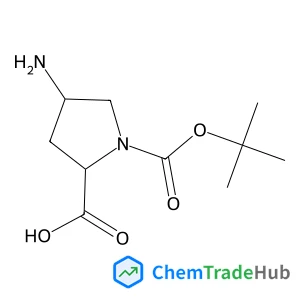
(2R,4R)-1-Boc-4-Aminopyrrolidine-2-carboxylic acid
CAS Number:
132622-98-1
Molecular Formula:
C10H18N2O4
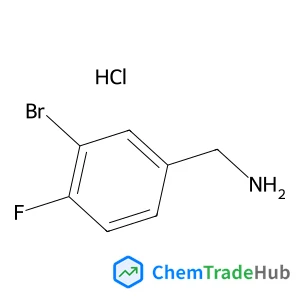
1-(3-Bromo-4-fluorophenyl)methanamine hydrochloride (1:1)
CAS Number:
202865-68-7
Molecular Formula:
C7H8BrClFN
Recommended Suppliers





Disclaimer
This page provides academic journal information for reference and research purposes only. We are not affiliated with any journal publishers and do not handle publication submissions. For publication-related inquiries, please contact the respective journal publishers directly.
If you notice any inaccuracies in the information displayed, please contact us at support@chemtradehub.com. We will promptly review and address your concerns.