












Comparative analysis of ethanol dynamics in aqueous and non-aqueous solutions
Literature Information
Publication Date
2020-09-24
DOI
10.1039/D0CP03160G
Impact Factor
3.676
Authors
Ivo Jukić, Martina Požar, Bernarda Lovrinčević
View Original
Abstract
In this study, we compare the results for vibrational, reorientational and hydrogen bond dynamics of ethanol in water and in hexane across the whole concentration range. Water and hexane are both commonly used as solvents, but so far, it has been unclear to what extent they modify the solute dynamics. Ethanol is chosen as the solute because it is an aliphatic molecule that is miscibile with both solvents. It is known that ethanol forms micelle-like domains in water and cyclic clusters resembling loops in hexane. This structural micro-heterogeneity is well known both in experiments and in simulations. The main question we raise here is: is there a signature of micro-heterogeneity in the dynamical quantities of ethanol? We focus on quantities such as the vibrational spectra, the reorientational correlation functions, the self-diffusion coefficients, the ethanol–ethanol hydrogen bond correlation functions and the corresponding hydrogen bond histograms. For the first time ever, we compute the van Hove functions to reveal the dynamical variations of spatial correlations in these systems. All these results complement each other and provide a unifying dynamical description of ethanol in binary mixtures.
Related Literature
Combining density functional theory (DFT) and pair distribution function (PDF) analysis to solve the structure of metastable materials: the case of metakaolin
Claire E. White, John L. Provis, Thomas Proffen, Daniel P. Riley, Jannie S. J. van Deventer
2010-02-22
Paper
DOI: 10.1039/B922993K
A LEEM/μ-LEED investigation of phase transformations in TiOx/Pt(111) ultrathin films
Stefano Agnoli, T. Onur Menteş, Miguel A. Niño, Andrea Locatelli, Gaetano Granozzi
2009-03-11
Paper
DOI: 10.1039/B821339A
Protein stability modulated by a conformational effector: effects of trifluoroethanol on bovine serum albumin
Rita Carrotta, Mauro Manno, Francesco Maria Giordano, Alessandro Longo, Giuseppe Portale, Vincenzo Martorana, Pier Luigi San Biagio
2009-03-05
Paper
DOI: 10.1039/B818687A
ZnO@Co hybrid nanotube arrays growth from electrochemical deposition: structural, optical, photocatalytic and magnetic properties
Li-Yuan Fan, Shu-Hong Yu
2009-03-24
Paper
DOI: 10.1039/B823379A
Refined kinetic transition networks for the GB1 hairpin peptide
Joanne M. Carr, David J. Wales
2009-03-17
Perspective
DOI: 10.1039/B820649J
Analysis of isotope effects in NMR one-bond indirect nuclear spin–spin coupling constants in terms of localized molecular orbitals
Patricio F. Provasi, Stephan P. A. Sauer
2009-03-03
Paper
DOI: 10.1039/B819376B
Structure and orientation of small molecules dissolved in the liquid crystalline phases of CsPFO/water system by multinuclear NMR
Silvia Borsacchi, Donata Catalano, Carlo Alberto Veracini
2009-04-22
Paper
DOI: 10.1039/B901895F
A molecular model for H2 interactions in aliphatic and aromatic hydrocarbons
Susana Figueroa-Gerstenmaier, Simona Giudice, Luigi Cavallo, Giuseppe Milano
2009-04-17
Paper
DOI: 10.1039/B900176J
Revealing the base pair stepping dynamics of nucleic acidmotorproteins with optical traps
Yann R. Chemla
2010-02-19
Perspective
DOI: 10.1039/B920234J
14N NQR and proton NMR study of ferroelectric phase transition and proton exchange in organic ferroelectric (H2-TPPZ)(Hca)2
Veselko Žagar, Tetsuo Asaji, Yumi Hasegawa
2010-02-22
Paper
DOI: 10.1039/B925326B
You might also like
Compound Q&A
How should waste containing 2-Ethyl-4-Methyl-1H-Imidazole-5-Carbaldehyde (CAS: 88634-80-4) be handled?
Waste containing 2-Ethyl-4-Methyl-1H-Imidazole-5-Carbaldehyde (CAS: 88634-80-4) ...
88634-80-42-Ethyl-4-Methyl-1H-...
Compound Q&A
What industries use Triethoxy(octyl)silane (CAS: 1385031-14-0)?
Triethoxy(octyl)silane (CAS: 1385031-14-0) is widely used in the pharmaceuticals...
1385031-14-0Triethoxy(octyl)sila...
Compound Q&A
Are there alternatives to 3-iodo-7-nitro-1H-indazole (CAS: 864724-64-1) in synthesis?
Several alternatives to 3-iodo-7-nitro-1H-indazole (CAS: 864724-64-1) exist in t...
864724-64-13-iodo-7-nitro-1H-in...
Compound Q&A
Are there alternatives to Benzene, bis[(trimethoxysilyl)ethyl] (CAS: 266317-71-9) in synthesis?
Yes, there are alternatives to Benzene, bis[(trimethoxysilyl)ethyl] (CAS: 266317...
266317-71-9Benzene, bis[(trimet...
Compound Q&A
Is Isothiazole-3-carbonitrile (CAS: 1452-17-1) safe?
Isothiazole-3-carbonitrile (CAS: 1452-17-1) is generally considered safe when us...
1452-17-1Isothiazole-3-carbon...
Compound Q&A
Is (3-Chlorophenyl)methanol (CAS: 873-63-2) safe?
(3-Chlorophenyl)methanol (CAS: 873-63-2) is considered low to moderately toxic. ...
873-63-2(3-Chlorophenyl)meth...
Compound Q&A
How is (2S,3S)-2-Hydroxy-3-({[(2-methyl-2-propanyl)oxy]carbonyl}amino)-3-(2-naphthyl)propanoic acid (CAS: 959583-98-3) typically synthesized?
(2S,3S)-2-Hydroxy-3-({[(2-methyl-2-propanyl)oxy]carbonyl}amino)-3-(2-naphthyl)pr...
959583-98-3(2S,3S)-2-Hydroxy-3-...
Compound Q&A
What precautions should be taken when handling Methyl 2-(bromomethyl)-5-methoxybenzoate (CAS: 788081-99-2)?
Proper handling of methyl 2-(bromomethyl)-5-methoxybenzoate requires the use of ...
788081-99-2Methyl 2-(bromomethy...
Compound Q&A
What is 6,8-Dibromoimidazo[1,2-a]pyridine-2-carboxylic acid (CAS: 904805-36-3)?
6,8-Dibromoimidazo[1,2-a]pyridine-2-carboxylic acid (CAS: 904805-36-3) is an aro...
904805-36-36,8-Dibromoimidazo[1...
Compound Q&A
Is 3-Amino-5-bromo-2-pyridinecarbonitrile (CAS: 573675-27-1) safe?
3-Amino-5-bromo-2-pyridinecarbonitrile is considered safe when handled under pro...
573675-27-13-Amino-5-bromo-2-py...
Source Journal
Physical Chemistry Chemical Physics

CiteScore:
5.5
Self-citation Rate:
10.3%
Articles per Year:
3036
Physical Chemistry Chemical Physics (PCCP) is an international journal co-owned by 19 physical chemistry and physics societies from around the world. This journal publishes original, cutting-edge research in physical chemistry, chemical physics and biophysical chemistry. To be suitable for publication in PCCP, articles must include significant innovation and/or insight into physical chemistry; this is the most important criterion that reviewers and Editors will judge against when evaluating submissions. The journal has a broad scope and welcomes contributions spanning experiment, theory, computation and data science. Topical coverage includes spectroscopy, dynamics, kinetics, statistical mechanics, thermodynamics, electrochemistry, catalysis, surface science, quantum mechanics, quantum computing and machine learning. Interdisciplinary research areas such as polymers and soft matter, materials, nanoscience, energy, surfaces/interfaces, and biophysical chemistry are welcomed if they demonstrate significant innovation and/or insight into physical chemistry. Joined experimental/theoretical studies are particularly appreciated when complementary and based on up-to-date approaches.
Recommended Compounds
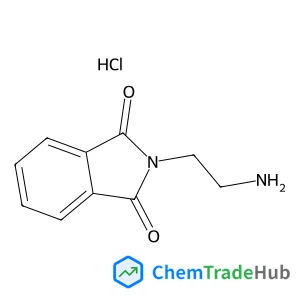
2-(2-Aminoethyl)-1H-isoindole-1,3(2H)-dione hydrochloride (1:1)
CAS Number:
30250-67-0
Molecular Formula:
C10H11ClN2O2
![N-[(9H-Fluoren-9-ylmethoxy)carbonyl]-beta-phenyl-L-phenylalanine structure](https://static.chemtradehub.com/structs/201/201484-50-6-c2fc.webp "N-[(9H-Fluoren-9-ylmethoxy)carbonyl]-beta-phenyl-L-phenylalanine structure")
N-[(9H-Fluoren-9-ylmethoxy)carbonyl]-beta-phenyl-L-phenylalanine
CAS Number:
201484-50-6
Molecular Formula:
C30H25NO4


Recommended Suppliers




Disclaimer
This page provides academic journal information for reference and research purposes only. We are not affiliated with any journal publishers and do not handle publication submissions. For publication-related inquiries, please contact the respective journal publishers directly.
If you notice any inaccuracies in the information displayed, please contact us at support@chemtradehub.com. We will promptly review and address your concerns.