












Molecular dynamics simulation insight into the temperature dependence and healing mechanism of an intrinsic self-healing polyurethane elastomer
Literature Information
Publication Date
2020-07-13
DOI
10.1039/D0CP03013A
Impact Factor
3.676
Authors
Xianling Chen, Jing Zhu, Jun Chen, Haobei Liu, Meng Zhang
View Original
Abstract
An intrinsic self-healing polyurethane (PU) elastomer was synthesized in our previous work. In this work, three-dimensional (3D) micro-crack models based on experimental samples were further introduced to investigate their self-healing behavior, mechanism, and temperature dependence by molecular dynamics (MD) simulations. In particular, the number, type, strength, and lifetime of hydrogen bonds as well as the microscopic behavior of molecular diffusion in the self-healing process were investigated. It was found that the self-healing capacity of PU mainly results from intermolecular electrostatic interactions, and the hydrogen bond plays a key role in electrostatic interactions. There is an optimum ratio of soft and hard segments at which the number of hydrogen bonds is appropriate and the self-healing capacity is optimum. Besides, the temperature has an optimal value at which the self-healing rate of PU is the fastest. The exchanges of hydrogen bonds, which endowed PU with self-healing capacity, were further revealed intuitively. We found that the exchanges of hydrogen bonds are reversible and more likely to occur on the urethane groups. This study deepened the understanding of the self-healing character of PU at the molecular level.
Related Literature
Quaternary ammonium salts of phenylglyoxylic acid as photobase generators for thiol-promoted epoxide photopolymerization
H. Salmi, X. Allonas, C. Ley, A. Defoin, A. Ak
2014-07-29
Paper
DOI: 10.1039/C4PY00927D
Polycarbonate-based biodegradable copolymers for stimuli responsive targeted drug delivery
Mutyala Naidu Ganivada, Pawan Kumar, Pintu Kanjilal, Himadri Dinda, Jayasri Das Sarma, Raja Shunmugam
2016-05-25
Paper
DOI: 10.1039/C6PY00615A
Theoretical simulations of nanostructures self-assembled from copolymer systems
Zhanwen Xu, Jiaping Lin, Qian Zhang, Liquan Wang, Xiaohui Tian
2016-05-05
Review Article
DOI: 10.1039/C6PY00535G
Controlled synthesis of β-sheet polymers based on side-chain amyloidogenic short peptide segments via RAFT polymerization
Sonu Kumar, Rituparna Acharya, Urmi Chatterji, Priyadarsi De
2014-07-01
Paper
DOI: 10.1039/C4PY00620H
A novel method to prepare water-soluble core microcapsules with controlled burst release
Mingming Zuo, Tianqing Liu, Jingjing Han
2014-06-30
Paper
DOI: 10.1039/C4PY00616J
Synthesis of multi-hollow clay-armored latexes by surfactant-free emulsion polymerization of styrene mediated by poly(ethylene oxide)-based macroRAFT/Laponite complexes
Thaissa de Camargo Chaparro, Franck D'Agosto, Muriel Lansalot, Amilton Martins Dos Santos, Elodie Bourgeat-Lami
2014-07-16
Paper
DOI: 10.1039/C4PY00362D
Light-mediated curing of CO2-based unsaturated polyethercarbonates via thiol–ene click chemistry
M. A. Subhani, B. Köhler, C. Gürtler, W. Leitner
2016-05-24
Paper
DOI: 10.1039/C6PY00458J
You might also like
Compound Q&A
Are there alternatives to 1-(4-Chlorophenyl)-N-hydroxymethanimine (CAS: 3848-36-0) in synthesis?
When considering alternatives to 1-(4-Chlorophenyl)-N-hydroxymethanimine (CAS: 3...
3848-36-01-(4-Chlorophenyl)-N...
Compound Q&A
How should (1R,9S,10S,12S,14E,16S,19R,20R,21S,22R)-3,9,21-Trihydroxy-5,10,12,14,16,20,22-heptamethyl-23,24-dioxatetracyclo[17.3.1.1~6,9~.0~2,7~]tetracosa-2,5,7,14-tetraen-4-one (CAS: 183202-73-5) be stored?
This compound should be stored in a cool, dry place away from direct sunlight. I...
183202-73-5(1R,9S,10S,12S,14E,1...
Compound Q&A
How is 3-(4-Bromophenyl)-5-(2-fluorophenyl)-1,2,4-oxadiazole (CAS: 419553-16-5) typically synthesized?
3-(4-Bromophenyl)-5-(2-fluorophenyl)-1,2,4-oxadiazole is synthesized through a m...
419553-16-53-(4-Bromophenyl)-5-...
Compound Q&A
How is 5-Chloro-2-(4-chlorophenyl)-4-methyl-6-[3-(1-piperidinyl)propoxy]pyrimidine (CAS: 1639220-19-1) typically synthesized?
5-Chloro-2-(4-chlorophenyl)-4-methyl-6-[3-(1-piperidinyl)propoxy]pyrimidine (CAS...
1639220-19-15-Chloro-2-(4-chloro...
Compound Q&A
What industries use 2-Chloro-4-(difluoromethoxy)pyridine (CAS: 1206978-15-5)?
2-Chloro-4-(difluoromethoxy)pyridine is used in the pharmaceutical industry for ...
1206978-15-52-Chloro-4-(difluoro...
Compound Q&A
What regulatory guidelines apply to 3-Chloro-6-methylpyridazine (CAS: 1121-79-5)?
3-Chloro-6-methylpyridazine (CAS: 1121-79-5) is classified under the Globally Ha...
1121-79-53-Chloro-6-methylpyr...
Compound Q&A
Are there alternatives to Methyl 4,5-dimethyl-2-nitrobenzoate in synthesis?
Several alternatives can be used in the synthesis of Methyl 4,5-dimethyl-2-nitro...
90922-74-0Methyl 4,5-dimethyl-...
Compound Q&A
Are there alternatives to (2E,2'E)-3,3'-(1,4-Phenylene)bisacrylaldehyde in synthesis?
Alternatives to (2E,2'E)-3,3'-(1,4-Phenylene)bisacrylaldehyde include other acry...
63405-68-5(2E,2'E)-3,3'-(1,4-P...
Compound Q&A
What is 3-Amino-5-chloropyridin-2-ol hydrochloride (CAS: 1261906-29-9)?
3-Amino-5-chloropyridin-2-ol hydrochloride is an organic compound with the CAS n...
1261906-29-93-Amino-5-chloropyri...
Compound Q&A
What precautions should be taken when handling 6,7-Difluoro-2,3-dihydro-4H-chromen-4-one (CAS: 1092349-93-3)?
When handling 6,7-Difluoro-2,3-dihydro-4H-chromen-4-one, it is essential to wear...
1092349-93-36,7-Difluoro-2,3-dih...
Source Journal
Physical Chemistry Chemical Physics

CiteScore:
5.5
Self-citation Rate:
10.3%
Articles per Year:
3036
Physical Chemistry Chemical Physics (PCCP) is an international journal co-owned by 19 physical chemistry and physics societies from around the world. This journal publishes original, cutting-edge research in physical chemistry, chemical physics and biophysical chemistry. To be suitable for publication in PCCP, articles must include significant innovation and/or insight into physical chemistry; this is the most important criterion that reviewers and Editors will judge against when evaluating submissions. The journal has a broad scope and welcomes contributions spanning experiment, theory, computation and data science. Topical coverage includes spectroscopy, dynamics, kinetics, statistical mechanics, thermodynamics, electrochemistry, catalysis, surface science, quantum mechanics, quantum computing and machine learning. Interdisciplinary research areas such as polymers and soft matter, materials, nanoscience, energy, surfaces/interfaces, and biophysical chemistry are welcomed if they demonstrate significant innovation and/or insight into physical chemistry. Joined experimental/theoretical studies are particularly appreciated when complementary and based on up-to-date approaches.
Recommended Compounds
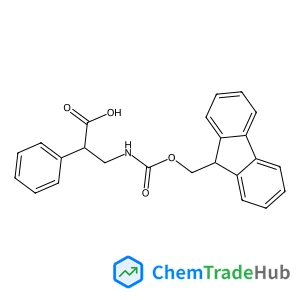
(S)-3-((((9H-Fluoren-9-yl)methoxy)carbonyl)amino)-2-phenylpropanoic acid
CAS Number:
1217663-60-9
Molecular Formula:
C24H21NO4
Recommended Suppliers





Disclaimer
This page provides academic journal information for reference and research purposes only. We are not affiliated with any journal publishers and do not handle publication submissions. For publication-related inquiries, please contact the respective journal publishers directly.
If you notice any inaccuracies in the information displayed, please contact us at support@chemtradehub.com. We will promptly review and address your concerns.