













Electrochemical growth of CoNi and Pt–CoNi soft magnetic composites on an alkanethiol monolayer-modified ITO substrate
Literature Information
Publication Date
2015-05-27
DOI
10.1039/C5CP02291F
Impact Factor
3.676
Authors
D. Escalera-López, E. Gómez, E. Vallés
View Original
Abstract
CoNi and Pt–CoNi magnetic layers on indium-tin oxide (ITO) substrates modified by an alkanethiol self-assembled monolayer (SAM) have been electrochemically obtained as an initial stage to prepare semiconducting layer-SAM-magnetic layer hybrid structures. The best conditions to obtain the maximum compactness of adsorbed layers of dodecanethiol (C12-SH) on ITO substrate have been studied using contact angle, AFM, XPS and electrochemical tests. The electrochemical characterization (electrochemical probe or voltammetric response in blank solutions) is fundamental to ensure the maximum blocking of the substrate. Although the electrodeposition process on the SAM-modified ITO substrate is very slow if the blocking of the surface is significant, non-cracked metallic layers of CoNi, with or without a previously electrodeposited seed-layer of platinum, have been obtained by optimizing the deposition potentials. Initial nucleation is expected to take place at the pinhole defects of the C12-SH SAM, followed by a mushroom-like growth regime through the SAM interface that allows the formation of a continuous metallic layer electrically connected to the ITO surface. Due to the potential of the methodology, the preparation of patterned metallic deposits on ITO substrate using SAMs with different coverage as templates is feasible.
Recommended Journals
Related Literature
Nanoscale engineering of solid-state materials for boosting hydrogen storage
Yudong Xue
2023-12-19
Review Article
DOI: 10.1039/D3CS00706E
A CuICoII cryptate for the visible light-driven reduction of CO2
Julia Jökel, Esma Birsen Boydas, Joël Wellauer, Oliver S. Wenger, Michael Römelt
2023-10-27
Edge Article
DOI: 10.1039/D3SC02679E
Interfacial engineering of transition metal dichalcogenide/carbon heterostructures for electrochemical energy applications
Fang He, Shi-Zhang Qiao
2023-10-23
Review Article
DOI: 10.1039/D3CS00445G
Mechanisms and models for water transport in reverse osmosis membranes: history, critical assessment, and recent developments
Hanqing Fan, Xinglin Lu, Menachem Elimelech
2023-10-27
Tutorial Review
DOI: 10.1039/D3CS00395G
Discovery of a selective TC-PTP degrader for cancer immunotherapy
Jinmin Miao, Jiajun Dong, Yiming Miao, Yunpeng Bai, Zihan Qu, Brenson A. Jassim, Bo Huang, Quyen Nguyen, Yuan Ma, Allison A. Murray, Jinyue Li
2023-10-24
Edge Article
DOI: 10.1039/D3SC04541B
Advances in glycoside and oligosaccharide synthesis
Conor J. Crawford
2023-10-13
Review Article
DOI: 10.1039/D3CS00321C
Correction: A tutorial on asymmetric electrocatalysis
Jonas Rein, Samson B. Zacate, Kaining Mao, Song Lin
2023-12-05
Correction
DOI: 10.1039/D3CS90096G
You might also like
Compound Q&A
How should waste containing 6-Chloro-5-(2'-hydroxy-3'-methoxy-4-biphenylyl)-3-(3-methoxyphenyl)-1H-pyrrolo[3,2-d]pyrimidine-2,4(3H,5H)-dione (CAS: 1346607-05-3) be handled?
Waste containing 6-Chloro-5-(2'-hydroxy-3'-methoxy-4-biphenylyl)-3-(3-methoxyphe...
1346607-05-36-Chloro-5-(2'-hydro...
Compound Q&A
What are the main uses of (3alpha,5alpha)-3-Hydroxypregnane-11,20-dione (CAS: 23930-19-0)?
(3alpha,5alpha)-3-Hydroxypregnane-11,20-dione is primarily used in the pharmaceu...
23930-19-0(3alpha,5alpha)-3-Hy...
Compound Q&A
What is the market or research trend for 4-Amino-6-chloro-2-pyridinecarboxylic acid (CAS: 546141-56-4)?
The market for 4-Amino-6-chloro-2-pyridinecarboxylic acid (CAS: 546141-56-4) is ...
546141-56-44-Amino-6-chloro-2-p...
Compound Q&A
Are there alternatives to (2-Benzoylethyl)trimethylammonium chloride (CAS: 24472-88-6) in synthesis?
Alternatives to (2-Benzoylethyl)trimethylammonium chloride (CAS: 24472-88-6) in ...
24472-88-6(2-Benzoylethyl)trim...
Compound Q&A
Is N-[4-Nitro-3-(trifluoromethyl)phenyl]acetamide (CAS: 393-12-4) safe?
N-[4-Nitro-3-(trifluoromethyl)phenyl]acetamide (CAS: 393-12-4) is generally safe...
393-12-4N-[4-Nitro-3-(triflu...
Compound Q&A
Are there alternatives to [(4R,5R,6S)-5-hydroxy-10-imino-3,7-dioxa-1,9-diazatricyclo[6.4.0.02,6]dodeca-8,11-dien-4-yl]methyl dihydrogen phosphate (CAS: 39679-56-6) in synthesis?
Alternative reagents such as other phosphates or similar functional groups can b...
39679-56-6[(4R,5R,6S)-5-hydrox...
Compound Q&A
Are there alternatives to N,N'-Bis(3-aminopropyl)-1,3-propanediamine (CAS: 4605-14-5) in synthesis?
There are alternatives to N,N'-Bis(3-aminopropyl)-1,3-propanediamine (CAS: 4605-...
4605-14-5N,N'-Bis(3-aminoprop...
Compound Q&A
What precautions should be taken when handling Aluminium trihexadecanoate (CAS: 555-35-1)?
When handling Aluminium trihexadecanoate, it is important to use appropriate per...
555-35-1Aluminium trihexadec...
Compound Q&A
What is (1,1-Dioxido-3-oxo-1,2-benzothiazol-2(3H)-yl)acetic acid (CAS: 52188-11-1)?
(1,1-Dioxido-3-oxo-1,2-benzothiazol-2(3H)-yl)acetic acid is a chemical compound ...
52188-11-1(1,1-Dioxido-3-oxo-1...
Compound Q&A
Are there alternatives to 5,5-dimethyloxolan-2-one (CAS: 3123-97-5) in synthesis?
Several alternatives to 5,5-dimethyloxolan-2-one (CAS: 3123-97-5) can be used in...
3123-97-55,5-dimethyloxolan-2...
Source Journal
Physical Chemistry Chemical Physics

CiteScore:
5.5
Self-citation Rate:
10.3%
Articles per Year:
3036
Physical Chemistry Chemical Physics (PCCP) is an international journal co-owned by 19 physical chemistry and physics societies from around the world. This journal publishes original, cutting-edge research in physical chemistry, chemical physics and biophysical chemistry. To be suitable for publication in PCCP, articles must include significant innovation and/or insight into physical chemistry; this is the most important criterion that reviewers and Editors will judge against when evaluating submissions. The journal has a broad scope and welcomes contributions spanning experiment, theory, computation and data science. Topical coverage includes spectroscopy, dynamics, kinetics, statistical mechanics, thermodynamics, electrochemistry, catalysis, surface science, quantum mechanics, quantum computing and machine learning. Interdisciplinary research areas such as polymers and soft matter, materials, nanoscience, energy, surfaces/interfaces, and biophysical chemistry are welcomed if they demonstrate significant innovation and/or insight into physical chemistry. Joined experimental/theoretical studies are particularly appreciated when complementary and based on up-to-date approaches.
Recommended Compounds

(3alpha,5beta,6alpha,7alpha)-6-Ethylcholane-3,7,24-triol
CAS Number:
1537866-49-1
Molecular Formula:
C26H46O3

![1-[6-(1H-Imidazol-1-yl)-3-pyridinyl]methanamine structure](https://static.chemtradehub.com/structs/914/914637-08-4-8825.webp "1-[6-(1H-Imidazol-1-yl)-3-pyridinyl]methanamine structure")
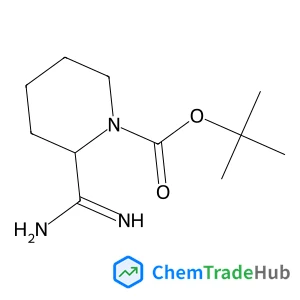
2-Methyl-2-propanyl 2-carbamimidoyl-1-piperidinecarboxylate
CAS Number:
1258640-98-0
Molecular Formula:
C11H21N3O2
Recommended Suppliers




Disclaimer
This page provides academic journal information for reference and research purposes only. We are not affiliated with any journal publishers and do not handle publication submissions. For publication-related inquiries, please contact the respective journal publishers directly.
If you notice any inaccuracies in the information displayed, please contact us at support@chemtradehub.com. We will promptly review and address your concerns.