


Selective bond breaking of halothane induced by electron transfer in potassium collisions
Literature Information
Publication Date
2020-09-24
DOI
10.1039/D0CP02570D
Impact Factor
3.676
Authors
A. I. Lozano, L. S. Maioli, B. Pamplona, M. Mendes, F. Ferreira da Silva, F. Kossoski, D. Süβ, M. H. F. Bettega, G. García, P. Limão-Vieira
View Original
Abstract
We present novel experimental results of negative ion formation of halothane (C2HBrClF3) upon electron transfer from hyperthermal neutral potassium atoms (K°) in the collision energy range of 8–1000 eV. The experiments were performed in a crossed molecular beam setup allowing a comprehensive analysis of the time-of-flight (TOF) mass negative ions fragmentation pattern and a detailed knowledge of the collision dynamics in the energy range investigated. Such TOF mass spectra data show that the only negative ions formed are Br−, Cl− and F−, with a strong energy dependence in the low-energy collision region, with the bromine anion being the most abundant and sole fragment at the lowest collision energy probed. In addition, potassium cation (K+) energy loss spectra in the forward scattering direction were obtained in a hemispherical energy analyser at different K° impact energies. In order to support our experimental findings, ab initio quantum chemical calculations have been performed to help interpret the role of the electronic structure of halothane. Potential energy curves were obtained along the C–X (X = Br, Cl) coordinate to lend support to the dissociation processes yielding anion formation.
Recommended Journals

Journal of Asian Natural Products Research

Topics in Catalysis

Critical Reviews in Solid State and Materials Sciences

Colloid Journal

Medicinal Chemistry Research

Polycyclic Aromatic Compounds

Acta Metallurgica Sinica-English Letters

Bioorganic & Medicinal Chemistry Letters

Cellulose

Chinese Journal of Chemistry
Related Literature
Electrochemistry of LiMn2O4nanoparticles made by flame spray pyrolysis
R. Büchel, M. Nakayama, P. Novák
2009-03-25
Paper
DOI: 10.1039/B821572N
Studying the microscopic nature of diffusion with helium-3 spin-echo
A. P. Jardine, G. Alexandrowicz, H. Hedgeland, W. Allison, J. Ellis
2009-03-12
Perspective
DOI: 10.1039/B810769F
Observation of oscillatory behavior during the dissolution of a pharmaceutical compound and evidence for the existence of an inverse Ostwald rule
2010-02-23
Paper
DOI: 10.1039/B917966F
The photophysics of selectively metallated arrays of quinoxaline-fused tetraarylporphyrins
James A. Hutchison, Paul J. Sintic, Maxwell J. Crossley, Toshihiko Nagamura, Kenneth P. Ghiggino
2009-03-03
Paper
DOI: 10.1039/B820969C
Flame spray-pyrolyzed vanadium oxidenanoparticles for lithium battery cathodes
Timothy J. Patey, Robert Büchel, Frank Krumeich, Jia-Zhao Wang, Hua-Kun Liu, Sotiris E. Pratsinis, Petr Novák
2009-03-14
Paper
DOI: 10.1039/B821389P
Shape control of iron oxide nanoparticles
Alexey Shavel, Luis M. Liz-Marzán
2009-03-03
Paper
DOI: 10.1039/B822733K
Oriented growth of the functionalized metal–organic framework CAU-1 on –OH- and –COOH-terminated self-assembled monolayers
Florian Hinterholzinger, Camilla Scherb, Tim Ahnfeldt, Norbert Stock, Thomas Bein
2010-04-13
Paper
DOI: 10.1039/B924657F
You might also like
Compound Q&A
How should waste containing 2-Ethyl-4-Methyl-1H-Imidazole-5-Carbaldehyde (CAS: 88634-80-4) be handled?
Waste containing 2-Ethyl-4-Methyl-1H-Imidazole-5-Carbaldehyde (CAS: 88634-80-4) ...
88634-80-42-Ethyl-4-Methyl-1H-...
Compound Q&A
What industries use Triethoxy(octyl)silane (CAS: 1385031-14-0)?
Triethoxy(octyl)silane (CAS: 1385031-14-0) is widely used in the pharmaceuticals...
1385031-14-0Triethoxy(octyl)sila...
Compound Q&A
Are there alternatives to 3-iodo-7-nitro-1H-indazole (CAS: 864724-64-1) in synthesis?
Several alternatives to 3-iodo-7-nitro-1H-indazole (CAS: 864724-64-1) exist in t...
864724-64-13-iodo-7-nitro-1H-in...
Compound Q&A
Are there alternatives to Benzene, bis[(trimethoxysilyl)ethyl] (CAS: 266317-71-9) in synthesis?
Yes, there are alternatives to Benzene, bis[(trimethoxysilyl)ethyl] (CAS: 266317...
266317-71-9Benzene, bis[(trimet...
Compound Q&A
Is Isothiazole-3-carbonitrile (CAS: 1452-17-1) safe?
Isothiazole-3-carbonitrile (CAS: 1452-17-1) is generally considered safe when us...
1452-17-1Isothiazole-3-carbon...
Compound Q&A
Is (3-Chlorophenyl)methanol (CAS: 873-63-2) safe?
(3-Chlorophenyl)methanol (CAS: 873-63-2) is considered low to moderately toxic. ...
873-63-2(3-Chlorophenyl)meth...
Compound Q&A
How is (2S,3S)-2-Hydroxy-3-({[(2-methyl-2-propanyl)oxy]carbonyl}amino)-3-(2-naphthyl)propanoic acid (CAS: 959583-98-3) typically synthesized?
(2S,3S)-2-Hydroxy-3-({[(2-methyl-2-propanyl)oxy]carbonyl}amino)-3-(2-naphthyl)pr...
959583-98-3(2S,3S)-2-Hydroxy-3-...
Compound Q&A
What precautions should be taken when handling Methyl 2-(bromomethyl)-5-methoxybenzoate (CAS: 788081-99-2)?
Proper handling of methyl 2-(bromomethyl)-5-methoxybenzoate requires the use of ...
788081-99-2Methyl 2-(bromomethy...
Compound Q&A
What is 6,8-Dibromoimidazo[1,2-a]pyridine-2-carboxylic acid (CAS: 904805-36-3)?
6,8-Dibromoimidazo[1,2-a]pyridine-2-carboxylic acid (CAS: 904805-36-3) is an aro...
904805-36-36,8-Dibromoimidazo[1...
Compound Q&A
Is 3-Amino-5-bromo-2-pyridinecarbonitrile (CAS: 573675-27-1) safe?
3-Amino-5-bromo-2-pyridinecarbonitrile is considered safe when handled under pro...
573675-27-13-Amino-5-bromo-2-py...
Source Journal
Physical Chemistry Chemical Physics

CiteScore:
5.5
Self-citation Rate:
10.3%
Articles per Year:
3036
Physical Chemistry Chemical Physics (PCCP) is an international journal co-owned by 19 physical chemistry and physics societies from around the world. This journal publishes original, cutting-edge research in physical chemistry, chemical physics and biophysical chemistry. To be suitable for publication in PCCP, articles must include significant innovation and/or insight into physical chemistry; this is the most important criterion that reviewers and Editors will judge against when evaluating submissions. The journal has a broad scope and welcomes contributions spanning experiment, theory, computation and data science. Topical coverage includes spectroscopy, dynamics, kinetics, statistical mechanics, thermodynamics, electrochemistry, catalysis, surface science, quantum mechanics, quantum computing and machine learning. Interdisciplinary research areas such as polymers and soft matter, materials, nanoscience, energy, surfaces/interfaces, and biophysical chemistry are welcomed if they demonstrate significant innovation and/or insight into physical chemistry. Joined experimental/theoretical studies are particularly appreciated when complementary and based on up-to-date approaches.
Recommended Compounds
![N-[(9H-Fluoren-9-ylmethoxy)carbonyl]-beta-phenyl-L-phenylalanine structure](https://static.chemtradehub.com/structs/201/201484-50-6-c2fc.webp "N-[(9H-Fluoren-9-ylmethoxy)carbonyl]-beta-phenyl-L-phenylalanine structure")
N-[(9H-Fluoren-9-ylmethoxy)carbonyl]-beta-phenyl-L-phenylalanine
CAS Number:
201484-50-6
Molecular Formula:
C30H25NO4
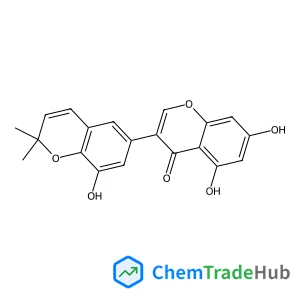
5,7,8'-Trihydroxy-2',2'-dimethyl-2'H,4H-3,6'-bichromen-4-one
CAS Number:
129280-33-7
Molecular Formula:
C20H16O6
Recommended Suppliers





Disclaimer
This page provides academic journal information for reference and research purposes only. We are not affiliated with any journal publishers and do not handle publication submissions. For publication-related inquiries, please contact the respective journal publishers directly.
If you notice any inaccuracies in the information displayed, please contact us at support@chemtradehub.com. We will promptly review and address your concerns.