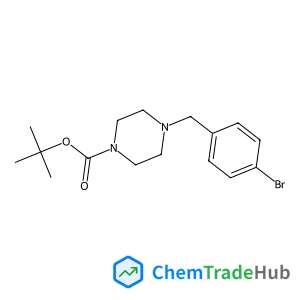
2-Methyl-2-propanyl 4-(4-bromobenzyl)-1-piperazinecarboxylate
CAS Number:
844891-10-7
Molecular Formula:
C16H23BrN2O2
A. P. Jardine, G. Alexandrowicz, H. Hedgeland, W. Allison, J. Ellis
Helium-3 spin-echo (3HeSE) is a powerful, new experimental technique for studying dynamical phenomena at surfaces with ultra-high energy resolution. Resolution is achieved by using the 3He nuclear spin as an internal timer, to enable measurement of the energy changes of individual atoms as they scatter. The technique yields a measurement of surface correlation in reciprocal space and real time, and probes the nanometre length scales and picosecond to nanosecond timescales that are characteristic of many important atomistic processes. In this article we provide an introductory description of the 3HeSE technique for quasi-elastic scattering measurements and explain how it can be used to obtain unique insights into the motion of adsorbates. We illustrate the technique by reviewing recent measurements, starting with simple hopping and then showing how correlations, arising from adsorbate interactions, can be observed. The final measurements demonstrate how the absence of such correlations, when expected, are used to question the conventional description that attributes the coverage dependence of surface processes entirely to pairwise forces between adsorbates. The emphasis throughout is on the characteristic signatures of adsorbate motion that can be seen in the data, without recourse to a detailed theoretical analysis. Numerical simulations using the Langevin equation are used to illustrate generic behaviour and to provide a quantitative analysis of the experiment.
DOI: 10.1039/B302409A
Jianhui Jiang, Yizeng Liang, Toru Amari, Yukihiro Ozaki
DOI: 10.1039/B304635D
Armand Ajdari
DOI: 10.1039/B408382M
Da Chen, Fang Wang, Xueguang Shao, Qingde Su
DOI: 10.1039/B305023H
Pavel Kubáň, Marcel A. Müri, Peter C. Hauser
DOI: 10.1039/B311376K
Megumi Hamano Nagaoka, Hiroshi Akiyama, Tamio Maitani
DOI: 10.1039/B311013N
David A. Ellis, Jonathan W. Martin, Derek C. G. Muir, Scott A. Mabury
DOI: 10.1039/B212658C
DOI: 10.1039/B400924J
Christoph Krafft, Stephan B. Sobottka, Gabriele Schackert, Reiner Salzer
DOI: 10.1039/B408934K
Thomas Franze, Michael G. Weller, Reinhard Niessner, Ulrich Pöschl
DOI: 10.1039/B402624A
Waste containing 2-Ethyl-4-Methyl-1H-Imidazole-5-Carbaldehyde (CAS: 88634-80-4) ...
Triethoxy(octyl)silane (CAS: 1385031-14-0) is widely used in the pharmaceuticals...
Several alternatives to 3-iodo-7-nitro-1H-indazole (CAS: 864724-64-1) exist in t...
Yes, there are alternatives to Benzene, bis[(trimethoxysilyl)ethyl] (CAS: 266317...
Isothiazole-3-carbonitrile (CAS: 1452-17-1) is generally considered safe when us...
(3-Chlorophenyl)methanol (CAS: 873-63-2) is considered low to moderately toxic. ...
(2S,3S)-2-Hydroxy-3-({[(2-methyl-2-propanyl)oxy]carbonyl}amino)-3-(2-naphthyl)pr...
Proper handling of methyl 2-(bromomethyl)-5-methoxybenzoate requires the use of ...
6,8-Dibromoimidazo[1,2-a]pyridine-2-carboxylic acid (CAS: 904805-36-3) is an aro...
3-Amino-5-bromo-2-pyridinecarbonitrile is considered safe when handled under pro...

Physical Chemistry Chemical Physics (PCCP) is an international journal co-owned by 19 physical chemistry and physics societies from around the world. This journal publishes original, cutting-edge research in physical chemistry, chemical physics and biophysical chemistry. To be suitable for publication in PCCP, articles must include significant innovation and/or insight into physical chemistry; this is the most important criterion that reviewers and Editors will judge against when evaluating submissions. The journal has a broad scope and welcomes contributions spanning experiment, theory, computation and data science. Topical coverage includes spectroscopy, dynamics, kinetics, statistical mechanics, thermodynamics, electrochemistry, catalysis, surface science, quantum mechanics, quantum computing and machine learning. Interdisciplinary research areas such as polymers and soft matter, materials, nanoscience, energy, surfaces/interfaces, and biophysical chemistry are welcomed if they demonstrate significant innovation and/or insight into physical chemistry. Joined experimental/theoretical studies are particularly appreciated when complementary and based on up-to-date approaches.
![4-chloro-N-[5-methyl-2-(7H-pyrrolo[2,3-d]pyrimidine-4-carbonyl)-3-pyridyl]-3-(trifluoromethyl)benzenesulfonamide structure](https://static.chemtradehub.com/structs/110/1100318-47-5-127d.webp "4-chloro-N-[5-methyl-2-(7H-pyrrolo[2,3-d]pyrimidine-4-carbonyl)-3-pyridyl]-3-(trifluoromethyl)benzenesulfonamide structure")
![4,4'-[2,5-Biphenyldiylbis(oxy)]dianiline structure](https://static.chemtradehub.com/structs/941/94148-67-1-24c6.webp "4,4'-[2,5-Biphenyldiylbis(oxy)]dianiline structure")