












Strain modulated ferromagnetic phase transitions in monolayer FeCl2 through exchange competitions: the first-principle and Monte Carlo simulations
Literature Information
Publication Date
2020-07-03
DOI
10.1039/D0CP01422B
Impact Factor
3.676
Authors
Ya Yang, Peiyin Guo, Yongsong Luo
View Original
Abstract
Tunable magnetic phase transitions and novel emergent spin phases in two-dimensional materials are fascinating subjects of research. 1T-FeCl2 has been predicted to be a magnetic monolayer. We performed the first-principle calculations based on density functional theory to clarify the electronic structure and magnetic properties of the monolayer 1T-FeCl2 modulated by the uniaxial and biaxial strains. Based on the stable structure confirmed by the phonon calculations, we showed that the geometry and magnetic structures evolved with strain. In combination with the Monte Carlo simulation, we found that the strain could induce a phase transition between the in-plane ferromagnetic order and the out-of-plane anti-ferromagnetic order. Energy bands with the Hubburd U and spin-orbital couplings confirmed the insulator ground state. We identified the strain-magnetism behavior originating from the competition between the direct-exchange interaction and the super-exchange interaction. Meanwhile, the strains regulated the Curie temperatures by selecting the d–p bonding along the x-direction or y-direction. Through strain engineering, the 1T-FeCl2 could be an intriguing platform for the two-dimensional systems and a potential spintronic material.
Related Literature
Exciton diffusion controlled quantum efficiency in hybrid dye sensitized solar cells
Zaicheng Sun, Yajun Cheng, Maria Lechmann, Jiaoli Li, Jixue Li, Jishan Wu, Andrew Grimsdale, Klaus Müllen, Hans-Jürgen Butt
2009-01-26
Paper
DOI: 10.1039/B812217B
Photochemical modification of diamond powders with elemental sulfur and their surface-attachment behavior on gold surfaces
Takako Nakamura, Tsuguyori Ohana, Yuta Hagiwara, Toshiki Tsubota
2008-11-14
Paper
DOI: 10.1039/B814406K
Polymer-nanotube composite mats with improved field emission performance and stability
E. Kymakis, E. Koudoumas
2008-11-26
Paper
DOI: 10.1039/B813198H
Maximum work in minimum time from a conservative quantum system
Peter Salamon, Karl Heinz Hoffmann, Yair Rezek, Ronnie Kosloff
2008-12-18
Paper
DOI: 10.1039/B816102J
Self-assembled dithiothreitol on Au surfaces for biological applications: phospholipid bilayer formation
Tânia B. Creczynski-Pasa, M. Antonieta Daza Millone, Maximiliano L. Munford, Vânia R. de Lima, Tiago O. Vieira, Guillermo A. Benitez, André A. Pasa, Roberto C. Salvarezza, María E. Vela
2008-12-24
Paper
DOI: 10.1039/B811964C
Microwave spectra of mixtures of non-absorbing solid particles and absorbing liquids
Paul D. I. Fletcher, Della D. Grice, Stephen J. Haswell
2008-12-16
Paper
DOI: 10.1039/B817507A
Spectral properties of self-assembled squaraine–tetralactam: a theoretical assessment
Denis Jacquemin, Eric A. Perpète, Adèle D. Laurent, Xavier Assfeld, Carlo Adamo
2009-01-12
Paper
DOI: 10.1039/B817720A
Blinking photoluminescence properties of single TiO2 nanodiscs: interfacial electron transfer dynamics
Seung-Do Oh, Yung Doug Suh, Hiroyuki Yoshikawa, Minjoong Yoon
2008-11-06
Paper
DOI: 10.1039/B812361F
You might also like
Compound Q&A
Are there alternatives to 1-(4-Chlorophenyl)-N-hydroxymethanimine (CAS: 3848-36-0) in synthesis?
When considering alternatives to 1-(4-Chlorophenyl)-N-hydroxymethanimine (CAS: 3...
3848-36-01-(4-Chlorophenyl)-N...
Compound Q&A
How should (1R,9S,10S,12S,14E,16S,19R,20R,21S,22R)-3,9,21-Trihydroxy-5,10,12,14,16,20,22-heptamethyl-23,24-dioxatetracyclo[17.3.1.1~6,9~.0~2,7~]tetracosa-2,5,7,14-tetraen-4-one (CAS: 183202-73-5) be stored?
This compound should be stored in a cool, dry place away from direct sunlight. I...
183202-73-5(1R,9S,10S,12S,14E,1...
Compound Q&A
How is 3-(4-Bromophenyl)-5-(2-fluorophenyl)-1,2,4-oxadiazole (CAS: 419553-16-5) typically synthesized?
3-(4-Bromophenyl)-5-(2-fluorophenyl)-1,2,4-oxadiazole is synthesized through a m...
419553-16-53-(4-Bromophenyl)-5-...
Compound Q&A
How is 5-Chloro-2-(4-chlorophenyl)-4-methyl-6-[3-(1-piperidinyl)propoxy]pyrimidine (CAS: 1639220-19-1) typically synthesized?
5-Chloro-2-(4-chlorophenyl)-4-methyl-6-[3-(1-piperidinyl)propoxy]pyrimidine (CAS...
1639220-19-15-Chloro-2-(4-chloro...
Compound Q&A
What industries use 2-Chloro-4-(difluoromethoxy)pyridine (CAS: 1206978-15-5)?
2-Chloro-4-(difluoromethoxy)pyridine is used in the pharmaceutical industry for ...
1206978-15-52-Chloro-4-(difluoro...
Compound Q&A
What regulatory guidelines apply to 3-Chloro-6-methylpyridazine (CAS: 1121-79-5)?
3-Chloro-6-methylpyridazine (CAS: 1121-79-5) is classified under the Globally Ha...
1121-79-53-Chloro-6-methylpyr...
Compound Q&A
Are there alternatives to Methyl 4,5-dimethyl-2-nitrobenzoate in synthesis?
Several alternatives can be used in the synthesis of Methyl 4,5-dimethyl-2-nitro...
90922-74-0Methyl 4,5-dimethyl-...
Compound Q&A
Are there alternatives to (2E,2'E)-3,3'-(1,4-Phenylene)bisacrylaldehyde in synthesis?
Alternatives to (2E,2'E)-3,3'-(1,4-Phenylene)bisacrylaldehyde include other acry...
63405-68-5(2E,2'E)-3,3'-(1,4-P...
Compound Q&A
What is 3-Amino-5-chloropyridin-2-ol hydrochloride (CAS: 1261906-29-9)?
3-Amino-5-chloropyridin-2-ol hydrochloride is an organic compound with the CAS n...
1261906-29-93-Amino-5-chloropyri...
Compound Q&A
What precautions should be taken when handling 6,7-Difluoro-2,3-dihydro-4H-chromen-4-one (CAS: 1092349-93-3)?
When handling 6,7-Difluoro-2,3-dihydro-4H-chromen-4-one, it is essential to wear...
1092349-93-36,7-Difluoro-2,3-dih...
Source Journal
Physical Chemistry Chemical Physics

CiteScore:
5.5
Self-citation Rate:
10.3%
Articles per Year:
3036
Physical Chemistry Chemical Physics (PCCP) is an international journal co-owned by 19 physical chemistry and physics societies from around the world. This journal publishes original, cutting-edge research in physical chemistry, chemical physics and biophysical chemistry. To be suitable for publication in PCCP, articles must include significant innovation and/or insight into physical chemistry; this is the most important criterion that reviewers and Editors will judge against when evaluating submissions. The journal has a broad scope and welcomes contributions spanning experiment, theory, computation and data science. Topical coverage includes spectroscopy, dynamics, kinetics, statistical mechanics, thermodynamics, electrochemistry, catalysis, surface science, quantum mechanics, quantum computing and machine learning. Interdisciplinary research areas such as polymers and soft matter, materials, nanoscience, energy, surfaces/interfaces, and biophysical chemistry are welcomed if they demonstrate significant innovation and/or insight into physical chemistry. Joined experimental/theoretical studies are particularly appreciated when complementary and based on up-to-date approaches.
Recommended Compounds
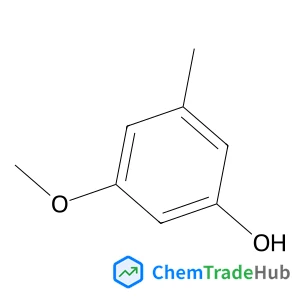
![2,9-Dichloro-5,12-dihydroquinolino[2,3-b]acridine-7,14-dione structure](https://static.chemtradehub.com/structs/308/3089-17-6-750b.webp "2,9-Dichloro-5,12-dihydroquinolino[2,3-b]acridine-7,14-dione structure")
2,9-Dichloro-5,12-dihydroquinolino[2,3-b]acridine-7,14-dione
CAS Number:
3089-17-6
Molecular Formula:
C20H10Cl2N2O2
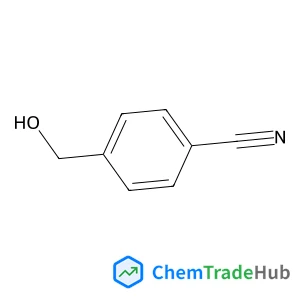
![N-[(E)-Phenylmethylene]benzenesulfonamide structure](https://static.chemtradehub.com/structs/139/13909-34-7-8167.webp "N-[(E)-Phenylmethylene]benzenesulfonamide structure")
Recommended Suppliers







Disclaimer
This page provides academic journal information for reference and research purposes only. We are not affiliated with any journal publishers and do not handle publication submissions. For publication-related inquiries, please contact the respective journal publishers directly.
If you notice any inaccuracies in the information displayed, please contact us at support@chemtradehub.com. We will promptly review and address your concerns.