


Polymer-nanotube composite mats with improved field emission performance and stability
Literature Information
Publication Date
2008-11-26
DOI
10.1039/B813198H
Impact Factor
3.676
Authors
E. Kymakis, E. Koudoumas
View Original
Abstract
The results of electron field emission from single walled carbon nanotubes (SWCNTs) mats deposited on different composite films of SWCNTs and poly(3-octylthiophene) (P3OT) semiconducting polymer are presented. Three different structures were tested: (a) dense and sparse SWCNT mats on n+-Si; (b) SWCNT mats on composite films with different SWCNT-P3OT ratios; (c) composite films with different SWCNT-P3OT ratios on n+-Si. The experiments show that there is a critical SWCNT-P3OT concentration in which the field emission stability of SWCNT mats is remarkably improved with a small reduction in the emission threshold compared to the optimum pristine SWCNT film. The contribution of the composite film morphology as well as the role of polymer–nanotube interaction on the emission performance are evaluated. The physical mechanism behind the stability of composite field emitters is also discussed.
Recommended Journals

Science Progress

Journal of Medicinal Chemistry

Kinetics and Catalysis

Proceedings of the National Academy of Sciences of the United States of America

Journal of Organometallic Chemistry

Journal of Catalysis

Molecular Pharmacology

Journal of Physics and Chemistry of Solids

Israel Journal of Chemistry

Pharmacological Reviews
Related Literature
Fabrication of honeycomb films from highly functional dendritic structures: electrostatic force driven immobilization of biomolecules
A. S. De León, S. Malhotra, M. Molina, A. Muñoz-Bonilla, J. Rodríguez-Hernández
2016-05-23
Paper
DOI: 10.1039/C6PY00601A
The enhanced actuation response of an ionic polymer–metal composite actuator based on sulfonated polyphenylsulfone
Yongjun Tang, Chao Chen, Yun Sheng Ye, Zhigang Xue, Xingping Zhou, Xiaolin Xie
2014-07-07
Paper
DOI: 10.1039/C4PY00663A
Indium-catalyzed polycyclotrimerization of diynes: a facile route to prepare regioregular hyperbranched polyarylenes
Zhe Wang, Yang Shi, Jian Wang, Lingzhi Li, Haiqiang Wu, Bicheng Yao, Jing Zhi Sun
2014-07-15
Communication
DOI: 10.1039/C4PY00859F
Facile RAFT synthesis of side-chain amino acids containing pH-responsive hyperbranched and star architectures
Saswati Ghosh Roy, Priyadarsi De
2014-07-21
Paper
DOI: 10.1039/C4PY00766B
Nanopatterned L10-FePt nanoparticles from single-source metallopolymer precursors for potential application in ferromagnetic bit-patterned media magnetic recording
Zhengong Meng, Guijun Li, Sheung-Mei Ng, Hon-Fai Wong, Sze-Chun Yiu, Chi-Wah Leung
2016-06-01
Paper
DOI: 10.1039/C6PY00714G
Enhanced drug toxicity by conjugation of platinum drugs to polymers with guanidine containing zwitterionic functional groups that mimic cell-penetrating peptides
Robert H. Utama, Hongxu Lu, Martina H. Stenzel
2014-08-07
Paper
DOI: 10.1039/C4PY00802B
Synthesis and properties of a well-defined copolymer of chlorotrifluoroethylene and N-vinylpyrrolidone by xanthate-mediated radical copolymerization under 60Co γ-ray irradiation
Pucheng Wang, Jingwen Dai, Lei Liu, Qibao Dong, Hu Wang, Ruke Bai
2014-07-24
Paper
DOI: 10.1039/C4PY00902A
Synthesis and characterization of supramolecular cross-linkers containing cyclodextrin dimer and trimer
Keisuke Iijima, Daisuke Aoki, Hiromitsu Sogawa, Shigeo Asai, Toshikazu Takata
2016-04-13
Communication
DOI: 10.1039/C6PY00367B
You might also like
Compound Q&A
Are there alternatives to 1-(4-Chlorophenyl)-N-hydroxymethanimine (CAS: 3848-36-0) in synthesis?
When considering alternatives to 1-(4-Chlorophenyl)-N-hydroxymethanimine (CAS: 3...
3848-36-01-(4-Chlorophenyl)-N...
Compound Q&A
How should (1R,9S,10S,12S,14E,16S,19R,20R,21S,22R)-3,9,21-Trihydroxy-5,10,12,14,16,20,22-heptamethyl-23,24-dioxatetracyclo[17.3.1.1~6,9~.0~2,7~]tetracosa-2,5,7,14-tetraen-4-one (CAS: 183202-73-5) be stored?
This compound should be stored in a cool, dry place away from direct sunlight. I...
183202-73-5(1R,9S,10S,12S,14E,1...
Compound Q&A
How is 3-(4-Bromophenyl)-5-(2-fluorophenyl)-1,2,4-oxadiazole (CAS: 419553-16-5) typically synthesized?
3-(4-Bromophenyl)-5-(2-fluorophenyl)-1,2,4-oxadiazole is synthesized through a m...
419553-16-53-(4-Bromophenyl)-5-...
Compound Q&A
How is 5-Chloro-2-(4-chlorophenyl)-4-methyl-6-[3-(1-piperidinyl)propoxy]pyrimidine (CAS: 1639220-19-1) typically synthesized?
5-Chloro-2-(4-chlorophenyl)-4-methyl-6-[3-(1-piperidinyl)propoxy]pyrimidine (CAS...
1639220-19-15-Chloro-2-(4-chloro...
Compound Q&A
What industries use 2-Chloro-4-(difluoromethoxy)pyridine (CAS: 1206978-15-5)?
2-Chloro-4-(difluoromethoxy)pyridine is used in the pharmaceutical industry for ...
1206978-15-52-Chloro-4-(difluoro...
Compound Q&A
What regulatory guidelines apply to 3-Chloro-6-methylpyridazine (CAS: 1121-79-5)?
3-Chloro-6-methylpyridazine (CAS: 1121-79-5) is classified under the Globally Ha...
1121-79-53-Chloro-6-methylpyr...
Compound Q&A
Are there alternatives to Methyl 4,5-dimethyl-2-nitrobenzoate in synthesis?
Several alternatives can be used in the synthesis of Methyl 4,5-dimethyl-2-nitro...
90922-74-0Methyl 4,5-dimethyl-...
Compound Q&A
Are there alternatives to (2E,2'E)-3,3'-(1,4-Phenylene)bisacrylaldehyde in synthesis?
Alternatives to (2E,2'E)-3,3'-(1,4-Phenylene)bisacrylaldehyde include other acry...
63405-68-5(2E,2'E)-3,3'-(1,4-P...
Compound Q&A
What is 3-Amino-5-chloropyridin-2-ol hydrochloride (CAS: 1261906-29-9)?
3-Amino-5-chloropyridin-2-ol hydrochloride is an organic compound with the CAS n...
1261906-29-93-Amino-5-chloropyri...
Compound Q&A
What precautions should be taken when handling 6,7-Difluoro-2,3-dihydro-4H-chromen-4-one (CAS: 1092349-93-3)?
When handling 6,7-Difluoro-2,3-dihydro-4H-chromen-4-one, it is essential to wear...
1092349-93-36,7-Difluoro-2,3-dih...
Source Journal
Physical Chemistry Chemical Physics

CiteScore:
5.5
Self-citation Rate:
10.3%
Articles per Year:
3036
Physical Chemistry Chemical Physics (PCCP) is an international journal co-owned by 19 physical chemistry and physics societies from around the world. This journal publishes original, cutting-edge research in physical chemistry, chemical physics and biophysical chemistry. To be suitable for publication in PCCP, articles must include significant innovation and/or insight into physical chemistry; this is the most important criterion that reviewers and Editors will judge against when evaluating submissions. The journal has a broad scope and welcomes contributions spanning experiment, theory, computation and data science. Topical coverage includes spectroscopy, dynamics, kinetics, statistical mechanics, thermodynamics, electrochemistry, catalysis, surface science, quantum mechanics, quantum computing and machine learning. Interdisciplinary research areas such as polymers and soft matter, materials, nanoscience, energy, surfaces/interfaces, and biophysical chemistry are welcomed if they demonstrate significant innovation and/or insight into physical chemistry. Joined experimental/theoretical studies are particularly appreciated when complementary and based on up-to-date approaches.
Recommended Compounds
![[4-(Isobutyrylamino)phenyl]boronic acid structure](https://static.chemtradehub.com/structs/874/874219-50-8-6ab5.webp "[4-(Isobutyrylamino)phenyl]boronic acid structure")
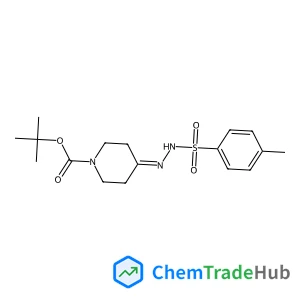
tert-Butyl 4-(2-(p-Tolylsulfonyl)hydrazono)piperidine-1-carboxylate
CAS Number:
1046478-89-0
Molecular Formula:
C17H25N3O4S
Recommended Suppliers





Disclaimer
This page provides academic journal information for reference and research purposes only. We are not affiliated with any journal publishers and do not handle publication submissions. For publication-related inquiries, please contact the respective journal publishers directly.
If you notice any inaccuracies in the information displayed, please contact us at support@chemtradehub.com. We will promptly review and address your concerns.