













Intramolecular vibrational energy redistribution and the quantum ergodicity transition: a phase space perspective
Literature Information
Publication Date
2020-04-20
DOI
10.1039/D0CP01413C
Impact Factor
3.676
Authors
Sourav Karmakar, Srihari Keshavamurthy
View Original
Abstract
Intramolecular vibrational energy redistribution (IVR) impacts the dynamics of reactions in a profound way. Theoretical and experimental studies are increasingly indicating that accounting for the finite rate of energy flow is critical for uncovering the correct reaction mechanisms and calculating accurate rates. This requires an explicit understanding of the influence and interplay of the various anharmonic (Fermi) resonances that lead to the coupling of the vibrational modes. In this regard, the local random matrix theory (LRMT) and the related Bose-statistics triangle rule (BSTR) model have emerged as powerful and predictive quantum theories for IVR. In this Perspective we highlight the close correspondence between LRMT and the classical phase space perspective on IVR, primarily using model Hamiltonians with three degrees of freedom. Our purpose for this is threefold. First, this clearly brings out the extent to which IVR pathways are essentially classical, and hence crucial towards attempts to control IVR. Second, given that LRMT and BSTR are designed to be applicable for large molecules, the exquisite correspondence observed even for small molecules allows for insights into the quantum ergodicity transition. Third, we showcase the power of modern nonlinear dynamics methods in analysing high dimensional phase spaces, thereby extending the deep insights into IVR that were earlier gained for systems with effectively two degrees of freedom. We begin with a brief overview of recent examples where IVR plays an important role and conclude by mentioning the outstanding problems and the potential connections to issues of interest in other fields.
Related Literature
A potential role for protein tyrosine phosphatase inhibition by a RuIII–edta complex (edta = ethylenediaminetetraacetate) in its biological activity
Debabrata Chatterjee, Anannya Mitra, Aviva Levina, Peter A. Lay
2008-05-28
Communication
DOI: 10.1039/B803261K
Vinyl and ring-opening metathesis polymerization of norbornene with novel half-sandwich iridium(iii) complexes bearing hydroxyindanimine ligands
Xia Meng, Guang-Rong Tang, Guo-Xin Jin
2008-05-08
Communication
DOI: 10.1039/B803382J
Gold nanocomposites with rigid fully conjugated heteroditopic ligands shell as nanobuilding blocks for coordination chemistry
Cédric R. Mayer, Eddy Dumas, Aude Michel, Francis Sécheresse
2006-09-21
Communication
DOI: 10.1039/B610631E
Crystal engineering of coordination polymers using 4,4′-bipyridine as a bond between transition metal atoms
Kumar Biradha, Madhushree Sarkar, Lalit Rajput
2006-08-16
Feature Article
DOI: 10.1039/B606184B
An efficient and reusable carbon-supported platinum catalyst for aerobic oxidation of alcohols in water
Yun Hau Ng, Shigeru Ikeda, Takashi Harada, Yoshihiro Morita, Michio Matsumura
2008-05-07
Communication
DOI: 10.1039/B803912G
Rhodium N-confused porphyrin-catalyzed alkene cyclopropanation
Teppei Niino, Motoki Toganoh, Bruno Andrioletti
2006-09-05
Communication
DOI: 10.1039/B608154A
Annulation of β-aryl-α-nitro-α,β-enals and 2,2-dimethyl-1,3-dioxan-5-one: a one-step assembly of nitrocyclitols. Application to a short practical synthesis of (±)-7-deoxy-2-epi-pancratistatin tetraacetate
Juan Carlos Ortiz, Lidia Ozores, Fernando Cagide-Fagín, Ricardo Alonso
2006-08-31
Communication
DOI: 10.1039/B606277F
Enantioselective rhodium-catalyzed addition of arylboronic acids to trifluoromethyl ketones
Sébastien L. X. Martina, Richard B. C. Jagt, Johannes G. de Vries, Ben L. Feringa, Adriaan J. Minnaard
2006-08-22
Communication
DOI: 10.1039/B609453H
You might also like
Compound Q&A
What are the main uses of 4-Nitrophenyl phosphate disodium salt hexahydrate (CAS: 333338-18-4)?
4-Nitrophenyl phosphate disodium salt hexahydrate is primarily used as a substra...
333338-18-44-Nitrophenyl phosph...
Compound Q&A
What are the main uses of 2-(Trifluoromethyl)-1,3-oxazole-4-carboxylic Acid (CAS: 1060816-01-4)?
2-(Trifluoromethyl)-1,3-oxazole-4-carboxylic Acid (CAS: 1060816-01-4) is widely ...
1060816-01-42-(Trifluoromethyl)-...
Compound Q&A
How should 2-Fluoro-4-biphenylcarboxylic acid (CAS: 137045-30-8) be stored?
2-Fluoro-4-biphenylcarboxylic acid should be stored in a cool, dry place at room...
137045-30-82-Fluoro-4-biphenylc...
Compound Q&A
What industries use Prednisolone-21-Carboxylic Acid (CAS: 61549-70-0)?
Prednisolone-21-Carboxylic Acid is primarily used in the pharmaceutical industry...
61549-70-0Prednisolone-21-Carb...
Compound Q&A
How should 4-(Hydrazinomethyl)-1,2,3-benzenetriol (CAS: 3614-72-0) be stored?
4-(Hydrazinomethyl)-1,2,3-benzenetriol (CAS: 3614-72-0) should be stored in a co...
3614-72-04-(Hydrazinomethyl)-...
Compound Q&A
What industries use 4-Amino-1-methyl-1H-pyrazole-5-carboxylic acid hydrochloride (CAS: 92534-70-8)?
4-Amino-1-methyl-1H-pyrazole-5-carboxylic acid hydrochloride (CAS: 92534-70-8) i...
92534-70-84-Amino-1-methyl-1H-...
Compound Q&A
What regulatory guidelines apply to dehydropachymic acid (CAS: 77012-31-8)?
Dehydropachymic acid (CAS: 77012-31-8) is regulated by various agencies. It fall...
77012-31-8Dehydropachymic acid
Compound Q&A
What is the market or research trend for 6-[(2,2-Dimethylpropanoyl)amino]nicotinic acid (CAS: 898561-66-5)?
The market and research trends for 6-[(2,2-Dimethylpropanoyl)amino]nicotinic aci...
898561-66-56-[(2,2-Dimethylprop...
Compound Q&A
How should 1,10-Phenanthroline-2,9-dicarbaldehyde (CAS: 57709-62-3) be stored?
1,10-Phenanthroline-2,9-dicarbaldehyde should be stored in a cool, dry place awa...
57709-62-31,10-Phenanthroline-...
Compound Q&A
How is 5-Carbamoyl-11-oxo-10,11-dihydro-5H-dibenzo[b,f]azepin-10-yl acetate (CAS: 113952-21-9) typically synthesized?
5-Carbamoyl-11-oxo-10,11-dihydro-5H-dibenzo[b,f]azepin-10-yl acetate can be synt...
113952-21-95-Carbamoyl-11-oxo-1...
Source Journal
Physical Chemistry Chemical Physics

CiteScore:
5.5
Self-citation Rate:
10.3%
Articles per Year:
3036
Physical Chemistry Chemical Physics (PCCP) is an international journal co-owned by 19 physical chemistry and physics societies from around the world. This journal publishes original, cutting-edge research in physical chemistry, chemical physics and biophysical chemistry. To be suitable for publication in PCCP, articles must include significant innovation and/or insight into physical chemistry; this is the most important criterion that reviewers and Editors will judge against when evaluating submissions. The journal has a broad scope and welcomes contributions spanning experiment, theory, computation and data science. Topical coverage includes spectroscopy, dynamics, kinetics, statistical mechanics, thermodynamics, electrochemistry, catalysis, surface science, quantum mechanics, quantum computing and machine learning. Interdisciplinary research areas such as polymers and soft matter, materials, nanoscience, energy, surfaces/interfaces, and biophysical chemistry are welcomed if they demonstrate significant innovation and/or insight into physical chemistry. Joined experimental/theoretical studies are particularly appreciated when complementary and based on up-to-date approaches.
Recommended Compounds
![[(1S,2S,3R,4S,7R,9S,10S,12R,15S)-4,12-Diacetyloxy-15-[(2R,3S)-3-benzamido-3-phenyl-2-(2,2,2-trichloroethoxycarbonyloxy)propanoyl]oxy-1,9-dihydroxy-10,14,17,17-tetramethyl-11-oxo-6-oxatetracyclo[11.3.1.03,10.04,7]heptadec-13-en-2-yl] benzoate structure](https://static.chemtradehub.com/structs/100/100431-55-8-7104.webp "[(1S,2S,3R,4S,7R,9S,10S,12R,15S)-4,12-Diacetyloxy-15-[(2R,3S)-3-benzamido-3-phenyl-2-(2,2,2-trichloroethoxycarbonyloxy)propanoyl]oxy-1,9-dihydroxy-10,14,17,17-tetramethyl-11-oxo-6-oxatetracyclo[11.3.1.03,10.04,7]heptadec-13-en-2-yl] benzoate structure")
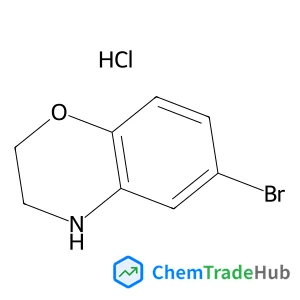
6-Bromo-3,4-dihydro-2H-1,4-benzoxazine hydrochloride (1:1)
CAS Number:
1260803-10-8
Molecular Formula:
C8H9BrClNO
Recommended Suppliers




Disclaimer
This page provides academic journal information for reference and research purposes only. We are not affiliated with any journal publishers and do not handle publication submissions. For publication-related inquiries, please contact the respective journal publishers directly.
If you notice any inaccuracies in the information displayed, please contact us at support@chemtradehub.com. We will promptly review and address your concerns.