












Enantioselective rhodium-catalyzed addition of arylboronic acids to trifluoromethyl ketones
Literature Information
Publication Date
2006-08-22
DOI
10.1039/B609453H
Impact Factor
6.222
Authors
Sébastien L. X. Martina, Richard B. C. Jagt, Johannes G. de Vries, Ben L. Feringa, Adriaan J. Minnaard
View Original
Abstract
The catalytic asymmetric 1,2-addition of a series of arylboronic acids to 2,2,2-trifluoroacetophenones is described with high isolated yields (up to 96%) and good enantioselectivities (up to 83% ee) using a rhodium(I)/phosphoramidite catalyst.
Related Literature
Effect of epoxy monomer structure on the curing process and thermo-mechanical characteristics of tri-functional epoxy/amine systems: a methodology combining atomistic molecular simulation with experimental analyses
Liang Gao, Qingjie Zhang, Hao Li, Siruo Yu, Weihong Zhong, Gang Sui, Xiaoping Yang
2017-02-10
Paper
DOI: 10.1039/C7PY00063D
Ultra-pH-sensitive polypeptide micelles with large fluorescence off/on ratio in near infrared range
Liyi Fu, Pan Yuan, Zheng Ruan, Le Liu, Tuanwei Li, Lifeng Yan
2016-12-16
Paper
DOI: 10.1039/C6PY01818A
A dendrimer–hydrophobic interaction synergy improves the stability of polyion complex micelles
Marcos Fernandez-Villamarin, Ana Sousa-Herves, Silvia Porto, Noelia Guldris, José Martínez-Costas, Ricardo Riguera, Eduardo Fernandez-Megia
2017-03-28
Paper
DOI: 10.1039/C7PY00304H
Deep eutectic solvents for green and efficient iron-mediated ligand-free atom transfer radical polymerization
Jirong Wang, Jianyu Han, Mohd Yusuf Khan, Dan He, Haiyan Peng, Dianyu Chen, Xiaolin Xie, Zhigang Xue
2017-01-23
Paper
DOI: 10.1039/C6PY02066F
Poly(fluoroacrylate)s with tunable surface hydrophobicity via radical copolymerization of 2,2,2-trifluoroethyl α-fluoroacrylate and 2-(trifluoromethyl)acrylic acid
Sanjib Banerjee, Bhausaheb V. Tawade, Vincent Ladmiral, Lionel X. Dupuy, Bruno Améduri
2017-03-07
Paper
DOI: 10.1039/C7PY00209B
Tumor-targeted aggregation of pH-sensitive nanocarriers for enhanced retention and rapid intracellular drug release
Wei Wu, Qiujing Zhang, Jiantao Wang, Miao Chen, Shuai Li, Zaifu Lin, Jianshu Li
2014-05-30
Paper
DOI: 10.1039/C4PY00575A
Preparation of a highly reactive polymer click reagent, PEG nitrile N-oxide, and its application in block and star polymer synthesis
Toyokazu Tsutsuba
2017-02-06
Communication
DOI: 10.1039/C7PY00100B
Synthesis of cardo-polymers using Tröger's base formation
Mariolino Carta, Matthew Croad, Johannes C. Jansen, Paola Bernardo, Gabriele Clarizia, Neil B. McKeown
2014-06-20
Paper
DOI: 10.1039/C4PY00607K
You might also like
Compound Q&A
What are the main uses of 4-Nitrophenyl phosphate disodium salt hexahydrate (CAS: 333338-18-4)?
4-Nitrophenyl phosphate disodium salt hexahydrate is primarily used as a substra...
333338-18-44-Nitrophenyl phosph...
Compound Q&A
What are the main uses of 2-(Trifluoromethyl)-1,3-oxazole-4-carboxylic Acid (CAS: 1060816-01-4)?
2-(Trifluoromethyl)-1,3-oxazole-4-carboxylic Acid (CAS: 1060816-01-4) is widely ...
1060816-01-42-(Trifluoromethyl)-...
Compound Q&A
How should 2-Fluoro-4-biphenylcarboxylic acid (CAS: 137045-30-8) be stored?
2-Fluoro-4-biphenylcarboxylic acid should be stored in a cool, dry place at room...
137045-30-82-Fluoro-4-biphenylc...
Compound Q&A
What industries use Prednisolone-21-Carboxylic Acid (CAS: 61549-70-0)?
Prednisolone-21-Carboxylic Acid is primarily used in the pharmaceutical industry...
61549-70-0Prednisolone-21-Carb...
Compound Q&A
How should 4-(Hydrazinomethyl)-1,2,3-benzenetriol (CAS: 3614-72-0) be stored?
4-(Hydrazinomethyl)-1,2,3-benzenetriol (CAS: 3614-72-0) should be stored in a co...
3614-72-04-(Hydrazinomethyl)-...
Compound Q&A
What industries use 4-Amino-1-methyl-1H-pyrazole-5-carboxylic acid hydrochloride (CAS: 92534-70-8)?
4-Amino-1-methyl-1H-pyrazole-5-carboxylic acid hydrochloride (CAS: 92534-70-8) i...
92534-70-84-Amino-1-methyl-1H-...
Compound Q&A
What regulatory guidelines apply to dehydropachymic acid (CAS: 77012-31-8)?
Dehydropachymic acid (CAS: 77012-31-8) is regulated by various agencies. It fall...
77012-31-8Dehydropachymic acid
Compound Q&A
What is the market or research trend for 6-[(2,2-Dimethylpropanoyl)amino]nicotinic acid (CAS: 898561-66-5)?
The market and research trends for 6-[(2,2-Dimethylpropanoyl)amino]nicotinic aci...
898561-66-56-[(2,2-Dimethylprop...
Compound Q&A
How should 1,10-Phenanthroline-2,9-dicarbaldehyde (CAS: 57709-62-3) be stored?
1,10-Phenanthroline-2,9-dicarbaldehyde should be stored in a cool, dry place awa...
57709-62-31,10-Phenanthroline-...
Compound Q&A
How is 5-Carbamoyl-11-oxo-10,11-dihydro-5H-dibenzo[b,f]azepin-10-yl acetate (CAS: 113952-21-9) typically synthesized?
5-Carbamoyl-11-oxo-10,11-dihydro-5H-dibenzo[b,f]azepin-10-yl acetate can be synt...
113952-21-95-Carbamoyl-11-oxo-1...
Source Journal
Chemical Communications

CiteScore:
8.6
Self-citation Rate:
4.7%
Articles per Year:
2458
ChemComm publishes urgent research which is of outstanding significance and interest to experts in the field, while also appealing to the journal’s broad chemistry readership. Our communication format is ideally suited to short, urgent studies that are of such importance that they require accelerated publication. Our scope covers all topics in chemistry, and research at the interface of chemistry and other disciplines (such as materials science, nanoscience, physics, engineering and biology) where there is a significant novelty in the chemistry aspects. Major topic areas covered include: Analytical Chemistry Catalysis Chemical Biology and medicinal chemistry Computational Chemistry and Machine Learning Energy and sustainable chemistry Environmental Chemistry Green Chemistry Inorganic Chemistry Materials Chemistry Nanoscience Organic Chemistry Physical Chemistry Polymer Chemistry Supramolecular Chemistry
Recommended Compounds
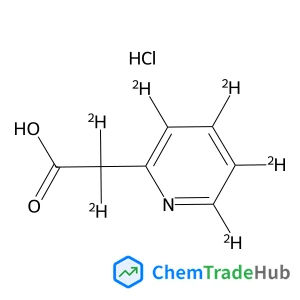
2,2-dideuterio-2-(3,4,5,6-tetradeuterio-2-pyridyl)acetic acid;hydrochloride
CAS Number:
1329799-67-8
Molecular Formula:
C7H2ClD6NO2

Recommended Suppliers






Disclaimer
This page provides academic journal information for reference and research purposes only. We are not affiliated with any journal publishers and do not handle publication submissions. For publication-related inquiries, please contact the respective journal publishers directly.
If you notice any inaccuracies in the information displayed, please contact us at support@chemtradehub.com. We will promptly review and address your concerns.