












Understanding of the C–H stretch region of infra-red spectroscopy: an analysis of the final state wavefunctions
Literature Information
Publication Date
2021-03-18
DOI
10.1039/D0CP01157F
Impact Factor
3.676
Authors
Swati Yadav, Subrata Banik, M. Durga Prasad
View Original
Abstract
The nature of the wavefunctions associated with the final states in the CH stretching region of several medium sized molecules is analysed. The number of optically bright transitions is much larger than the number of CH oscillators present in the molecule, and they are spread over a range of about 300 cm−1. Several of them are clustered together within about 5 cm−1 with near equal intensities. The final states of all these transitions are superpositions of multiple zeroth order states. In almost all of such superpositions, no single zeroth order state has more than 50% weight. Several multiquantum states, with three to four quanta of excitation dominate the final states, with the CH chromophore contributing only a small weightage. Thus the band structure of the CH stretch region is due to several optically bright transitions whose final states are superpositions of low frequency multiquantum states with the CH chromophore contributing only a small weight to make them spectroscopically active.
Related Literature
Giant exchange bias field above room temperature in perovskite YbCr1−xFexO3 (x = 0.6–0.9)
Kang Zhao, Dao Wang, Sajjad Ur Rehman
2023-12-06
Paper
DOI: 10.1039/D3CP04883G
Pressure effects on both fluorescent emission and charge transport properties of organic semiconductors: a computational study
Yi Zeng, Wen Shi, Qian Peng, Yingli Niu, Zhiying Ma, Xiaoyan Zheng
2023-12-05
Paper
DOI: 10.1039/D3CP03852A
Dendrite-free deposition and side-reaction suppression of zinc anodes achieved via constructing synergistic interface buffer layers
Ting Li, Zhongfu Yan, Mengjiao Liu, Xinyu Liu, Liang Liu, Jiahao Chen, Jianping Long
2023-12-09
Paper
DOI: 10.1039/D3SE01334K
Effect of a single methyl substituent on the electronic structure of cobaltocene studied by computationally assisted MATI spectroscopy
Sergey Yu. Ketkov, Sheng-Yuan Tzeng, Elena A. Rychagova, Anton N. Lukoyanov, Wen-Bih Tzeng
2023-12-05
Paper
DOI: 10.1039/D3CP05120J
Analysing the stability of He-filled hydrates: how many He atoms fit in the sII crystal?
Raquel Yanes-Rodríguez, Rita Prosmiti
2023-12-01
Paper
DOI: 10.1039/D3CP05410A
The single metal atom (Ni, Pd, Pt) anchored on defective hexagonal boron nitride for oxidative desulfurization
Naixia Lv, Hongshun Ran, Jinrui Zhang, Jie Yin, Yuan Zhang, Hongping Li, Linhua Zhu
2023-12-19
Paper
DOI: 10.1039/D3CP04963A
Sufficient driving force for quinoidal isoindigo-based diradicaloids with tunable diradical characters
Li Shen, Xiaobo Gao, Zhanqing Chang, Changhao Zhang, Yue Li, Jitao Lu, Qingguo Meng, Qian Wu
2023-12-13
Paper
DOI: 10.1039/D3CP05199D
Insights into the multi-functional lithium difluoro(oxalate)borate additive in boosting the Li-ion reaction kinetics for Li3VO4 anodes
Miaomiao Zhang, Cunyuan Pei, Qiqi Xiang, Lintao Liu, Zhongxu Dai, Huijuan Ma, Shibing Ni
2023-12-06
Paper
DOI: 10.1039/D3CP04952C
You might also like
Compound Q&A
How should waste containing N-Methoxy-N-methyl-1,3-thiazole-5-carboxamide (CAS: 898825-89-3) be handled?
Waste containing N-Methoxy-N-methyl-1,3-thiazole-5-carboxamide (CAS: 898825-89-3...
898825-89-3N-Methoxy-N-methyl-1...
Compound Q&A
How should N-(4-Biphenylyl)dibenzo[b,d]furan-4-amine (CAS: 1318338-47-4) be stored?
N-(4-Biphenylyl)dibenzo[b,d]furan-4-amine should be stored in a tightly sealed c...
1318338-47-4N-(4-Biphenylyl)dibe...
Compound Q&A
What is the market or research trend for 3-Acetamido-5-amino-2,4,6-triiodobenzoic acid (CAS: 1713-07-1)?
The market for 3-Acetamido-5-amino-2,4,6-triiodobenzoic acid (CAS: 1713-07-1) is...
1713-07-13-Acetamido-5-amino-...
Compound Q&A
How should Benzyl 2-O-acetyl-3,4,6-tri-O-benzyl-beta-D-galactopyranoside (CAS: 61820-03-9) be stored?
Benzyl 2-O-acetyl-3,4,6-tri-O-benzyl-beta-D-galactopyranoside (CAS: 61820-03-9) ...
61820-03-9Benzyl 2-O-acetyl-3,...
Compound Q&A
What regulatory guidelines apply to 2-Ethylpiperazine dihydrochloride (CAS: 438050-52-3)?
2-Ethylpiperazine dihydrochloride (CAS: 438050-52-3) is regulated under the Glob...
438050-52-32-Ethylpiperazine di...
Compound Q&A
What regulatory guidelines apply to 1,1'-[1,3-Phenylenebis(methylene)]bis(3-methyl-1H-pyrrole-2,5-dione) (CAS: 119462-56-5)?
1,1'-[1,3-Phenylenebis(methylene)]bis(3-methyl-1H-pyrrole-2,5-dione) (CAS: 11946...
119462-56-51,1'-[1,3-Phenyleneb...
Compound Q&A
Are there alternatives to 5-Fluoro-2-(1-pyrrolidinyl)pyridine (CAS: 1287217-79-1) in synthesis?
Several alternatives can be used in the synthesis of 5-Fluoro-2-(1-pyrrolidinyl)...
1287217-79-15-Fluoro-2-(1-pyrrol...
Compound Q&A
What precautions should be taken when handling 1-((2R,3R,4R,5R)-5-((bis(4-methoxyphenyl)(phenyl)methoxy)methyl)-4-hydroxy-3-methoxytetrahydrofuran-2-yl)-5-methylpyrimidine-2,4(1H,3H)-dione (CAS: 153631-19-7)?
Proper personal protective equipment (PPE) must be worn when handling this compo...
153631-19-71-((2R,3R,4R,5R)-5-(...
Compound Q&A
What precautions should be taken when handling 6-Bromoimidazo[1,2-a]pyridin-8-amine (CAS: 676371-00-9)?
When handling 6-Bromoimidazo[1,2-a]pyridin-8-amine, it is important to wear appr...
676371-00-96-Bromoimidazo[1,2-a...
Compound Q&A
Are there alternatives to (2S,4R)-4-(4-Nitrobenzyl)pyrrolidine-2-carboxylic acid hydrochloride (CAS: 1049740-22-8) in synthesis?
Alternatives to (2S,4R)-4-(4-Nitrobenzyl)pyrrolidine-2-carboxylic acid hydrochlo...
1049740-22-8(2S,4R)-4-(4-Nitrobe...
Source Journal
Physical Chemistry Chemical Physics

CiteScore:
5.5
Self-citation Rate:
10.3%
Articles per Year:
3036
Physical Chemistry Chemical Physics (PCCP) is an international journal co-owned by 19 physical chemistry and physics societies from around the world. This journal publishes original, cutting-edge research in physical chemistry, chemical physics and biophysical chemistry. To be suitable for publication in PCCP, articles must include significant innovation and/or insight into physical chemistry; this is the most important criterion that reviewers and Editors will judge against when evaluating submissions. The journal has a broad scope and welcomes contributions spanning experiment, theory, computation and data science. Topical coverage includes spectroscopy, dynamics, kinetics, statistical mechanics, thermodynamics, electrochemistry, catalysis, surface science, quantum mechanics, quantum computing and machine learning. Interdisciplinary research areas such as polymers and soft matter, materials, nanoscience, energy, surfaces/interfaces, and biophysical chemistry are welcomed if they demonstrate significant innovation and/or insight into physical chemistry. Joined experimental/theoretical studies are particularly appreciated when complementary and based on up-to-date approaches.
Recommended Compounds
![2-Methyl-2-propanyl {3-[4-(4,4,5,5-tetramethyl-1,3,2-dioxaborolan-2-yl)phenyl]-3-oxetanyl}carbamate structure](https://static.chemtradehub.com/structs/127/1279090-25-3-1b84.webp "2-Methyl-2-propanyl {3-[4-(4,4,5,5-tetramethyl-1,3,2-dioxaborolan-2-yl)phenyl]-3-oxetanyl}carbamate structure")
2-Methyl-2-propanyl {3-[4-(4,4,5,5-tetramethyl-1,3,2-dioxaborolan-2-yl)phenyl]-3-oxetanyl}carbamate
CAS Number:
1279090-25-3
Molecular Formula:
C20H30BNO5
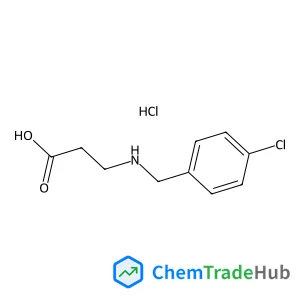
N-(4-Chlorobenzyl)-beta-alanine hydrochloride (1:1)
CAS Number:
1172479-10-5
Molecular Formula:
C10H13Cl2NO2

N-(5-Fluoro-2-oxo-2,3-dihydro-4-pyrimidinyl)benzamide
CAS Number:
10357-07-0
Molecular Formula:
C11H8FN3O2
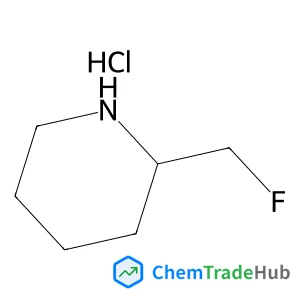
(2S)-2-(Fluoromethyl)piperidine hydrochloride (1:1)
CAS Number:
886216-73-5
Molecular Formula:
C6H13ClFN
Recommended Suppliers





Disclaimer
This page provides academic journal information for reference and research purposes only. We are not affiliated with any journal publishers and do not handle publication submissions. For publication-related inquiries, please contact the respective journal publishers directly.
If you notice any inaccuracies in the information displayed, please contact us at support@chemtradehub.com. We will promptly review and address your concerns.