












Pressure effects on both fluorescent emission and charge transport properties of organic semiconductors: a computational study
Literature Information
Publication Date
2023-12-05
DOI
10.1039/D3CP03852A
Impact Factor
3.676
Authors
Yi Zeng, Wen Shi, Qian Peng, Yingli Niu, Zhiying Ma, Xiaoyan Zheng
View Original
Abstract
External pressure can regulate the photophysical property and charge transport performance of organic semiconductors, however, the underlying mechanism at the microscopic level is still elusive. Using thermal vibrational correlation function coupled quantum mechanics/molecular mechanics and full quantum charge transfer rate theory, we systematically explore the influence of pressure on fluorescence emission and charge transport behaviours of representative cyclooctatetrathiophene (COTh). It is found that, upon pressurization, the intramolecular configurations of COTh became more twisted, leading to the blue-shifted emission. The fluorescence quantum efficiency (FQE) of COTh crystals decreases monotonically in a wide pressure range of 0–4.38 GPa, because the increase of intermolecular electronic energy transfer rate constant (keet) is larger than the decrease of internal conversion rate constant (kic), and the variation of keet is dominant. The decrease in kic is attributed to the decreasing reorganization energy, reflecting the suppression of the low-frequency flipping vibrations of four thiophene rings and the high-frequency stretching vibrations of central cyclooctatetraene, while the keet increase is due to the simultaneous increase in exciton coupling and spectra overlap. Moreover, we predicted that the hole mobility of COTh increases monotonically by nearly an order of magnitude from 0.39 to 3.00 cm2 V−1 s−1 upon compression, because of the increase in transfer integral and the decrease of charged reorganization energy. Furthermore, its hole mobility exhibits obvious anisotropy. Our work systematically builds the external pressure, molecular packing, luminescence and transport properties relationships of organic semiconductors and provides theoretical guidance for the rational design of pressure responsive organic semiconductors with excellent photoelectric performance.
Related Literature
129Xe NMR shielding and self-diffusion in the mixture of two thermotropic nematogens with opposite diamagnetic anisotropy
Jyrki Ruohonen, Jukka Jokisaari
2001-07-04
Paper
DOI: 10.1039/B102828F
Clinoptilolite–heulandite polymorphism: structural features from computer simulation
A. Rabdel Ruiz-Salvador, Ariel Gómez, Dewi W. Lewis, C. Richard A. Catlow, L. Marleny Rodríguez-Albelo, Luis Montero, Gerardo Rodríguez-Fuentes
2000-03-31
Paper
DOI: 10.1039/A909671J
Rotational spectroscopy of the gas phase complex of water and bromine monochloride in the microwave region: Geometry, binding strength and charge transfer
J. B. Davey, A. C. Legon
2001-07-12
Paper
DOI: 10.1039/B103351B
Size selective protein adsorption on thiol-functionalised SBA-15 mesoporous molecular sieve
Humphrey H. P. Yiu, Catherine H. Botting, Nigel P Botting, Paul A. Wright
2001-07-03
Communication
DOI: 10.1039/B104729A
Effect of heat treatment on boron impurity in Vycor. Part I. Near infrared spectra and ab initio calculations of the vibrations of model molecules for surface boranols
Cédric Carteret, André Burneau
2000-03-29
Paper
DOI: 10.1039/A909397D
Relative permittivity of dipolar liquids and their mixtures. Comparison of theory and experiment
2001-07-10
Paper
DOI: 10.1039/B009721G
O 1D quantum yields from O3 photolysis in the near UV region between 305 and 375 nm
Dieter Bauer, Luca D'Ottone, Anthony J. Hynes
2000-03-10
Paper
DOI: 10.1039/B000159G
On the variation of the electric quadrupole moment with internuclear distance and the atom–diatom long-range electrostatic interaction energy
S. P. J. Rodrigues, A. J. C. Varandas
2000-02-07
Paper
DOI: 10.1039/A908694C
Dynamics of the reaction of O− with D2 at low collision energies: reagent rotational energy effects
Susan Troutman Lee, Elizabeth Richards O'Grady, Michael A. Carpenter, James M. Farrar
2000-01-07
Paper
DOI: 10.1039/A906996H
You might also like
Compound Q&A
Are there alternatives to 1-(4-Chlorophenyl)-N-hydroxymethanimine (CAS: 3848-36-0) in synthesis?
When considering alternatives to 1-(4-Chlorophenyl)-N-hydroxymethanimine (CAS: 3...
3848-36-01-(4-Chlorophenyl)-N...
Compound Q&A
How should (1R,9S,10S,12S,14E,16S,19R,20R,21S,22R)-3,9,21-Trihydroxy-5,10,12,14,16,20,22-heptamethyl-23,24-dioxatetracyclo[17.3.1.1~6,9~.0~2,7~]tetracosa-2,5,7,14-tetraen-4-one (CAS: 183202-73-5) be stored?
This compound should be stored in a cool, dry place away from direct sunlight. I...
183202-73-5(1R,9S,10S,12S,14E,1...
Compound Q&A
How is 3-(4-Bromophenyl)-5-(2-fluorophenyl)-1,2,4-oxadiazole (CAS: 419553-16-5) typically synthesized?
3-(4-Bromophenyl)-5-(2-fluorophenyl)-1,2,4-oxadiazole is synthesized through a m...
419553-16-53-(4-Bromophenyl)-5-...
Compound Q&A
How is 5-Chloro-2-(4-chlorophenyl)-4-methyl-6-[3-(1-piperidinyl)propoxy]pyrimidine (CAS: 1639220-19-1) typically synthesized?
5-Chloro-2-(4-chlorophenyl)-4-methyl-6-[3-(1-piperidinyl)propoxy]pyrimidine (CAS...
1639220-19-15-Chloro-2-(4-chloro...
Compound Q&A
What industries use 2-Chloro-4-(difluoromethoxy)pyridine (CAS: 1206978-15-5)?
2-Chloro-4-(difluoromethoxy)pyridine is used in the pharmaceutical industry for ...
1206978-15-52-Chloro-4-(difluoro...
Compound Q&A
What regulatory guidelines apply to 3-Chloro-6-methylpyridazine (CAS: 1121-79-5)?
3-Chloro-6-methylpyridazine (CAS: 1121-79-5) is classified under the Globally Ha...
1121-79-53-Chloro-6-methylpyr...
Compound Q&A
Are there alternatives to Methyl 4,5-dimethyl-2-nitrobenzoate in synthesis?
Several alternatives can be used in the synthesis of Methyl 4,5-dimethyl-2-nitro...
90922-74-0Methyl 4,5-dimethyl-...
Compound Q&A
Are there alternatives to (2E,2'E)-3,3'-(1,4-Phenylene)bisacrylaldehyde in synthesis?
Alternatives to (2E,2'E)-3,3'-(1,4-Phenylene)bisacrylaldehyde include other acry...
63405-68-5(2E,2'E)-3,3'-(1,4-P...
Compound Q&A
What is 3-Amino-5-chloropyridin-2-ol hydrochloride (CAS: 1261906-29-9)?
3-Amino-5-chloropyridin-2-ol hydrochloride is an organic compound with the CAS n...
1261906-29-93-Amino-5-chloropyri...
Compound Q&A
What precautions should be taken when handling 6,7-Difluoro-2,3-dihydro-4H-chromen-4-one (CAS: 1092349-93-3)?
When handling 6,7-Difluoro-2,3-dihydro-4H-chromen-4-one, it is essential to wear...
1092349-93-36,7-Difluoro-2,3-dih...
Source Journal
Physical Chemistry Chemical Physics

CiteScore:
5.5
Self-citation Rate:
10.3%
Articles per Year:
3036
Physical Chemistry Chemical Physics (PCCP) is an international journal co-owned by 19 physical chemistry and physics societies from around the world. This journal publishes original, cutting-edge research in physical chemistry, chemical physics and biophysical chemistry. To be suitable for publication in PCCP, articles must include significant innovation and/or insight into physical chemistry; this is the most important criterion that reviewers and Editors will judge against when evaluating submissions. The journal has a broad scope and welcomes contributions spanning experiment, theory, computation and data science. Topical coverage includes spectroscopy, dynamics, kinetics, statistical mechanics, thermodynamics, electrochemistry, catalysis, surface science, quantum mechanics, quantum computing and machine learning. Interdisciplinary research areas such as polymers and soft matter, materials, nanoscience, energy, surfaces/interfaces, and biophysical chemistry are welcomed if they demonstrate significant innovation and/or insight into physical chemistry. Joined experimental/theoretical studies are particularly appreciated when complementary and based on up-to-date approaches.
Recommended Compounds
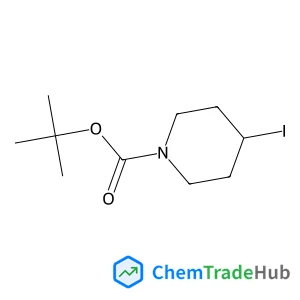
2-Methyl-2-propanyl 4-iodo-1-piperidinecarboxylate
CAS Number:
301673-14-3
Molecular Formula:
C10H18INO2
Recommended Suppliers




Disclaimer
This page provides academic journal information for reference and research purposes only. We are not affiliated with any journal publishers and do not handle publication submissions. For publication-related inquiries, please contact the respective journal publishers directly.
If you notice any inaccuracies in the information displayed, please contact us at support@chemtradehub.com. We will promptly review and address your concerns.