


Sufficient driving force for quinoidal isoindigo-based diradicaloids with tunable diradical characters
Literature Information
Publication Date
2023-12-13
DOI
10.1039/D3CP05199D
Impact Factor
3.676
Authors
Li Shen, Xiaobo Gao, Zhanqing Chang, Changhao Zhang, Yue Li, Jitao Lu, Qingguo Meng, Qian Wu
View Original
Abstract
Stable organic π-conjugated diradcialoids with tunable diradical characters can profoundly affect emerging technology. Over the past years, great efforts have been devoted to studying the structure-diradical character relationship in diradicaloids. Herein, a series of quinoidal isoindigo (IID) compounds with different attached terminal end groups were designed. Detailed analysis focuses on elucidating the driving force for evoking and enhancing the diradical character in the quinoidal IID systems. The arylene units of the IID core and the bridged aromatic units determine the contribution of the open-shell diradical form in the ground state. Diradical character y0 correlates well with bond length alternation (BLA), the total HOMA, and the total NICS(1)zz, and it is tuned by bridged aromatic units and terminal end groups in symmetric systems. The zwitterionic character weakens the diradical character in asymmetric systems to different extents. This work contributes to the deep understanding of evoking and enhancing the diradical character in quinoidal IID-based diradcialoids, providing useful guidelines to produce new molecules with desirable properties.
Recommended Journals

Angewandte Chemie International Edition

Photochemical & Photobiological Sciences

Advanced Engineering Materials

Environmental Toxicology and Pharmacology

Molecules

Journal of Enzyme inhibition and Medicinal Chemistry

Current Pharmaceutical Biotechnology

Molecular Diversity

Faraday Discussions

Green Chemistry
Related Literature
129Xe NMR shielding and self-diffusion in the mixture of two thermotropic nematogens with opposite diamagnetic anisotropy
Jyrki Ruohonen, Jukka Jokisaari
2001-07-04
Paper
DOI: 10.1039/B102828F
Rotational spectroscopy of the gas phase complex of water and bromine monochloride in the microwave region: Geometry, binding strength and charge transfer
J. B. Davey, A. C. Legon
2001-07-12
Paper
DOI: 10.1039/B103351B
The deuterium quadrupole coupling constant in liquid ammonia
Edme H. Hardy, Manfred D. Zeidler
2000-03-29
Paper
DOI: 10.1039/B000035N
Studies on the phase behavior of perfluoropolyether carboxylic acids and their salts: Observation of a stunning temperature-dependent color effect for the birefringence in the pyridinium salt system
J. Würtz, J. Meyer, H. Hoffmann
2001-07-04
Paper
DOI: 10.1039/B102776J
Response reactions: definition, derivation and classification based on the composition of the participating species
2001-07-12
Paper
DOI: 10.1039/B101725J
The skeletal isomerization of but-1-ene catalyzed by theta-1 zeolite
M. Boronat, P. Viruela, A. Corma
2001-06-29
Paper
DOI: 10.1039/B103429B
Dielectric properties of dehydrated NaA zeolite, analyses and calculation of dielectric spectra
Tatsuo Ohgushi, Kazushi Ishimaru
2001-07-12
Paper
DOI: 10.1039/B102331B
Gaussian-2 theoretical and direct ab initio molecular dynamics study of the reaction of O(3P) with thiirane, O(3P) + C2H4S(1A1)→SO(3Σ−) + C2H4(1Ag)
Yasuyuki Ishikawa, Yuchuan Gong, Brad R. Weiner
2000-02-07
Paper
DOI: 10.1039/A907976I
You might also like
Compound Q&A
Are there alternatives to 1-(4-Chlorophenyl)-N-hydroxymethanimine (CAS: 3848-36-0) in synthesis?
When considering alternatives to 1-(4-Chlorophenyl)-N-hydroxymethanimine (CAS: 3...
3848-36-01-(4-Chlorophenyl)-N...
Compound Q&A
How should (1R,9S,10S,12S,14E,16S,19R,20R,21S,22R)-3,9,21-Trihydroxy-5,10,12,14,16,20,22-heptamethyl-23,24-dioxatetracyclo[17.3.1.1~6,9~.0~2,7~]tetracosa-2,5,7,14-tetraen-4-one (CAS: 183202-73-5) be stored?
This compound should be stored in a cool, dry place away from direct sunlight. I...
183202-73-5(1R,9S,10S,12S,14E,1...
Compound Q&A
How is 3-(4-Bromophenyl)-5-(2-fluorophenyl)-1,2,4-oxadiazole (CAS: 419553-16-5) typically synthesized?
3-(4-Bromophenyl)-5-(2-fluorophenyl)-1,2,4-oxadiazole is synthesized through a m...
419553-16-53-(4-Bromophenyl)-5-...
Compound Q&A
How is 5-Chloro-2-(4-chlorophenyl)-4-methyl-6-[3-(1-piperidinyl)propoxy]pyrimidine (CAS: 1639220-19-1) typically synthesized?
5-Chloro-2-(4-chlorophenyl)-4-methyl-6-[3-(1-piperidinyl)propoxy]pyrimidine (CAS...
1639220-19-15-Chloro-2-(4-chloro...
Compound Q&A
What industries use 2-Chloro-4-(difluoromethoxy)pyridine (CAS: 1206978-15-5)?
2-Chloro-4-(difluoromethoxy)pyridine is used in the pharmaceutical industry for ...
1206978-15-52-Chloro-4-(difluoro...
Compound Q&A
What regulatory guidelines apply to 3-Chloro-6-methylpyridazine (CAS: 1121-79-5)?
3-Chloro-6-methylpyridazine (CAS: 1121-79-5) is classified under the Globally Ha...
1121-79-53-Chloro-6-methylpyr...
Compound Q&A
Are there alternatives to Methyl 4,5-dimethyl-2-nitrobenzoate in synthesis?
Several alternatives can be used in the synthesis of Methyl 4,5-dimethyl-2-nitro...
90922-74-0Methyl 4,5-dimethyl-...
Compound Q&A
Are there alternatives to (2E,2'E)-3,3'-(1,4-Phenylene)bisacrylaldehyde in synthesis?
Alternatives to (2E,2'E)-3,3'-(1,4-Phenylene)bisacrylaldehyde include other acry...
63405-68-5(2E,2'E)-3,3'-(1,4-P...
Compound Q&A
What is 3-Amino-5-chloropyridin-2-ol hydrochloride (CAS: 1261906-29-9)?
3-Amino-5-chloropyridin-2-ol hydrochloride is an organic compound with the CAS n...
1261906-29-93-Amino-5-chloropyri...
Compound Q&A
What precautions should be taken when handling 6,7-Difluoro-2,3-dihydro-4H-chromen-4-one (CAS: 1092349-93-3)?
When handling 6,7-Difluoro-2,3-dihydro-4H-chromen-4-one, it is essential to wear...
1092349-93-36,7-Difluoro-2,3-dih...
Source Journal
Physical Chemistry Chemical Physics

CiteScore:
5.5
Self-citation Rate:
10.3%
Articles per Year:
3036
Physical Chemistry Chemical Physics (PCCP) is an international journal co-owned by 19 physical chemistry and physics societies from around the world. This journal publishes original, cutting-edge research in physical chemistry, chemical physics and biophysical chemistry. To be suitable for publication in PCCP, articles must include significant innovation and/or insight into physical chemistry; this is the most important criterion that reviewers and Editors will judge against when evaluating submissions. The journal has a broad scope and welcomes contributions spanning experiment, theory, computation and data science. Topical coverage includes spectroscopy, dynamics, kinetics, statistical mechanics, thermodynamics, electrochemistry, catalysis, surface science, quantum mechanics, quantum computing and machine learning. Interdisciplinary research areas such as polymers and soft matter, materials, nanoscience, energy, surfaces/interfaces, and biophysical chemistry are welcomed if they demonstrate significant innovation and/or insight into physical chemistry. Joined experimental/theoretical studies are particularly appreciated when complementary and based on up-to-date approaches.
Recommended Compounds
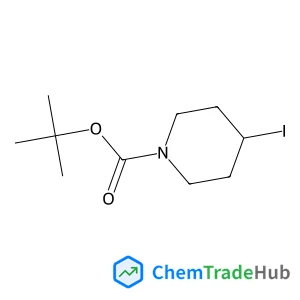
2-Methyl-2-propanyl 4-iodo-1-piperidinecarboxylate
CAS Number:
301673-14-3
Molecular Formula:
C10H18INO2
![N-[(E)-Phenylmethylene]benzenesulfonamide structure](https://static.chemtradehub.com/structs/139/13909-34-7-8167.webp "N-[(E)-Phenylmethylene]benzenesulfonamide structure")
Recommended Suppliers




Disclaimer
This page provides academic journal information for reference and research purposes only. We are not affiliated with any journal publishers and do not handle publication submissions. For publication-related inquiries, please contact the respective journal publishers directly.
If you notice any inaccuracies in the information displayed, please contact us at support@chemtradehub.com. We will promptly review and address your concerns.