


Cation vacancy related crystal structure and bandgap and their effects on the thermoelectric performance of Cu-ternary systems Cu3+δIn5Te9 (δ = 0–0.175)
Literature Information
Publication Date
2020-02-26
DOI
10.1039/D0CP00626B
Impact Factor
3.676
Authors
Yafen Xia, Yong Luo, Jiaolin Cui
View Original
Abstract
In this work the crystal structure and bandgap in the Cu3+δIn5Te9 material system were engineered through modifying the copper vacancy concentration (Vc). The results reveal that the crystal distortion parameter (ψ) increases as the Vc value decreases, which plays a fundamental role in enhancing the phonon scattering, thereby reducing the lattice part (κL) to the minimum value 0.21 W K−1 m−1 at ∼830 K. Although the electrical properties degrade due to the reduced Hall carrier concentration (nH) caused by the widened bandgap (Eg) as the Vc value increases, the mobility (μ) increases. As a consequence, the thermoelectric performance remarkably improves with a highest ZT value of ∼1.0 for the sample Cu3+δIn5Te9 (δ = 0.1). This value doubles that of the pristine Cu3In5Te9. The work gives insight into the potential phonon scattering in the distorted crystal structure in Cu-ternary systems and sheds some light on the design of high performance thermoelectric materials.
Recommended Journals

Russian Journal of Bioorganic Chemistry

Russian Journal of Applied Chemistry

Russian Chemical Bulletin

Chemistry Education Research and Practice

Russian Journal of Coordination Chemistry

Nature Medicine

Russian Journal of General Chemistry

Chemical Communications

Organic Process Research & Development

Journal of Saudi Chemical Society
Related Literature
Why solid oxide cells can be reversibly operated in solid oxide electrolysis cell and fuel cell modes?
Kongfa Chen, Na Ai, San Ping Jiang
2015-10-28
Paper
DOI: 10.1039/C5CP05065K
Long term puzzles of the CH and CD energetics and related phenomena revisited; solutions sought through REMPI-photofragmentations of bromomethanes
Arnar Hafliðason, Huasheng Wang, Ágúst Kvaran
2015-12-09
Paper
DOI: 10.1039/C5CP06097D
Probing the dynamics of highly excited toluene on the fs timescale
C. C. Papadopoulou, S. Kaziannis, C. Kosmidis
2015-11-12
Paper
DOI: 10.1039/C5CP04346H
S-doped mesoporous nanocomposite of HTiNbO5 nanosheets and TiO2 nanoparticles with enhanced visible light photocatalytic activity
Ruirui Han, Hongmei Ji, Tao Sun, Jin Zhao, Ningna Chen, Jing Chen, Xuefeng Guo, Wenhua Hou, Weiping Ding
2015-11-23
Paper
DOI: 10.1039/C5CP06555K
Nanostring-cluster hierarchical structured Bi2O3: synthesis, evolution and application in biosensing
Ya-Nan Yu, Shi-Yu Lu, Shu-Juan Bao, Qiang-Qiang Sun, Sheng-Hui Liao
2015-12-03
Paper
DOI: 10.1039/C5CP05790F
Effect of hydration on the organo-noble gas molecule HKrCCH: role of krypton in the stabilization of hydrated HKrCCH complexes
Biswajit Biswas, Prashant Chandra Singh
2015-10-20
Paper
DOI: 10.1039/C5CP04744G
Testing the transferability of a coarse-grained model to intrinsically disordered proteins
Gil O. Rutter, David Quigley, Tiffany R. Walsh
2015-11-05
Paper
DOI: 10.1039/C5CP05652G
A combined computational and experimental investigation of Mg doped α-Fe2O3
Monica Kosa, Hannah Noa Barad, Vijay Singh, David A. Keller, Klimentiy Shimanovich, Sven Rühle, Assaf Y. Anderson, Arie Zaban, Dan Thomas Major
2015-11-23
Paper
DOI: 10.1039/C5CP05987A
Protein motions and dynamic effects in enzyme catalysis
Louis Y. P. Luk, E. Joel Loveridge, Rudolf K. Allemann
2015-04-09
Paper
DOI: 10.1039/C5CP00794A
You might also like
Compound Q&A
Is 6-(3-Fluorophenyl)picolinic acid (CAS: 887982-40-3) safe?
6-(3-Fluorophenyl)picolinic acid is generally considered safe for laboratory use...
887982-40-36-(3-Fluorophenyl)pi...
Compound Q&A
What industries use (3R)-3-Pyrrolidinol (CAS: 2799-21-5)?
(3R)-3-Pyrrolidinol is used in the pharmaceutical industry as a precursor for dr...
2799-21-5(3R)-3-Pyrrolidinol
Compound Q&A
What precautions should be taken when handling (4R,5R)-4,5-Diethoxycarbonyl-2,2-dimethyldioxolane (CAS: 59779-75-8)?
When handling (4R,5R)-4,5-Diethoxycarbonyl-2,2-dimethyldioxolane (CAS: 59779-75-...
59779-75-8(4R,5R)-4,5-Diethoxy...
Compound Q&A
How is 1-(6-Chloroimidazo[1,2-b]pyridazin-3-yl)ethanone (CAS: 90734-71-7) typically synthesized?
1-(6-Chloroimidazo[1,2-b]pyridazin-3-yl)ethanone is often synthesized via a mult...
90734-71-71-(6-Chloroimidazo[1...
Compound Q&A
What is the market or research trend for N-Ethyl-3,4-dimethylbenzylamine (CAS: 39180-83-1)?
The market for N-Ethyl-3,4-dimethylbenzylamine (CAS: 39180-83-1) remains steady,...
39180-83-1N-Ethyl-3,4-dimethyl...
Compound Q&A
What is Tert-butyl 3-(pyrrolidin-1-yl)azetidine-1-carboxylate (CAS: 1019008-21-9)?
Tert-butyl 3-(pyrrolidin-1-yl)azetidine-1-carboxylate is a chemical compound wit...
1019008-21-9Tert-butyl 3-(pyrrol...
Compound Q&A
What regulatory guidelines apply to 1-Bromo-3-chloro-2,4-dimethoxybenzene (CAS: 1228956-93-1)?
1-Bromo-3-chloro-2,4-dimethoxybenzene (CAS: 1228956-93-1) falls under the classi...
1228956-93-11-Bromo-3-chloro-2,4...
Compound Q&A
Is 8-Bromo-2-methyl-3,4-dihydroisoquinolin-1(2H)-one (CAS: 1368622-07-4) safe?
The safety of 8-Bromo-2-methyl-3,4-dihydroisoquinolin-1(2H)-one (CAS: 1368622-07...
1368622-07-48-Bromo-2-methyl-3,4...
Compound Q&A
Is Benzyl [(3S)-2,6-dioxo-3-piperidinyl]carbamate (CAS: 22785-43-9) safe?
Benzyl [(3S)-2,6-dioxo-3-piperidinyl]carbamate is generally safe when handled wi...
22785-43-9Benzyl [(3S)-2,6-dio...
Compound Q&A
How should 1-{[4-(4,4,5,5-Tetramethyl-1,3,2-dioxaborolan-2-yl)phenyl]sulfonyl}pyrrolidine (CAS: 928657-21-0) be stored?
1-{[4-(4,4,5,5-Tetramethyl-1,3,2-dioxaborolan-2-yl)phenyl]sulfonyl}pyrrolidine s...
928657-21-01-{[4-(4,4,5,5-Tetra...
Source Journal
Physical Chemistry Chemical Physics

CiteScore:
5.5
Self-citation Rate:
10.3%
Articles per Year:
3036
Physical Chemistry Chemical Physics (PCCP) is an international journal co-owned by 19 physical chemistry and physics societies from around the world. This journal publishes original, cutting-edge research in physical chemistry, chemical physics and biophysical chemistry. To be suitable for publication in PCCP, articles must include significant innovation and/or insight into physical chemistry; this is the most important criterion that reviewers and Editors will judge against when evaluating submissions. The journal has a broad scope and welcomes contributions spanning experiment, theory, computation and data science. Topical coverage includes spectroscopy, dynamics, kinetics, statistical mechanics, thermodynamics, electrochemistry, catalysis, surface science, quantum mechanics, quantum computing and machine learning. Interdisciplinary research areas such as polymers and soft matter, materials, nanoscience, energy, surfaces/interfaces, and biophysical chemistry are welcomed if they demonstrate significant innovation and/or insight into physical chemistry. Joined experimental/theoretical studies are particularly appreciated when complementary and based on up-to-date approaches.
Recommended Compounds
![[4-Chloro-3-(diethylcarbamoyl)phenyl]boronic acid structure](https://static.chemtradehub.com/structs/871/871332-68-2-0e3b.webp "[4-Chloro-3-(diethylcarbamoyl)phenyl]boronic acid structure")
[4-Chloro-3-(diethylcarbamoyl)phenyl]boronic acid
CAS Number:
871332-68-2
Molecular Formula:
C11H15BClNO3
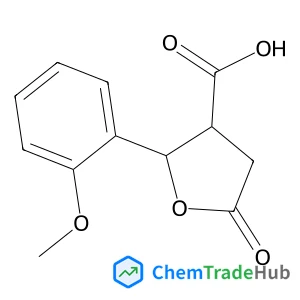
trans-2-(2-Methoxyphenyl)-5-oxotetrahydrofuran-3-carboxylic acid
CAS Number:
99226-02-5
Molecular Formula:
C12H12O5

Recommended Suppliers





Disclaimer
This page provides academic journal information for reference and research purposes only. We are not affiliated with any journal publishers and do not handle publication submissions. For publication-related inquiries, please contact the respective journal publishers directly.
If you notice any inaccuracies in the information displayed, please contact us at support@chemtradehub.com. We will promptly review and address your concerns.