











Different submicellar solubilization mechanisms revealed by 1H NMR and 2D diffusion ordered spectroscopy (DOSY)
Literature Information
Publication Date
2020-04-20
DOI
10.1039/D0CP00429D
Impact Factor
3.676
Authors
Mengjian Wu, Zhaoxia Wu, Shangwu Ding, Zhong Chen, Xiaohong Cui
View Original
Abstract
Different submicellar solubilization mechanisms of two systems, Triton X-100 (TX-100)/tetradecane and sodium dodecyl sulfate (SDS)/butyl methacrylate, are revealed on the molecular scale by 1H NMR spectroscopy and 2D diffusion ordered spectroscopy (DOSY). It is evident that the apparent solubilities of both tetradecane and butyl methacrylate are enhanced, even at much lower surfactant concentrations than the CMCs. Solubilized solutes also contribute to the early formation of surfactant micelles. In general, the molar solubilization ratios (MSRs) of both solutes linearly increase as the surfactant concentrations increase. However, variations in MSRs of the two systems are different below and above the CMC, which is probably related to the different solubilization mechanisms. For TX-100/tetradecane, as the TX-100 concentration increases, the tetradecane resonance in the independent state transforms into that of the aggregated state and the corresponding evolution of diffusions is shown in the 2D DOSY spectra. These results demonstrate that below the CMC, tetradecane is first solubilized in TX-100 solutions, and then solubilized in TX-100 micelles above the CMC. For SDS/butyl methacrylate, the appearance of oligomeric SDS resonances below the CMC indicates that butyl methacrylate is partially solubilized in SDS oligomers. Then, when the CMC is reached, the dominant, monomeric SDS molecules aggregate into oligomers, and the similar diffusivity trend of butyl methacrylate with that of SDS indicates that a proportion of butyl methacrylate molecules are solubilized in it. Finally, the fusion of SDS resonances in the two states and the tendency of co-diffusion of SDS and butyl methacrylate indicate that all the SDS molecules gradually aggregate into micelles, and almost all the butyl methacrylate molecules are solubilized in them. In conclusion, above the CMCs, the solubilization manners of these two systems are similar. However, they are different below CMCs. The solubilization of tetradecane by TX-100 is driven by the intermolecular hydrophobic interaction, i.e., molecular-pair formation. However, the polar interaction between functional groups of butyl methacrylate and the polar head of SDS contributes to the solubilization of butyl methacrylate. The different submicellar solubilization mechanisms are mainly caused by the different properties of solutes and surfactants, which also results in different MSRs and solubilization sites in the micelles.
Related Literature
Gas phase 1H NMR studies and kinetic modeling of dihydrogen isotope equilibration catalyzed by Ru-nanoparticles under normal conditions: dissociative vs. associative exchange
Hans-Heinrich Limbach, Tal Pery, Niels Rothermel, Bruno Chaudret, Torsten Gutmann, Gerd Buntkowsky
2017-12-19
Paper
DOI: 10.1039/C7CP07770J
Plasmonic sphere-on-plane systems with semiconducting polymer spacer layers
Binxing Yu, Jill I. Tracey, Zhongkai Cheng, Martin Vacha
2018-03-26
Paper
DOI: 10.1039/C8CP01314D
Electron-stimulated reactions in nanoscale water films adsorbed on α-Al2O3(0001)
Nikolay G. Petrik, Greg A. Kimmel
2018-04-11
Paper
DOI: 10.1039/C8CP01284A
The influence of the size and symmetry of cations and anions on the physicochemical behavior of organic ionic plastic crystal electrolytes mixed with sodium salts
F. Makhlooghiazad, J. Guazzagaloppa, L. A. O’Dell, R. Yunis, A. Basile, P. C. Howlett, M. Forsyth
2018-01-25
Paper
DOI: 10.1039/C7CP06971E
Full-dimensional quantum mechanics calculations for the spectroscopic characterization of the isomerization transition states of HOCO/DOCO systems
Dandan Ma, Haisheng Ren, Jianyi Ma
2018-01-19
Paper
DOI: 10.1039/C7CP07673H
Alloy-composition-dependent oxygen reduction reaction activity and electrochemical stability of Pt-based bimetallic systems: a model electrocatalyst study of Pt/PtxNi100−x(111)
Naoto Todoroki, Ryutaro Kawamura, Masato Asano, Ren Sasakawa, Shuntaro Takahashi, Toshimasa Wadayama
2018-04-03
Paper
DOI: 10.1039/C8CP01217B
Infrared laser dissociation of single megadalton polymer ions in a gated electrostatic ion trap: the added value of statistical analysis of individual events‡
Mohammad A. Halim, Christian Clavier, Xavier Dagany, Michel Kerleroux, Philippe Dugourd, Robert C. Dunbar, Rodolphe Antoine
2018-04-12
Paper
DOI: 10.1039/C8CP00404H
Anharmonicity in a double hydrogen transfer reaction studied in a single porphycene molecule on a Cu(110) surface
S. Liu, D. Baugh, K. Motobayashi, X. Zhao, S. Gawinkowski, L. Grill, M. Persson, T. Kumagai
2018-03-29
Paper
DOI: 10.1039/C8CP00178B
Rationalisation of the optical signatures of nor-dihydroxanthene-hemicyanine fused near-infrared fluorophores by first-principle tools
Cloé Azarias, Isabelle Navizet, Paul Fleurat-Lessard, Boris Le Guennic, Jean-Alexandre Richard, Denis Jacquemin
2018-04-03
Paper
DOI: 10.1039/C8CP01587B
You might also like
Compound Q&A
What are the main uses of 1-(3-Aminophenyl)-3-[(3R)-1-(3,3-dimethyl-2-oxobutyl)-2-oxo-5-(2-pyridinyl)-2,3-dihydro-1H-1,4-benzodiazepin-3-yl]urea (CAS: 155412-88-7)?
This compound is mainly used as an intermediate in the synthesis of antipsychoti...
155412-88-71-(3-Aminophenyl)-3-...
Compound Q&A
How should waste containing 1-(D-Ribofuranosyl)-1,4-dihydro-3-pyridinecarboxamide (CAS: 19132-12-8) be handled?
Waste containing 1-(D-Ribofuranosyl)-1,4-dihydro-3-pyridinecarboxamide (CAS: 191...
19132-12-81-(D-Ribofuranosyl)-...
Compound Q&A
What regulatory guidelines apply to 2-Methyl-2-propanyl 3-bromo-3-(hydroxymethyl)-1-azetidinecarboxylate (CAS: 2007919-81-3)?
2-Methyl-2-propanyl 3-bromo-3-(hydroxymethyl)-1-azetidinecarboxylate (CAS: 20079...
2007919-81-32-Methyl-2-propanyl ...
Compound Q&A
What is N-(4-Chloro-2-pyridinyl)acetamide (CAS: 245056-66-0)?
N-(4-Chloro-2-pyridinyl)acetamide (CAS: 245056-66-0) is a chemical compound with...
245056-66-0N-(4-Chloro-2-pyridi...
Compound Q&A
What is 5-Chloro-2-hydroxybenzoic acid (CAS: 321-14-2)?
5-Chloro-2-hydroxybenzoic acid, also known as 5-chlorosalicylic acid, is an arom...
321-14-25-Chloro-2-hydroxybe...
Compound Q&A
What precautions should be taken when handling 1,1-Dichloro-1-fluoroethane (CAS: 1717-00-6)?
When handling 1,1-Dichloro-1-fluoroethane (CAS: 1717-00-6), it is important to u...
1717-00-61,1-Dichloro-1-fluor...
Compound Q&A
What are the physical and chemical properties of Fmoc-(2S,3R)-3-phenylpyrrolidine-2-carboxylic acid (CAS: 281655-32-1)?
Fmoc-(2S,3R)-3-phenylpyrrolidine-2-carboxylic acid is a white crystalline solid ...
281655-32-1Fmoc-(2S,3R)-3-pheny...
Compound Q&A
What are the main uses of 4-Amino-5-bromo-2-pyridinecarboxylic acid (CAS: 1363381-01-4)?
4-Amino-5-bromo-2-pyridinecarboxylic acid is primarily used as a precursor in th...
1363381-01-44-Amino-5-bromo-2-py...
Compound Q&A
What precautions should be taken when handling (S)-tert-butyl 2-((2-(4-bromophenyl)-2-oxoethyl)carbamoyl)pyrrolidine-1-carboxylate (CAS: 1007881-98-2)?
Handling this compound should be done with personal protective equipment (PPE) i...
1007881-98-2(S)-tert-butyl 2-((2...
Compound Q&A
What precautions should be taken when handling 8-bromo-2,2-dimethyl-3,4-dihydro-2H-1,4-benzoxazin-3-one (CAS: 688363-73-7)?
When handling 8-bromo-2,2-dimethyl-3,4-dihydro-2H-1,4-benzoxazin-3-one, use prop...
688363-73-78-bromo-2,2-dimethyl...
Source Journal
Physical Chemistry Chemical Physics

CiteScore:
5.5
Self-citation Rate:
10.3%
Articles per Year:
3036
Physical Chemistry Chemical Physics (PCCP) is an international journal co-owned by 19 physical chemistry and physics societies from around the world. This journal publishes original, cutting-edge research in physical chemistry, chemical physics and biophysical chemistry. To be suitable for publication in PCCP, articles must include significant innovation and/or insight into physical chemistry; this is the most important criterion that reviewers and Editors will judge against when evaluating submissions. The journal has a broad scope and welcomes contributions spanning experiment, theory, computation and data science. Topical coverage includes spectroscopy, dynamics, kinetics, statistical mechanics, thermodynamics, electrochemistry, catalysis, surface science, quantum mechanics, quantum computing and machine learning. Interdisciplinary research areas such as polymers and soft matter, materials, nanoscience, energy, surfaces/interfaces, and biophysical chemistry are welcomed if they demonstrate significant innovation and/or insight into physical chemistry. Joined experimental/theoretical studies are particularly appreciated when complementary and based on up-to-date approaches.
Recommended Compounds
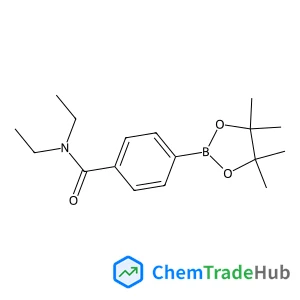
N,N-Diethyl-4-(4,4,5,5-tetramethyl-1,3,2-dioxaborolan-2-yl)benzamide
CAS Number:
325142-99-2
Molecular Formula:
C17H26BNO3
![6-Benzyl-4,5,6,7-tetrahydro-1H-pyrazolo[3,4-c]pyridin-3(2H)-one structure](https://static.chemtradehub.com/structs/909/909187-64-0-f54f.webp "6-Benzyl-4,5,6,7-tetrahydro-1H-pyrazolo[3,4-c]pyridin-3(2H)-one structure")
6-Benzyl-4,5,6,7-tetrahydro-1H-pyrazolo[3,4-c]pyridin-3(2H)-one
CAS Number:
909187-64-0
Molecular Formula:
C13H15N3O
Recommended Suppliers






Disclaimer
This page provides academic journal information for reference and research purposes only. We are not affiliated with any journal publishers and do not handle publication submissions. For publication-related inquiries, please contact the respective journal publishers directly.
If you notice any inaccuracies in the information displayed, please contact us at support@chemtradehub.com. We will promptly review and address your concerns.