












Solvation properties of protic ionic liquid–molecular solvent mixtures
Literature Information
Publication Date
2020-04-22
DOI
10.1039/D0CP00201A
Impact Factor
3.676
Authors
Dilek Yalcin, Andrew J. Christofferson, Calum J. Drummond, Tamar L. Greaves
View Original
Abstract
Ionic liquids (ILs) are increasingly receiving interest for a wide range of applications. However, for many applications their cost and/or viscosity can be too high. This can be addressed by using protic ionic liquids as cheaper alternatives, and through mixing with molecular solvents. However, mixing ILs with a molecular solvent adds another dimension to the compositional space, as well as increasing the complexity of solvent–solute interactions. In this study, we have investigated the solvation properties of binary mixtures of PILs with molecular solvents. The selected binary solvent systems are the PILs ethylammonium nitrate (EAN) and propylammonium nitrate (PAN) combined with either water, methanol, acetonitrile or DMSO. In addition, water is combined with the other molecular solvents for comparison. The mole fractions of the secondary solvents were 0, 0.25, 0.5, 0.75, 0.9 and 1 for all combinations, which resulted in a total of 66 solvent mixtures. The solvation properties in each of these mixtures were determined from spectroscopic measurements of 4 well-known solvatochromic probe molecules as solutes. The solvation properties were comparatively investigated, and interpreted, in terms of the specific and non-specific interactions between PIL–solvent, PIL–solute and solvent–solute. All 66 solvent mixtures were also analysed using FTIR with no probe molecules present. In addition, through molecular dynamics simulations, the dye–solvent interactions were simulated for two of the dye molecules in water–EAN binary systems, and the radial distribution functions for the key interactions were obtained. The results showed that the solvation parameters of the binary mixtures deviated considerably from the ideal solvation behaviour. In many cases, bulk compositions and the estimated excess compositions in the solvation shells of the probes were different, suggesting preferential solvation, the extent of which is solute dependent. Our results clearly show that using PILs in a mixture with molecular solvents can strongly enhance the solvation capability.
Related Literature
The reaction of fluorine atoms with methanol: yield of CH3O/CH2OH and rate constant of the reactions CH3O + CH3O and CH3O + HO2
Emmanuel Assaf, Coralie Schoemaecker, Luc Vereecken, Christa Fittschen
2017-11-06
Paper
DOI: 10.1039/C7CP05770A
Magnetization relaxation in the single-ion magnet DySc2N@C80: quantum tunneling, magnetic dilution, and unconventional temperature dependence
D. S. Krylov, F. Liu, A. Brandenburg, L. Spree, V. Bon, S. Kaskel, A. U. B. Wolter, B. Büchner, S. M. Avdoshenko, A. A. Popov
2018-04-10
Paper
DOI: 10.1039/C8CP01608A
Electron-density distributions in selected ferrocenyl-pyrazolyl late transition-metal complexes
M. A. Peck, G. R. Hearne, C. Obuah, J. Darkwa
2018-03-27
Paper
DOI: 10.1039/C8CP01135D
Excimer formation and evolution of excited state properties in discrete dimeric stacking of an anthracene derivative: a computational investigation
Yu Gao, Haichao Liu, Shitong Zhang, Qiang Gu, Yue Shen, Yunpeng Ge, Bing Yang
2018-04-06
Paper
DOI: 10.1039/C8CP00834E
How changes in interfacial pH lead to new voltammetric features: the case of the electrochemical oxidation of hydrazine
Antony Cyril Arulrajan, Christophe Renault, Stanley C. S. Lai
2018-04-06
Paper
DOI: 10.1039/C8CP01835A
Theoretical determination of adsorption and ionisation energies of polycyclic aromatic hydrocarbons on water ice
Nadia Ben Amor, Mathias Rapacioli, Jennifer A. Noble, Joëlle Mascetti, Céline Toubin, Aude Simon
2018-04-11
Paper
DOI: 10.1039/C8CP01175C
Molecular structure and adsorption of dimethyl sulfoxide at the air/aqueous solution interface probed by non-resonant second harmonic generation
Qianshun Wei, Dexia Zhou, Hongtao Bian
2018-03-27
Paper
DOI: 10.1039/C8CP00099A
Surface modification effects on defect-related photoluminescence in colloidal CdS quantum dots
TaeGi Lee, Kunio Shimura, DaeGwi Kim
2018-04-13
Paper
DOI: 10.1039/C7CP07812A
Direct observation of stepwise intermolecular proton and hydrogen transfer between alcohols and the triplet state of 4-nitro-1-naphthol
Fengjin Zhang, Di Zhang, Yong Du, Peipei Jin, Yanying Zhao, Xuming Zheng, Jiadan Xue
2018-04-17
Paper
DOI: 10.1039/C8CP00484F
A tethered bilayer lipid membrane that mimics microbial membranes
Jakob Andersson, Melanie A. Fuller, Kathleen Wood, Stephen A. Holt, Ingo Köper
2018-04-27
Paper
DOI: 10.1039/C8CP01346B
You might also like
Compound Q&A
What are the main uses of 1-(3-Aminophenyl)-3-[(3R)-1-(3,3-dimethyl-2-oxobutyl)-2-oxo-5-(2-pyridinyl)-2,3-dihydro-1H-1,4-benzodiazepin-3-yl]urea (CAS: 155412-88-7)?
This compound is mainly used as an intermediate in the synthesis of antipsychoti...
155412-88-71-(3-Aminophenyl)-3-...
Compound Q&A
How should waste containing 1-(D-Ribofuranosyl)-1,4-dihydro-3-pyridinecarboxamide (CAS: 19132-12-8) be handled?
Waste containing 1-(D-Ribofuranosyl)-1,4-dihydro-3-pyridinecarboxamide (CAS: 191...
19132-12-81-(D-Ribofuranosyl)-...
Compound Q&A
What regulatory guidelines apply to 2-Methyl-2-propanyl 3-bromo-3-(hydroxymethyl)-1-azetidinecarboxylate (CAS: 2007919-81-3)?
2-Methyl-2-propanyl 3-bromo-3-(hydroxymethyl)-1-azetidinecarboxylate (CAS: 20079...
2007919-81-32-Methyl-2-propanyl ...
Compound Q&A
What is N-(4-Chloro-2-pyridinyl)acetamide (CAS: 245056-66-0)?
N-(4-Chloro-2-pyridinyl)acetamide (CAS: 245056-66-0) is a chemical compound with...
245056-66-0N-(4-Chloro-2-pyridi...
Compound Q&A
What is 5-Chloro-2-hydroxybenzoic acid (CAS: 321-14-2)?
5-Chloro-2-hydroxybenzoic acid, also known as 5-chlorosalicylic acid, is an arom...
321-14-25-Chloro-2-hydroxybe...
Compound Q&A
What precautions should be taken when handling 1,1-Dichloro-1-fluoroethane (CAS: 1717-00-6)?
When handling 1,1-Dichloro-1-fluoroethane (CAS: 1717-00-6), it is important to u...
1717-00-61,1-Dichloro-1-fluor...
Compound Q&A
What are the physical and chemical properties of Fmoc-(2S,3R)-3-phenylpyrrolidine-2-carboxylic acid (CAS: 281655-32-1)?
Fmoc-(2S,3R)-3-phenylpyrrolidine-2-carboxylic acid is a white crystalline solid ...
281655-32-1Fmoc-(2S,3R)-3-pheny...
Compound Q&A
What are the main uses of 4-Amino-5-bromo-2-pyridinecarboxylic acid (CAS: 1363381-01-4)?
4-Amino-5-bromo-2-pyridinecarboxylic acid is primarily used as a precursor in th...
1363381-01-44-Amino-5-bromo-2-py...
Compound Q&A
What precautions should be taken when handling (S)-tert-butyl 2-((2-(4-bromophenyl)-2-oxoethyl)carbamoyl)pyrrolidine-1-carboxylate (CAS: 1007881-98-2)?
Handling this compound should be done with personal protective equipment (PPE) i...
1007881-98-2(S)-tert-butyl 2-((2...
Compound Q&A
What precautions should be taken when handling 8-bromo-2,2-dimethyl-3,4-dihydro-2H-1,4-benzoxazin-3-one (CAS: 688363-73-7)?
When handling 8-bromo-2,2-dimethyl-3,4-dihydro-2H-1,4-benzoxazin-3-one, use prop...
688363-73-78-bromo-2,2-dimethyl...
Source Journal
Physical Chemistry Chemical Physics

CiteScore:
5.5
Self-citation Rate:
10.3%
Articles per Year:
3036
Physical Chemistry Chemical Physics (PCCP) is an international journal co-owned by 19 physical chemistry and physics societies from around the world. This journal publishes original, cutting-edge research in physical chemistry, chemical physics and biophysical chemistry. To be suitable for publication in PCCP, articles must include significant innovation and/or insight into physical chemistry; this is the most important criterion that reviewers and Editors will judge against when evaluating submissions. The journal has a broad scope and welcomes contributions spanning experiment, theory, computation and data science. Topical coverage includes spectroscopy, dynamics, kinetics, statistical mechanics, thermodynamics, electrochemistry, catalysis, surface science, quantum mechanics, quantum computing and machine learning. Interdisciplinary research areas such as polymers and soft matter, materials, nanoscience, energy, surfaces/interfaces, and biophysical chemistry are welcomed if they demonstrate significant innovation and/or insight into physical chemistry. Joined experimental/theoretical studies are particularly appreciated when complementary and based on up-to-date approaches.
Recommended Compounds
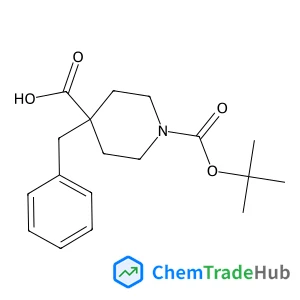
4-Benzyl-1-(tert-butoxycarbonyl)piperidine-4-carboxylic acid
CAS Number:
170838-87-6
Molecular Formula:
C18H25NO4
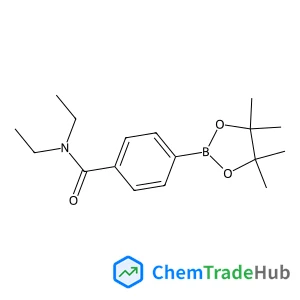
N,N-Diethyl-4-(4,4,5,5-tetramethyl-1,3,2-dioxaborolan-2-yl)benzamide
CAS Number:
325142-99-2
Molecular Formula:
C17H26BNO3
Recommended Suppliers






Disclaimer
This page provides academic journal information for reference and research purposes only. We are not affiliated with any journal publishers and do not handle publication submissions. For publication-related inquiries, please contact the respective journal publishers directly.
If you notice any inaccuracies in the information displayed, please contact us at support@chemtradehub.com. We will promptly review and address your concerns.