


Manifestation of fluorophore segmental motion in carbon dots in steady-state fluorescence experiments
Literature Information
Publication Date
2020-03-24
DOI
10.1039/D0CP00056F
Impact Factor
3.676
Authors
A. N. Starukhin, D. K. Nelson, D. A. Eurov, D. A. Kurdyukov, V. G. Golubev
View Original
Abstract
The steady state fluorescence anisotropy of carbon dot solutions of different viscosities η and its variation with temperature T has been investigated. The dependence of the anisotropy on T/η is shown to be described by the Perrin equation, which implies that Brownian rotational motion of carbon dots in solution is a basic mechanism of fluorescence depolarization. Peculiarities of the Perrin plot testify that the luminous entity (“fluorophore”) responsible for carbon dot fluorescence displays noticeable segmental motions, which are independent of the overall rotational diffusion of the dots. The Perrin model fit to the experimental data yields the effective volumes of the fluorophore VF = 0.35 ± 0.15 nm3 and of the carbon dot as a whole VC = 10.5 ± 1.8 nm3. The rotational motions of the fluorophores are shown to be limited and spectrally dependent. A feasible nature of the fluorophores in question is discussed.
Recommended Journals

AIAA Journal

Chemistry of Heterocyclic Compounds

Anti-Corrosion Methods and Materials

Chemical Reviews

Chemical & Pharmaceutical Bulletin

Cement and Concrete Research

Journal of the Chinese Chemical Society

Chemistry of Natural Compounds

Journal of the American Chemical Society

Canadian Metallurgical Quarterly
Related Literature
A ribose-functionalized NAD+ with versatile activity for ADP-ribosylation
Elisa N. Stephens, Xiao-Nan Zhang, Albert T. Lam, Jiawei Li, Hua Pei
2023-11-03
Communication
DOI: 10.1039/D3CC04343F
A triad molecular conductor: simultaneous control of charge and molecular arrangements
Naoya Kinoshita, Atsuya Maruyama
2023-10-10
Communication
DOI: 10.1039/D3CC03198E
Correction: Strengthening Pt/WOx interfacial interactions to increase the CO tolerance of Pt for hydrogen oxidation reaction
Lin Guo, Jinyu Zheng
2023-11-06
Correction
DOI: 10.1039/D3CC90365F
Carborane-based heteromolecular extended networks driven by directional C–Te⋯N chalcogen bonding interactions
Maxime Beau, Olivier Jeannin, Marc Fourmigué, Emmanuel Aubert, Enrique Espinosa, Sunhee Lee, Won-Sik Han, Ie-Rang Jeon
2023-10-17
Communication
DOI: 10.1039/D3CC04338J
Janus interface enables reversible Zn-ion battery by regulating interfacial water structure and crystal-orientation
Yuxuan Liang, Meijia Qiu, Peng Sun, Wenjie Mai
2023-12-19
Edge Article
DOI: 10.1039/D3SC05334B
Clickable bisreactive small gold nanoclusters for preparing multifunctionalized nanomaterials: application to photouncaging of an anticancer molecule
Kenji Watanabe, Qiyue Mao, Zhouen Zhang, Machi Hata, Masahito Kodera, Hiroaki Kitagishi
2023-12-15
Edge Article
DOI: 10.1039/D3SC04365G
Fabrication of porous polyimide as cathode for high performance lithium-ion battery
Xianyu Liu, Mingxun Xie, Yunxia Wei, Yongliang Guo, Zheng Liu
2023-10-24
Communication
DOI: 10.1039/D3CC04287A
Switchover from singlet oxygen to superoxide radical through a photoinduced two-step sequential energy transfer process
Shengsheng Yu, Rong-Xin Zhu, Kai-Kai Niu, Ning Han, Hui Liu, Ling-Bao Xing
2024-01-05
Edge Article
DOI: 10.1039/D3SC05820D
Ferrocene/air double-mediated FeTiO3-photocatalyzed semi-heterogeneous annulation of quinoxalin-2(1H)-ones in EtOH/H2O
Wen-Tao Ouyang, Hong-Tao Ji, Jun Jiang, Chao Wu, Jia-Cheng Hou, Min-Hang Zhou, Yu-Han Lu, Li-Juan Ou, Wei-Min He
2023-11-07
Communication
DOI: 10.1039/D3CC04020H
You might also like
Compound Q&A
What are the main uses of (5-Sulfamoyl-3-pyridinyl)boronic acid (CAS: 951233-61-7)?
(5-Sulfamoyl-3-pyridinyl)boronic acid is primarily used in chemical synthesis, p...
951233-61-7(5-Sulfamoyl-3-pyrid...
Compound Q&A
How is Benzyl 2-methyl-2-(methylsulfonyl)-4-pentenoate (CAS: 1942858-50-5) typically synthesized?
Benzyl 2-methyl-2-(methylsulfonyl)-4-pentenoate is typically synthesized via est...
1942858-50-5Benzyl 2-methyl-2-(m...
Compound Q&A
What precautions should be taken when handling 8-Fluoroquinolin-6-ol (CAS: 209353-22-0)?
When handling 8-Fluoroquinolin-6-ol (CAS: 209353-22-0), it is important to use p...
209353-22-08-Fluoroquinolin-6-o...
Compound Q&A
What are the physical and chemical properties of 1,3-Dibromo-5-(2-methyl-2-propanyl)benzene (CAS: 129316-09-2)?
1,3-Dibromo-5-(2-methyl-2-propanyl)benzene (CAS: 129316-09-2) is a crystalline c...
129316-09-21,3-Dibromo-5-(2-met...
Compound Q&A
What industries use Ethyl 7-chloro-4-oxo-1-(1,3-thiazol-2-yl)-1,4-dihydro-1,8-naphthyridine-3-carboxylate (CAS: 174726-87-5)?
Ethyl 7-chloro-4-oxo-1-(1,3-thiazol-2-yl)-1,4-dihydro-1,8-naphthyridine-3-carbox...
174726-87-5Ethyl 7-chloro-4-oxo...
Compound Q&A
What precautions should be taken when handling Delta-7-Avenasterol (CAS: 23290-26-8)?
When handling Delta-7-Avenasterol (CAS: 23290-26-8), it is important to wear app...
23290-26-8Delta-7-Avenasterol
Compound Q&A
What precautions should be taken when handling N-({(5R)-3-[3-Fluoro-4-(4-morpholinyl)phenyl]-2-oxo-1,3-oxazolidin-5-yl}methyl)acetamide (CAS: 872992-20-6)?
Proper handling involves the use of personal protective equipment such as gloves...
872992-20-6N-({(5R)-3-[3-Fluoro...
Compound Q&A
What precautions should be taken when handling 2-Methyl-2-proanyl 4-[(2-aminophenyl)amino]-1-piperidinecarboxylate (CAS: 79099-00-6)?
When handling 2-Methyl-2-proanyl 4-[(2-aminophenyl)amino]-1-piperidinecarboxylat...
79099-00-62-Methyl-2-propanyl ...
Compound Q&A
What is N-Methyl-4-chlorobenzylamine hydrochloride (CAS: 65542-24-7)?
N-Methyl-4-chlorobenzylamine hydrochloride (CAS: 65542-24-7) is a organic compou...
65542-24-7N-Methyl-4-chloroben...
Compound Q&A
Is [2-(Dodecyloxy)ethoxy]acetic acid (CAS: 27306-90-7) safe?
[2-(Dodecyloxy)ethoxy]acetic acid (CAS: 27306-90-7) is generally considered safe...
27306-90-7[2-(Dodecyloxy)ethox...
Source Journal
Physical Chemistry Chemical Physics

CiteScore:
5.5
Self-citation Rate:
10.3%
Articles per Year:
3036
Physical Chemistry Chemical Physics (PCCP) is an international journal co-owned by 19 physical chemistry and physics societies from around the world. This journal publishes original, cutting-edge research in physical chemistry, chemical physics and biophysical chemistry. To be suitable for publication in PCCP, articles must include significant innovation and/or insight into physical chemistry; this is the most important criterion that reviewers and Editors will judge against when evaluating submissions. The journal has a broad scope and welcomes contributions spanning experiment, theory, computation and data science. Topical coverage includes spectroscopy, dynamics, kinetics, statistical mechanics, thermodynamics, electrochemistry, catalysis, surface science, quantum mechanics, quantum computing and machine learning. Interdisciplinary research areas such as polymers and soft matter, materials, nanoscience, energy, surfaces/interfaces, and biophysical chemistry are welcomed if they demonstrate significant innovation and/or insight into physical chemistry. Joined experimental/theoretical studies are particularly appreciated when complementary and based on up-to-date approaches.
Recommended Compounds
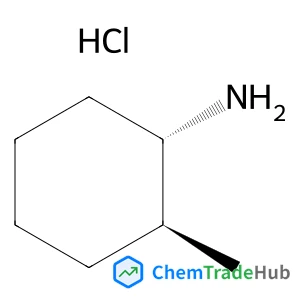
(1R,2R)-2-Methylcyclohexanamine hydrochloride (1:1)
CAS Number:
39558-31-1
Molecular Formula:
C7H16ClN
![N-[2,6-Di(9-anthryl)-4-oxido-8,9,10,11,12,13,14,15-octahydrodinaphtho[2,1-d:1',2'-f][1,3,2]dioxaphosphepin-4-yl]-1,1,1-trifluoromethanesulfonamide structure](https://static.chemtradehub.com/structs/122/1227374-64-2-cdb5.webp "N-[2,6-Di(9-anthryl)-4-oxido-8,9,10,11,12,13,14,15-octahydrodinaphtho[2,1-d:1',2'-f][1,3,2]dioxaphosphepin-4-yl]-1,1,1-trifluoromethanesulfonamide structure")
N-[2,6-Di(9-anthryl)-4-oxido-8,9,10,11,12,13,14,15-octahydrodinaphtho[2,1-d:1',2'-f][1,3,2]dioxaphosphepin-4-yl]-1,1,1-trifluoromethanesulfonamide
CAS Number:
1227374-64-2
Molecular Formula:
C49H37F3NO5PS
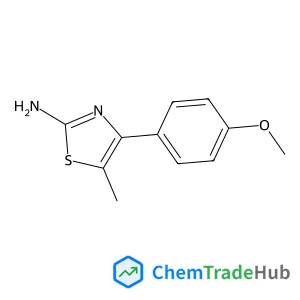
4-(4-Methoxyphenyl)-5-methyl-1,3-thiazol-2-amine
CAS Number:
105512-88-7
Molecular Formula:
C11H12N2OS

Recommended Suppliers






Disclaimer
This page provides academic journal information for reference and research purposes only. We are not affiliated with any journal publishers and do not handle publication submissions. For publication-related inquiries, please contact the respective journal publishers directly.
If you notice any inaccuracies in the information displayed, please contact us at support@chemtradehub.com. We will promptly review and address your concerns.