













Sulphonyl transfer reactions
Literature Information
Publication Date
DOI
10.1039/CS9891800123
Impact Factor
54.564
Authors
View Original
Abstract
The first page of this article is displayed as the abstract.
Related Literature
Photocatalysis of PbS quantum dots in a quantum dot-sensitized solar cell: photovoltaic performance and characteristics
Beibei Ma, Liduo Wang, Haopeng Dong, Rui Gao, Yi Geng, Yifeng Zhu, Yong Qiu
2010-12-16
Communication
DOI: 10.1039/C0CP02415E
Aggregation behavior of gemini surfactants and their interaction with macromolecules in aqueous solution
Yuchun Han, Yilin Wang
2011-01-12
Perspective
DOI: 10.1039/C0CP01196G
Characterization and reactivity of oxygen-centred radicals over transition metal oxideclusters
Sheng-Gui He, Xun-Lei Ding
2011-01-05
Perspective
DOI: 10.1039/C0CP01171A
Mesoporous carbon capsules as electrode materials in electrochemical double layer capacitors
Shanthi Murali, Daniel R. Dreyer, Patricia Valle-Vigón, Meryl D. Stoller, Yanwu Zhu, Cornelio Morales, Antonio B. Fuertes, Christopher W. Bielawski, Rodney S. Ruoff
2010-12-14
Communication
DOI: 10.1039/C0CP02557G
Processes in chemical reactions related to the environment, energy and materials sciences
2011-01-11
Editorial
DOI: 10.1039/C0CP90160A
Two-mode dynamics in dispersed systems: the case of particle-stabilized foams studied by diffusing wave spectroscopy
Antonio Stocco, Jérôme Crassous, Anniina Salonen, Arnaud Saint-Jalmes, Dominique Langevin
2010-11-25
Paper
DOI: 10.1039/C0CP01152E
Synthesis and characterization of nanogels of poly(N-isopropylacrylamide) by a combination of light and small-angle X-ray scattering
Thomas Alsted, Walter Richtering, Jan Skov Pedersen
2010-10-07
Paper
DOI: 10.1039/C0CP01359E
Synthesis of silica supported AuCu nanoparticlecatalysts and the effects of pretreatment conditions for the CO oxidation reaction
J. Chris Bauer, David Mullins, Meijun Li, E. Andrew Payzant
2011-01-18
Paper
DOI: 10.1039/C0CP01859G
Capture and dissociation in the complex-forming CH+H2 → CH2+H, CH+H2 reactions
Miguel González, Amaia Saracibar, Ernesto Garcia
2011-01-06
Paper
DOI: 10.1039/C0CP01188F
Ammonia IRMS-TPD measurements on Brønsted acidity of proton-formed SAPO-34
Katsuki Suzuki, Takuma Nishio, Naonobu Katada, German Sastre, Miki Niwa
2010-12-20
Paper
DOI: 10.1039/C0CP00961J
You might also like
Compound Q&A
What are the main uses of 1H-Indazole-6-carbonitrile (CAS: 141290-59-7)?
1H-Indazole-6-carbonitrile finds applications in pharmaceuticals, where it serve...
141290-59-71H-Indazole-6-carbon...
Compound Q&A
How should waste containing Dioctyl (2E)-2-butenedioate (CAS: 2997-85-5) be handled?
Waste containing Dioctyl (2E)-2-butenedioate (CAS: 2997-85-5) should be collecte...
2997-85-5Dioctyl (2E)-2-buten...
Compound Q&A
What industries use Sodium [(1,2-benzoxazol-3-ylmethyl)sulfonyl]azanide (CAS: 68291-98-5)?
Sodium [(1,2-benzoxazol-3-ylmethyl)sulfonyl]azanide is primarily used in pharmac...
68291-98-5Sodium [(1,2-benzoxa...
Compound Q&A
Are there alternatives to Dimethyl 4-(4,4,5,5-tetramethyl-1,3,2-dioxaborolan-2-yl)-2,6-pyridinedicarboxylate (CAS: 741709-66-0) in synthesis?
Dimethyl 4-(4,4,5,5-tetramethyl-1,3,2-dioxaborolan-2-yl)-2,6-pyridinedicarboxyla...
741709-66-0Dimethyl 4-(4,4,5,5-...
Compound Q&A
How should waste containing 2-Fluoro-6-hydrazinopyridine (CAS: 80714-39-2) be handled?
Waste containing 2-Fluoro-6-hydrazinopyridine (CAS: 80714-39-2) should be manage...
80714-39-22-Fluoro-6-hydrazino...
Compound Q&A
What is 6-Formyl-2-pyridinecarboxylic acid (CAS: 499214-11-8)?
6-Formyl-2-pyridinecarboxylic acid is an organic compound with the molecular for...
499214-11-86-Formyl-2-pyridinec...
Compound Q&A
What is the market or research trend for 3-(3,4-dimethoxyphenyl)-2,5-dimethyl-N-(2-morpholin-4-ylethyl)pyrazolo[1,5-a]pyrimidin-7-amine (CAS: 900874-91-1)?
Research trends for this compound indicate a focus on its potential applications...
900874-91-13-(3,4-dimethoxyphen...
Compound Q&A
How is 9H-Tribenzo[b,d,f]azepine (CAS: 29875-73-8) typically synthesized?
9H-Tribenzo[b,d,f]azepine is typically synthesized via a multi-step process invo...
29875-73-89H-Tribenzo[b,d,f]az...
Compound Q&A
How is 1-Cyclopropyl-7-ethoxy-6-fluoro-8-methoxy-4-oxo-1,4-dihydro-3-quinolinecarboxylic acid (CAS: 1797982-51-4) typically synthesized?
1-Cyclopropyl-7-ethoxy-6-fluoro-8-methoxy-4-oxo-1,4-dihydro-3-quinolinecarboxyli...
1797982-51-41-Cyclopropyl-7-etho...
Compound Q&A
How should waste containing Methyl 3-oxo-1,2,3,4-tetrahydro-6-quinoxalinecarboxylate (CAS: 671820-52-3) be handled?
Waste containing Methyl 3-oxo-1,2,3,4-tetrahydro-6-quinoxalinecarboxylate (CAS: ...
671820-52-3Methyl 3-oxo-1,2,3,4...
Source Journal
Chemical Society Reviews

CiteScore:
80.8
Self-citation Rate:
1.2%
Articles per Year:
250
Chem Soc Rev publishes review articles covering important topics at the forefront of the chemical sciences. Reviews should be of the very highest quality and international impact. We particularly encourage international and multidisciplinary collaborations among our authors. Our scope covers the breadth of the chemical sciences, including interdisciplinary topics where the article has a basis in chemistry. Topics include: Analytical chemistry Biomaterials chemistry Bioorganic/medicinal chemistry Catalysis Chemical Biology Coordination Chemistry Crystal Engineering Energy Sustainable chemistry Green chemistry Inorganic chemistry Inorganic materials Main group chemistry Nanoscience Organic chemistry Organic materials Organometallics Physical chemistry Supramolecular chemistry Synthetic methodology Theoretical and computational chemistry
Recommended Compounds


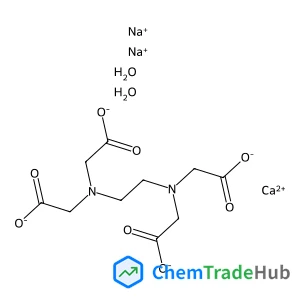
EthylenediaminetetraaceticacidcalciumDisodiumsalthydrate
CAS Number:
23411-34-9
Molecular Formula:
C10H16CaN2Na2O10

Recommended Suppliers





Disclaimer
This page provides academic journal information for reference and research purposes only. We are not affiliated with any journal publishers and do not handle publication submissions. For publication-related inquiries, please contact the respective journal publishers directly.
If you notice any inaccuracies in the information displayed, please contact us at support@chemtradehub.com. We will promptly review and address your concerns.