












1976 Presidential address. Chemistry and the new industrial revolution
Literature Information
Publication Date
DOI
10.1039/CS9760500317
Impact Factor
54.564
Authors
View Original
Abstract
The first page of this article is displayed as the abstract.
Related Literature
2D silver nanocrystal ordering modulated by various substrates and revealed using oxygen plasma treatment
Emilie Klecha, Imad Arfaoui, Johannes Richardi, Dorothée Ingert, Marie-Paule Pileni
2010-12-17
Paper
DOI: 10.1039/C0CP01237H
The impact of protonation and deprotonation of 3-methyl-2′-deoxyadenosine on N-glycosidic bond cleavage
Ali Ebrahimi, Mostafa Habibi-Khorassani, Sophia Bazzi
2011-01-26
Paper
DOI: 10.1039/C0CP01279C
MRCI investigation of different isomers of Ni2O2H2+‡
Olaf Hübner, Hans-Jörg Himmel
2010-12-08
Paper
DOI: 10.1039/C0CP01170C
Unfolding and refolding details of lysozyme in the presence of β-casein micelles
Fu-Gen Wu, Jun-Jie Luo, Zhi-Wu Yu
2011-01-24
Paper
DOI: 10.1039/C0CP01184C
Mesoporous carbon capsules as electrode materials in electrochemical double layer capacitors
Shanthi Murali, Daniel R. Dreyer, Patricia Valle-Vigón, Meryl D. Stoller, Yanwu Zhu, Cornelio Morales, Antonio B. Fuertes, Christopher W. Bielawski, Rodney S. Ruoff
2010-12-14
Communication
DOI: 10.1039/C0CP02557G
The role of calcium in membrane condensation and spontaneous curvature variations in model lipidic systems
Anan Yaghmur, Barbara Sartori, Michael Rappolt
2010-11-03
Paper
DOI: 10.1039/C0CP01036G
Theoretical study of the source-drain current and gate leakage current to understand the graphene field-effect transistors
Cui Yu, Hongmei Liu, Wenbin Ni, Nengyue Gao, Jianwei Zhao, Haoli Zhang
2011-01-14
Paper
DOI: 10.1039/C0CP01026J
Catalytic activity of a ζ-class zinc and cadmium containing carbonic anhydrase. Compared work mechanisms
Orazio Amata, Tiziana Marino, Nino Russo, Marirosa Toscano
2011-01-07
Paper
DOI: 10.1039/C0CP01053G
Direct electrochemisty and electrocatalysis of anthraquinone-monosulfonate/polyaniline hybrid film synthesized by a novel electrochemical doping-dedoping-redoping method on pre-activated spectroscopically pure graphite surface
Guoquan Zhang, Fenglin Yang
2011-01-07
Paper
DOI: 10.1039/C0CP00608D
You might also like
Compound Q&A
What are the main uses of 1H-Indazole-6-carbonitrile (CAS: 141290-59-7)?
1H-Indazole-6-carbonitrile finds applications in pharmaceuticals, where it serve...
141290-59-71H-Indazole-6-carbon...
Compound Q&A
How should waste containing Dioctyl (2E)-2-butenedioate (CAS: 2997-85-5) be handled?
Waste containing Dioctyl (2E)-2-butenedioate (CAS: 2997-85-5) should be collecte...
2997-85-5Dioctyl (2E)-2-buten...
Compound Q&A
What industries use Sodium [(1,2-benzoxazol-3-ylmethyl)sulfonyl]azanide (CAS: 68291-98-5)?
Sodium [(1,2-benzoxazol-3-ylmethyl)sulfonyl]azanide is primarily used in pharmac...
68291-98-5Sodium [(1,2-benzoxa...
Compound Q&A
Are there alternatives to Dimethyl 4-(4,4,5,5-tetramethyl-1,3,2-dioxaborolan-2-yl)-2,6-pyridinedicarboxylate (CAS: 741709-66-0) in synthesis?
Dimethyl 4-(4,4,5,5-tetramethyl-1,3,2-dioxaborolan-2-yl)-2,6-pyridinedicarboxyla...
741709-66-0Dimethyl 4-(4,4,5,5-...
Compound Q&A
How should waste containing 2-Fluoro-6-hydrazinopyridine (CAS: 80714-39-2) be handled?
Waste containing 2-Fluoro-6-hydrazinopyridine (CAS: 80714-39-2) should be manage...
80714-39-22-Fluoro-6-hydrazino...
Compound Q&A
What is 6-Formyl-2-pyridinecarboxylic acid (CAS: 499214-11-8)?
6-Formyl-2-pyridinecarboxylic acid is an organic compound with the molecular for...
499214-11-86-Formyl-2-pyridinec...
Compound Q&A
What is the market or research trend for 3-(3,4-dimethoxyphenyl)-2,5-dimethyl-N-(2-morpholin-4-ylethyl)pyrazolo[1,5-a]pyrimidin-7-amine (CAS: 900874-91-1)?
Research trends for this compound indicate a focus on its potential applications...
900874-91-13-(3,4-dimethoxyphen...
Compound Q&A
How is 9H-Tribenzo[b,d,f]azepine (CAS: 29875-73-8) typically synthesized?
9H-Tribenzo[b,d,f]azepine is typically synthesized via a multi-step process invo...
29875-73-89H-Tribenzo[b,d,f]az...
Compound Q&A
How is 1-Cyclopropyl-7-ethoxy-6-fluoro-8-methoxy-4-oxo-1,4-dihydro-3-quinolinecarboxylic acid (CAS: 1797982-51-4) typically synthesized?
1-Cyclopropyl-7-ethoxy-6-fluoro-8-methoxy-4-oxo-1,4-dihydro-3-quinolinecarboxyli...
1797982-51-41-Cyclopropyl-7-etho...
Compound Q&A
How should waste containing Methyl 3-oxo-1,2,3,4-tetrahydro-6-quinoxalinecarboxylate (CAS: 671820-52-3) be handled?
Waste containing Methyl 3-oxo-1,2,3,4-tetrahydro-6-quinoxalinecarboxylate (CAS: ...
671820-52-3Methyl 3-oxo-1,2,3,4...
Source Journal
Chemical Society Reviews

CiteScore:
80.8
Self-citation Rate:
1.2%
Articles per Year:
250
Chem Soc Rev publishes review articles covering important topics at the forefront of the chemical sciences. Reviews should be of the very highest quality and international impact. We particularly encourage international and multidisciplinary collaborations among our authors. Our scope covers the breadth of the chemical sciences, including interdisciplinary topics where the article has a basis in chemistry. Topics include: Analytical chemistry Biomaterials chemistry Bioorganic/medicinal chemistry Catalysis Chemical Biology Coordination Chemistry Crystal Engineering Energy Sustainable chemistry Green chemistry Inorganic chemistry Inorganic materials Main group chemistry Nanoscience Organic chemistry Organic materials Organometallics Physical chemistry Supramolecular chemistry Synthetic methodology Theoretical and computational chemistry
Recommended Compounds
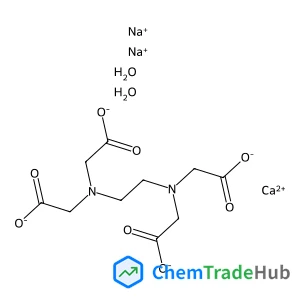
EthylenediaminetetraaceticacidcalciumDisodiumsalthydrate
CAS Number:
23411-34-9
Molecular Formula:
C10H16CaN2Na2O10

Recommended Suppliers


Disclaimer
This page provides academic journal information for reference and research purposes only. We are not affiliated with any journal publishers and do not handle publication submissions. For publication-related inquiries, please contact the respective journal publishers directly.
If you notice any inaccuracies in the information displayed, please contact us at support@chemtradehub.com. We will promptly review and address your concerns.