


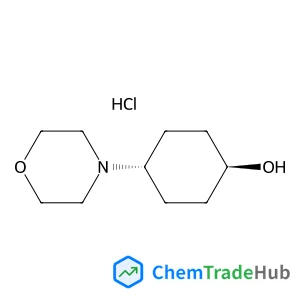
trans-4-(4-Morpholinyl)cyclohexanol hydrochloride (1:1)
CAS Number:
1588441-09-1
Molecular Formula:
C10H20ClNO2
Meiqiu Xie, Yang Li, Xuhai Liu, Jianping Yang, Hui Li
High-performance photovoltaics (PVs) constitute a subject of extensive research efforts, in which silicon (Si)-based solar cells (SCs) have been widely commercialized. However, the low carrier mobility of Si-based SCs can limit the effective charge separation, thereby negatively impacting the device performance. Here, via calculating the physicochemical and PV performance based on density functional theory, we demonstrate SCs based on two-dimensional (2D) group IV and V compounds with an AX3 configuration. Firstly, the cleavage energies of AX3 (A = Si, Ge; X = P, As, and Sb) are calculated to be less than 1 J m−2, providing an experimental feasibility to be exfoliated from the corresponding bulk. Secondly, electronic and optical properties have been systematically investigated. To be specific, the band gap of monolayer AX3 falls in the range of 1.11–1.27 eV, which is comparable with that of Si. Significantly, the electron mobility of monolayer AX3 can reach as high as ∼30 000 cm2 V−1 s−1, which is one order of magnitude higher than that of Si. Furthermore, the optical absorbance of monolayer SiAs3, SiP3 and GeAs3 exhibits high coefficients in visible light. Therefore, we believe that our designed AX3-based PV systems with power conversion efficiency of 20% can offer great potential in the application of high-performance two-dimension-based PVs.

Proceedings of the National Academy of Sciences of the United States of America

Journal of Physics and Chemistry of Solids

Pure and Applied Chemistry

Fibre Chemistry

Journal of Medicinal Chemistry

Russian Chemical Reviews

Planta Medica

Pharmacological Reviews

Journal of Catalysis

Journal of Organometallic Chemistry
Benjamin Bobin Ye, Zhen-Gang Wang
DOI: 10.1039/D2CP00166G
Manli Zhang, Dawen Zhang, Yunhu Hu, Qiyong Zhu, Longjiu Cheng
DOI: 10.1039/D2CP01552H
Ikuo Kurisaki, Shigenori Tanaka
DOI: 10.1039/D2CP00267A
Aleksandra Leszczyk, Paweł Tecmer, Dariusz Kedziera, Katharina Boguslawski
DOI: 10.1039/D2CP03377A
J. C. Woicik
DOI: 10.1039/D2CP00912A
Toshiko Mizokuro, Kenji Kamada, Yoriko Sonoda
DOI: 10.1039/D1CP04784A
Li-Zhen Sun, Jun-Lin Qian, Pinggen Cai, Xiaojun Xu
DOI: 10.1039/D2CP02737B
Jingwen Jiang, Yiguo Xu, Xiuwen Zhang
DOI: 10.1039/D2CP02054H
Ethyl 4-chlorothieno[2,3-b]pyridine-5-carboxylate (CAS: 59713-58-5) can be synth...
5-Methyl-1H-indole-3-carbaldehyde (CAS: 52562-50-2) is subject to various regula...
(1,3-Dimethyl-2,4-dioxo-1,2,3,4-tetrahydro-5-pyrimidinyl)boronic acid is a white...
Waste containing Sulfocostunolide A (CAS: 1016983-51-9) should be handled with c...
When handling Murraxocin (CAS: 88478-44-8), ensure proper personal protective eq...
Formvar (CAS: 63148-64-1) is an alkyd resin characterized by a high molecular we...
(S)-4-benzyl-2-((benzyloxy)methyl)morpholine is generally safe when handled with...
Methyl 1-(5-bromo-2-pyrimidinyl)cyclopropanecarboxylate (CAS: 1447607-69-3) is p...
2-Methyl-1-phenyl-1-propanamine hydrochloride (CAS: 24290-47-9) is generally con...
3-(4-Bromophenyl)-2-methylpropanoic acid is synthesized through a multi-step pro...

Physical Chemistry Chemical Physics (PCCP) is an international journal co-owned by 19 physical chemistry and physics societies from around the world. This journal publishes original, cutting-edge research in physical chemistry, chemical physics and biophysical chemistry. To be suitable for publication in PCCP, articles must include significant innovation and/or insight into physical chemistry; this is the most important criterion that reviewers and Editors will judge against when evaluating submissions. The journal has a broad scope and welcomes contributions spanning experiment, theory, computation and data science. Topical coverage includes spectroscopy, dynamics, kinetics, statistical mechanics, thermodynamics, electrochemistry, catalysis, surface science, quantum mechanics, quantum computing and machine learning. Interdisciplinary research areas such as polymers and soft matter, materials, nanoscience, energy, surfaces/interfaces, and biophysical chemistry are welcomed if they demonstrate significant innovation and/or insight into physical chemistry. Joined experimental/theoretical studies are particularly appreciated when complementary and based on up-to-date approaches.
![2-(Methylsulfonyl)-2,4,5,6-tetrahydropyrrolo[3,4-c]pyrazole structure](https://static.chemtradehub.com/structs/122/1226781-80-1-09d5.webp "2-(Methylsulfonyl)-2,4,5,6-tetrahydropyrrolo[3,4-c]pyrazole structure")


