













Bistachybotrysins L–V, bioactive phenylspirodrimane dimers from the fungus Stachybotrys chartarum
Literature Information
Publication Date
2019-12-26
DOI
10.1039/C9QO01284B
Impact Factor
5.281
Authors
Jimei Liu, Xiaona Jia, Jinlian Zhao, Jiamin Feng, Minghua Chen, Ridao Chen, Kebo Xie, Dawei Chen, Yan Li, Dan Zhang, Ying Peng, Shuyi Si, Jungui Dai
View Original
Abstract
Bistachybotrysins L–V (1–11), eleven novel dimeric phenylspirodrimanes, were isolated from the fungus Stachybotrys chartarum CGMCC 3.5365. Among them, 1 and 2, a pair of stereoisomeric dimers represent an unusual aromatic [5,6]-spiroketal skeleton with a central 2-methoxy-1,6-dioxaspiro[4.5]decane core fused with two phenyl units. Their structures, including absolute configurations, were elucidated using extensive spectroscopic data, single-crystal X-ray diffraction (Cu Kα), and calculated electronic circular dichroism (ECD) analyses. Biological assay revealed that 2 showed potent cytotoxicity against five human tumor cell lines with IC50 values in the range of 1.8–3.5 μM; 2, 3, and 9 displayed neuroprotective effects toward the glutamate-induced toxicity in SK-N-SH cells by increasing cell viability 17.4%–17.6% at 10.0 μM; and 8 exhibited anti-inflammatory activity by suppressing LPS-induced NO production in BV2 cells with an inhibition rate of 54.2% at 10.0 μM. Furthermore, the possible biogenetic pathways of these compounds are proposed.
Recommended Journals
Related Literature
Insights into the synthesis of pillar[5]arene and its conversion into pillar[6]arene
Marta Da Pian, Fabrizio Fabris, Alessandro Scarso
2019-03-06
Research Article
DOI: 10.1039/C9QO00176J
Quantification of the hydrophobic effect using water-soluble super aryl-extended calix[4]pyrroles‡
2019-02-22
Research Article
DOI: 10.1039/C9QO00171A
Oxidative selenofunctionalization of allenes: convenient access to 2-(phenylselanyl)-but-2-enals and 4-oxo-3-(phenylselanyl)pent-2-enoates‡
Benito Alcaide, Pedro Almendros, Teresa Martínez del Campo, Laura Martín, Guillermo Palop, Mireia Toledano-Pinedo
2019-05-24
Research Article
DOI: 10.1039/C9QO00561G
Asymmetric hydrogenation of α,β-unsaturated sulfones by a rhodium/thiourea–bisphosphine complex
Yongjie Sun, Jun Jiang, Xiaochong Guo
2019-03-06
Research Article
DOI: 10.1039/C8QO01291A
Study of through-space substituent–π interactions using N-phenylimide molecular balances
Jungwun Hwang, Ping Li, Erik C. Vik, Ishwor Karki, Ken D. Shimizu
2019-03-25
Research Article
DOI: 10.1039/C9QO00195F
Metal-free tandem reaction synthesis of spiro-cyclopropyl fused pyrazolin-5-one derivatives
Man Liu, Chen-Fei Liu, Jing Zhang, Yan-Jun Xu, Lin Dong
2019-01-21
Research Article
DOI: 10.1039/C8QO01378K
Copper-catalyzed direct C–H phosphorylation of N-imino isoquinolinium ylides with H-phosphonates
Xin-Chen Zhan, Yu-Yuan Hei, Jian-Lan Song, Peng-Cheng Qian, Xing-Guo Zhang, Chen-Liang Deng
2019-03-15
Research Article
DOI: 10.1039/C9QO00107G
Enantiodivergent synthesis of 1,2-bis(diphenylphosphino)ethanes via asymmetric [3 + 2]-cycloaddition
Bing Liu, Wenbo Li, Hai-Hong Wu, Junliang Zhang
2019-01-25
Research Article
DOI: 10.1039/C8QO01404C
Chiral self-sorting behaviour of [2.2]paracyclophane-based bis(pyridine) ligands‡
J. Anhäuser, R. Puttreddy, Y. Lorenz, A. Schneider, M. Engeser, K. Rissanen, A. Lützen
2019-03-12
Research Article
DOI: 10.1039/C9QO00155G
You might also like
Compound Q&A
How should waste containing (6-Bromo-2-naphthyl)oxy](dimethyl)(2-methyl-2-propanyl)silane be handled?
Waste containing (6-Bromo-2-naphthyl)oxy](dimethyl)(2-methyl-2-propanyl)silane (...
100751-65-3[(6-Bromo-2-naphthyl...
Compound Q&A
How is 7-Fluoro-4-isoquinolinecarboxylic acid (CAS: 1841081-40-0) typically synthesized?
7-Fluoro-4-isoquinolinecarboxylic acid can be synthesized via a multi-step proce...
1841081-40-07-Fluoro-4-isoquinol...
Compound Q&A
What are the physical and chemical properties of 2,3,5,6-Tetrabromothieno[3,2-b]thiophene (CAS: 124638-53-5)?
2,3,5,6-Tetrabromothieno[3,2-b]thiophene is a crystalline compound with a high m...
124638-53-52,3,5,6-Tetrabromoth...
Compound Q&A
Is 1-[4-(Benzylamino)-7,8-dihydro-5H-pyrano[4,3-d]pyrimidin-2-yl]-2-methyl-1H-indole-4-carboxamide (CAS: 1542705-92-9) safe?
1-[4-(Benzylamino)-7,8-dihydro-5H-pyrano[4,3-d]pyrimidin-2-yl]-2-methyl-1H-indol...
1542705-92-91-[4-(Benzylamino)-7...
Compound Q&A
What is the market or research trend for imidazo[5,1-d]-1,2,3,5-tetrazine-8-carboxylic acid, 3,4-dihydro-3-methyl-4-oxo- (CAS: 113942-30-6)?
The market for imidazo[5,1-d]-1,2,3,5-tetrazine-8-carboxylic acid, 3,4-dihydro-3...
113942-30-6Imidazo[5,1-d]-1,2,3...
Compound Q&A
What is 3-(Triisopropylsilyl)propiolaldehyde (CAS: 163271-80-5)?
3-(Triisopropylsilyl)propiolaldehyde is a synthetic organic compound with the CA...
163271-80-53-(Triisopropylsilyl...
Compound Q&A
What regulatory guidelines apply to 6-Nitro-2H-1,4-benzoxazin-3(4H)-one (CAS: 81721-87-1)?
6-Nitro-2H-1,4-benzoxazin-3(4H)-one (CAS: 81721-87-1) is subject to various regu...
81721-87-16-Nitro-2H-1,4-benzo...
Compound Q&A
How should waste containing (3-Fluorophenyl)(4-{[(2-methyl-2-propanyl)oxy]carbonyl}-1-piperazinyl)acetic acid (CAS: 885272-91-3) be handled?
Waste containing (3-Fluorophenyl)(4-{[(2-methyl-2-propanyl)oxy]carbonyl}-1-piper...
885272-91-3(3-Fluorophenyl)(4-{...
Compound Q&A
What are the physical and chemical properties of N,N'-4,4'-Biphenyldiyldiisonicotinamide (CAS: 55119-40-9)?
N,N'-4,4'-Biphenyldiyldiisonicotinamide is a white crystalline solid with a mole...
55119-40-9N,N'-4,4'-Biphenyldi...
Compound Q&A
What industries use 6-Bromo-8-fluoro-2-quinazolinol (CAS: 1036756-15-6)?
6-Bromo-8-fluoro-2-quinazolinol is primarily used in the pharmaceutical industry...
1036756-15-66-Bromo-8-fluoro-2-q...
Source Journal
Organic Chemistry Frontiers

CiteScore:
7.8
Self-citation Rate:
8.7%
Articles per Year:
724
Organic Chemistry Frontiers publishes high-quality research from across organic chemistry. Emphases are placed on studies that make significant contributions to the field of organic chemistry by reporting either new or significantly improved protocols or methodologies. Topics include, but are not limited to the following: Organic synthesis Development of synthetic methodologies Catalysis Natural products Functional organic materials Supramolecular and macromolecular chemistry Physical and computational organic chemistry
Recommended Compounds
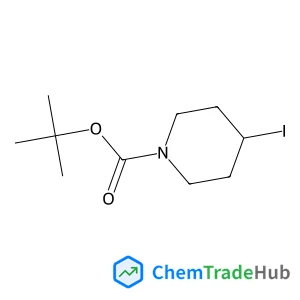
2-Methyl-2-propanyl 4-iodo-1-piperidinecarboxylate
CAS Number:
301673-14-3
Molecular Formula:
C10H18INO2
Recommended Suppliers




Disclaimer
This page provides academic journal information for reference and research purposes only. We are not affiliated with any journal publishers and do not handle publication submissions. For publication-related inquiries, please contact the respective journal publishers directly.
If you notice any inaccuracies in the information displayed, please contact us at support@chemtradehub.com. We will promptly review and address your concerns.