












Supramolecularly assisted synthesis of chiral tripodal imidazolium compounds‡
Literature Information
Publication Date
2019-03-04
DOI
10.1039/C9QO00163H
Impact Factor
5.281
Authors
Adriana Valls, Belén Altava, M. Isabel Burguete, Jorge Escorihuela, Vicente Martí-Centelles, Santiago V. Luis
View Original
Abstract
A strong preference for the formation of tripodal systems over the related monotopic and ditopic compounds is observed for the reaction between tris(halomethyl)benzenes and imidazoles derived from amino acids and containing an amide fragment. This preference allows the formation of the tripodal derivative as the major product even when an equimolar mixture of the tris(halomethyl)benzene and the imidazole is reacted (1 : 1 ratio instead of the stoichiometric 1 : 3 ratio). The reactions were monitored using 1H NMR spectroscopy and ESI mass spectrometry and kinetically characterized. Computational studies were also performed in order to rationalize the observed preference of the tri-substituted product. The results reveal the existence of well-defined supramolecular interactions between the imidazolium groups and the reacting imidazoles that facilitate the formation of the multitopic systems once the first imidazolium group is formed. Analysis of the different structural components shows that the presence of the amide group from the amino acid moiety is the key structural requirement for such supramolecular assistance to take place. The preorganization of the supramolecular intermediates formed through hydrogen bonding interactions involving amide-NH fragments in imidazoles and bromide anions in imidazolium groups seems to be also present at the corresponding TSs, decreasing the associated energy barriers.
Related Literature
Chemical diffusion with non-constant Dδ and the appearance of a parabolic rate law: Model study on SrTiO3
Rotraut Merkle, Joachim Maier, Klaus-Dieter Becker, Marc Kreye
2004-03-09
Paper
DOI: 10.1039/B315485H
Adding water to sugar: A spectroscopic and computational study of α- and β-phenylxyloside in the gas phase
Isabel Hünig, Alexander J. Painter, Rebecca A. Jockusch, Pierre Çarçabal, Elaine M. Marzluff, Lavina C. Snoek, David P. Gamblin, Benjamin G. Davis, John P. Simons
2005-05-17
Paper
DOI: 10.1039/B504230E
A theoretical study of the bonding in NO, (NO)2, (NO)2− and (NO)22− using a topological analysis of the electron localization function
Franck Fuster, Christine Dézarnaud-Dandine, Hilaire Chevreau, Alain Sevin
2004-05-25
Paper
DOI: 10.1039/B401310G
Ab initio studies on the photophysics of the guanine–cytosine base pair
Andrzej L. Sobolewski, Wolfgang Domcke
2004-01-28
Paper
DOI: 10.1039/B314419D
Rotational isomers of hydroxy deuterated o- and m-cresols studied by ultraviolet high resolution experiments
Christian Ratzer, Michael Schmitt
2005-04-26
Paper
DOI: 10.1039/B418847K
Species with negative electron affinity and standard DFT methods
D. Mariano A. Vera, Adriana B. Pierini
2004-04-29
Communication
DOI: 10.1039/B403898C
Collision-induced non-adiabatic transitions between the ion-pair states of molecular iodine: A challenge for experiment and theory
Timur V. Tscherbul, Alexei A. Buchachenko, Mikhail E. Akopyan, Sergey A. Poretsky, Anatoly M. Pravilov, Thomas A. Stephenson
2004-05-18
Invited Article
DOI: 10.1039/B402655A
Ti diffusion in La-doped SrTiO3 single crystals
Karsten Gömann, Günter Borchardt, Anissa Gunhold, Wolfgang Maus-Friedrichs, Horst Baumann
2004-04-02
Paper
DOI: 10.1039/B315210C
Amphoteric behaviour of Er3+ dopants in BaTiO3: an Er–LIII edge EXAFS assessment
M. T. Buscaglia, V. Buscaglia, P. Ghigna, M. Viviani, G. Spinolo, A. Testino, P. Nanni
2004-05-10
Paper
DOI: 10.1039/B402859G
You might also like
Compound Q&A
How should waste containing (6-Bromo-2-naphthyl)oxy](dimethyl)(2-methyl-2-propanyl)silane be handled?
Waste containing (6-Bromo-2-naphthyl)oxy](dimethyl)(2-methyl-2-propanyl)silane (...
100751-65-3[(6-Bromo-2-naphthyl...
Compound Q&A
How is 7-Fluoro-4-isoquinolinecarboxylic acid (CAS: 1841081-40-0) typically synthesized?
7-Fluoro-4-isoquinolinecarboxylic acid can be synthesized via a multi-step proce...
1841081-40-07-Fluoro-4-isoquinol...
Compound Q&A
What are the physical and chemical properties of 2,3,5,6-Tetrabromothieno[3,2-b]thiophene (CAS: 124638-53-5)?
2,3,5,6-Tetrabromothieno[3,2-b]thiophene is a crystalline compound with a high m...
124638-53-52,3,5,6-Tetrabromoth...
Compound Q&A
Is 1-[4-(Benzylamino)-7,8-dihydro-5H-pyrano[4,3-d]pyrimidin-2-yl]-2-methyl-1H-indole-4-carboxamide (CAS: 1542705-92-9) safe?
1-[4-(Benzylamino)-7,8-dihydro-5H-pyrano[4,3-d]pyrimidin-2-yl]-2-methyl-1H-indol...
1542705-92-91-[4-(Benzylamino)-7...
Compound Q&A
What is the market or research trend for imidazo[5,1-d]-1,2,3,5-tetrazine-8-carboxylic acid, 3,4-dihydro-3-methyl-4-oxo- (CAS: 113942-30-6)?
The market for imidazo[5,1-d]-1,2,3,5-tetrazine-8-carboxylic acid, 3,4-dihydro-3...
113942-30-6Imidazo[5,1-d]-1,2,3...
Compound Q&A
What is 3-(Triisopropylsilyl)propiolaldehyde (CAS: 163271-80-5)?
3-(Triisopropylsilyl)propiolaldehyde is a synthetic organic compound with the CA...
163271-80-53-(Triisopropylsilyl...
Compound Q&A
What regulatory guidelines apply to 6-Nitro-2H-1,4-benzoxazin-3(4H)-one (CAS: 81721-87-1)?
6-Nitro-2H-1,4-benzoxazin-3(4H)-one (CAS: 81721-87-1) is subject to various regu...
81721-87-16-Nitro-2H-1,4-benzo...
Compound Q&A
How should waste containing (3-Fluorophenyl)(4-{[(2-methyl-2-propanyl)oxy]carbonyl}-1-piperazinyl)acetic acid (CAS: 885272-91-3) be handled?
Waste containing (3-Fluorophenyl)(4-{[(2-methyl-2-propanyl)oxy]carbonyl}-1-piper...
885272-91-3(3-Fluorophenyl)(4-{...
Compound Q&A
What are the physical and chemical properties of N,N'-4,4'-Biphenyldiyldiisonicotinamide (CAS: 55119-40-9)?
N,N'-4,4'-Biphenyldiyldiisonicotinamide is a white crystalline solid with a mole...
55119-40-9N,N'-4,4'-Biphenyldi...
Compound Q&A
What industries use 6-Bromo-8-fluoro-2-quinazolinol (CAS: 1036756-15-6)?
6-Bromo-8-fluoro-2-quinazolinol is primarily used in the pharmaceutical industry...
1036756-15-66-Bromo-8-fluoro-2-q...
Source Journal
Organic Chemistry Frontiers

CiteScore:
7.8
Self-citation Rate:
8.7%
Articles per Year:
724
Organic Chemistry Frontiers publishes high-quality research from across organic chemistry. Emphases are placed on studies that make significant contributions to the field of organic chemistry by reporting either new or significantly improved protocols or methodologies. Topics include, but are not limited to the following: Organic synthesis Development of synthetic methodologies Catalysis Natural products Functional organic materials Supramolecular and macromolecular chemistry Physical and computational organic chemistry
Recommended Compounds
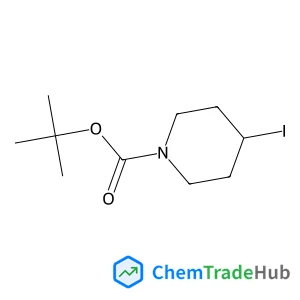
2-Methyl-2-propanyl 4-iodo-1-piperidinecarboxylate
CAS Number:
301673-14-3
Molecular Formula:
C10H18INO2
![5-Bromoimidazo[1,2-a]pyridine structure](https://static.chemtradehub.com/structs/692/69214-09-1-d8e2.webp "5-Bromoimidazo[1,2-a]pyridine structure")
![2-{[4-(2-Methoxyethyl)phenoxy]methyl}oxirane structure](https://static.chemtradehub.com/structs/567/56718-70-8-f037.webp "2-{[4-(2-Methoxyethyl)phenoxy]methyl}oxirane structure")
Recommended Suppliers






Disclaimer
This page provides academic journal information for reference and research purposes only. We are not affiliated with any journal publishers and do not handle publication submissions. For publication-related inquiries, please contact the respective journal publishers directly.
If you notice any inaccuracies in the information displayed, please contact us at support@chemtradehub.com. We will promptly review and address your concerns.