













Rotational isomers of hydroxy deuterated o- and m-cresols studied by ultraviolet high resolution experiments
Literature Information
Publication Date
2005-04-26
DOI
10.1039/B418847K
Impact Factor
3.676
Authors
Christian Ratzer, Michael Schmitt
View Original
Abstract
The laser induced fluorescence spectra of several torsional transitions of the S1 ← S0 electronic transition were recorded for the hydroxy deuterated o- and m-cresols. Both cis and trans rotamers were observed in a high resolution molecular beam experiment. The spectra were analyzed using a genetic algorithm assisted automatic assignment. The Hamiltonian used included rotational, torsional and rotation–torsion components. Both, high resolution rotationally resolved spectra and low resolution torsional frequencies, were combined to obtain the rotational constants, the direction of the methyl group axis, and the V3 and V6 barriers to internal rotation of the methyl top in the ground (S0) and excited (S1) states. The lifetime of the S1 state is also reported. Quantum interference effects due to the interaction of the internal and overall rotation allowed for determination of the absolute sign of the angle between transition moment and the a principal axis.
Related Literature
Automated analysis of single cells using Laser Tweezers Raman Spectroscopy
P. Scully, N. Goddard, P. Gardner
2015-11-10
Paper
DOI: 10.1039/C5AN01851J
High-resolution FTIR imaging of colon tissues for elucidation of individual cellular and histopathological features
Jayakrupakar Nallala, Gavin Rhys Lloyd, Neil Shepherd, Nick Stone
2015-11-02
Paper
DOI: 10.1039/C5AN01871D
ATR-FTIR spectroscopy coupled with chemometric analysis discriminates normal, borderline and malignant ovarian tissue: classifying subtypes of human cancer
Helen F. Stringfellow, Francis L. Martin
2015-06-12
Paper
DOI: 10.1039/C5AN00939A
Subcutaneous and transcutaneous monitoring of murine hindlimb ischemia by in vivo Raman spectroscopy
Rida Al-Rifai, Samar Kheirallah, Nicole Bouland, Gaël Poitevin, Abdelilah Beljebbar
2019-07-03
Paper
DOI: 10.1039/C8AN02449A
A robust electrochemiluminescence immunoassay for carcinoembryonic antigen detection based on a microtiter plate as a bridge and Au@Pd nanorods as a peroxidase mimic
Xuehui Pang, Dan Wu, Hongmin Ma, Zhaoqing Yan, Jiatao Zhang, Bin Du, Qin Wei
2015-11-16
Paper
DOI: 10.1039/C5AN02053K
A water-stable La-MOF with high fluorescence sensing and supercapacitive performances
Qian-Qian Liu, Shi-Hui Zhang, Jing Yang, Ke-Fen Yue
2019-06-18
Paper
DOI: 10.1039/C9AN00858F
Intrinsically fluorescent gold nanoclusters stabilized within a copper storage protein that follow the Irving–Williams trend in metal ion sensing
Dhanashree Selvan, Pallavi Prasad, Skyler Crane, Abubkr Abuhagr, Richard Covington, Kateryna Artyushkova, Guda Ramakrishna, Saumen Chakraborty
2019-04-26
Paper
DOI: 10.1039/C9AN00426B
Fluorescent visual quantitation of cell-secreted sialoglycoconjugates by chemoselective recognition and hybridization chain reaction
Yingying Xiong, Yunlong Chen, Lin Ding, Xiaoqiang Liu, Huangxian Ju
2019-06-07
Paper
DOI: 10.1039/C9AN00572B
A near-infrared and two-photon dual-mode fluorescent probe for the colorimetric monitoring of SO2in vitro and in vivo
Xiuqi Kong, Min Li, Baoli Dong, Nan Zhang, Wenhui Song, Yaru Lu, Weiying Lin
2019-06-05
Paper
DOI: 10.1039/C9AN00515C
You might also like
Compound Q&A
How should waste containing (6-Bromo-2-naphthyl)oxy](dimethyl)(2-methyl-2-propanyl)silane be handled?
Waste containing (6-Bromo-2-naphthyl)oxy](dimethyl)(2-methyl-2-propanyl)silane (...
100751-65-3[(6-Bromo-2-naphthyl...
Compound Q&A
How is 7-Fluoro-4-isoquinolinecarboxylic acid (CAS: 1841081-40-0) typically synthesized?
7-Fluoro-4-isoquinolinecarboxylic acid can be synthesized via a multi-step proce...
1841081-40-07-Fluoro-4-isoquinol...
Compound Q&A
What are the physical and chemical properties of 2,3,5,6-Tetrabromothieno[3,2-b]thiophene (CAS: 124638-53-5)?
2,3,5,6-Tetrabromothieno[3,2-b]thiophene is a crystalline compound with a high m...
124638-53-52,3,5,6-Tetrabromoth...
Compound Q&A
Is 1-[4-(Benzylamino)-7,8-dihydro-5H-pyrano[4,3-d]pyrimidin-2-yl]-2-methyl-1H-indole-4-carboxamide (CAS: 1542705-92-9) safe?
1-[4-(Benzylamino)-7,8-dihydro-5H-pyrano[4,3-d]pyrimidin-2-yl]-2-methyl-1H-indol...
1542705-92-91-[4-(Benzylamino)-7...
Compound Q&A
What is the market or research trend for imidazo[5,1-d]-1,2,3,5-tetrazine-8-carboxylic acid, 3,4-dihydro-3-methyl-4-oxo- (CAS: 113942-30-6)?
The market for imidazo[5,1-d]-1,2,3,5-tetrazine-8-carboxylic acid, 3,4-dihydro-3...
113942-30-6Imidazo[5,1-d]-1,2,3...
Compound Q&A
What is 3-(Triisopropylsilyl)propiolaldehyde (CAS: 163271-80-5)?
3-(Triisopropylsilyl)propiolaldehyde is a synthetic organic compound with the CA...
163271-80-53-(Triisopropylsilyl...
Compound Q&A
What regulatory guidelines apply to 6-Nitro-2H-1,4-benzoxazin-3(4H)-one (CAS: 81721-87-1)?
6-Nitro-2H-1,4-benzoxazin-3(4H)-one (CAS: 81721-87-1) is subject to various regu...
81721-87-16-Nitro-2H-1,4-benzo...
Compound Q&A
How should waste containing (3-Fluorophenyl)(4-{[(2-methyl-2-propanyl)oxy]carbonyl}-1-piperazinyl)acetic acid (CAS: 885272-91-3) be handled?
Waste containing (3-Fluorophenyl)(4-{[(2-methyl-2-propanyl)oxy]carbonyl}-1-piper...
885272-91-3(3-Fluorophenyl)(4-{...
Compound Q&A
What are the physical and chemical properties of N,N'-4,4'-Biphenyldiyldiisonicotinamide (CAS: 55119-40-9)?
N,N'-4,4'-Biphenyldiyldiisonicotinamide is a white crystalline solid with a mole...
55119-40-9N,N'-4,4'-Biphenyldi...
Compound Q&A
What industries use 6-Bromo-8-fluoro-2-quinazolinol (CAS: 1036756-15-6)?
6-Bromo-8-fluoro-2-quinazolinol is primarily used in the pharmaceutical industry...
1036756-15-66-Bromo-8-fluoro-2-q...
Source Journal
Physical Chemistry Chemical Physics

CiteScore:
5.5
Self-citation Rate:
10.3%
Articles per Year:
3036
Physical Chemistry Chemical Physics (PCCP) is an international journal co-owned by 19 physical chemistry and physics societies from around the world. This journal publishes original, cutting-edge research in physical chemistry, chemical physics and biophysical chemistry. To be suitable for publication in PCCP, articles must include significant innovation and/or insight into physical chemistry; this is the most important criterion that reviewers and Editors will judge against when evaluating submissions. The journal has a broad scope and welcomes contributions spanning experiment, theory, computation and data science. Topical coverage includes spectroscopy, dynamics, kinetics, statistical mechanics, thermodynamics, electrochemistry, catalysis, surface science, quantum mechanics, quantum computing and machine learning. Interdisciplinary research areas such as polymers and soft matter, materials, nanoscience, energy, surfaces/interfaces, and biophysical chemistry are welcomed if they demonstrate significant innovation and/or insight into physical chemistry. Joined experimental/theoretical studies are particularly appreciated when complementary and based on up-to-date approaches.
Recommended Compounds
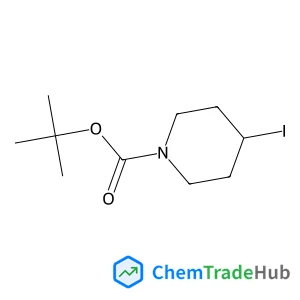
2-Methyl-2-propanyl 4-iodo-1-piperidinecarboxylate
CAS Number:
301673-14-3
Molecular Formula:
C10H18INO2
![5-Bromoimidazo[1,2-a]pyridine structure](https://static.chemtradehub.com/structs/692/69214-09-1-d8e2.webp "5-Bromoimidazo[1,2-a]pyridine structure")


Recommended Suppliers





Disclaimer
This page provides academic journal information for reference and research purposes only. We are not affiliated with any journal publishers and do not handle publication submissions. For publication-related inquiries, please contact the respective journal publishers directly.
If you notice any inaccuracies in the information displayed, please contact us at support@chemtradehub.com. We will promptly review and address your concerns.