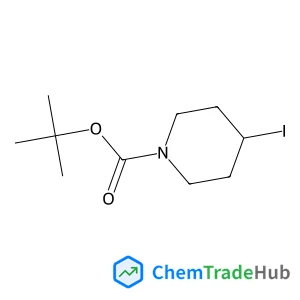
2-Methyl-2-propanyl 4-iodo-1-piperidinecarboxylate
CAS Number:
301673-14-3
Molecular Formula:
C10H18INO2
N. S. Phala, G. Klatt, E. van Steen, S. A. French, A. A. Sokol
The interaction between gold in the 0, I, II and III oxidation states and the zinc-terminated ZnO(0001) surface is studied via the QM/MM electronic embedding method using density functional theory. The surface sites considered are the vacant zinc interstitial surface site (VZISS) and the bulk-terminated island site (BTIS). We find that on the VZISS, only Au(0) and Au(I) are stable oxidation states. However, all clusters of I to III oxidation states are stable as substitutionals for Zn2+ in the bulk terminated island site. Au(OH)x complexes (x = 1–3) can adsorb exothermically onto the VZISS, indicating that higher oxidation states of gold can be stabilised at this site in the presence of hydroxyl groups. CO is used as a probe molecule to study the reactivity of Au in different oxidation states in VZISS and BTIS. In all cases, we find that the strongest binding of CO is to surface Au(I). Furthermore, CO binding onto Au(0) is stronger when the gold atom is adsorbed onto the VZISS compared to CO binding onto a gas phase neutral gold atom. These results indicate that the nature of the oxidation states of Au on ZnO(0001) will depend on the type of adsorption site. The role of ZnO in Au/ZnO catalysts is not, therefore, merely to disperse gold atoms/particles, but to also modify their electronic properties.

Cement and Concrete Composites

Advanced Materials

Advanced Composite Materials

Advances in Cement Research

Journal of Computer-Aided Molecular Design

Heterocyclic Communications

Journal of Physical Organic Chemistry

Current Medicinal Chemistry

Construction and Building Materials

Bio-Medical Materials and Engineering
Helen F. Stringfellow, Francis L. Martin
DOI: 10.1039/C5AN00939A
Matthew J. Baker
DOI: 10.1039/C5AN01858G
Woo Young Kwon, Byung Seok Cha, Seokjoon Kim, Sung Hyun Hwang, Ji Min Kim, Kalishwaralal Kalimuthu, Hyun Gyu Park, Ki Soo Park
DOI: 10.1039/C9AN00429G
Kay S. McMillan, Anthony G. McCluskey, Annette Sorensen, Marie Boyd, Michele Zagnoni
DOI: 10.1039/C5AN01382H
Sarah Theiner, Anna Schoeberl, Lisa Fischer, Sophie Neumayer, Stephan Hann, Gunda Koellensperger
DOI: 10.1039/C9AN00039A
Michael Tu, David Chia, Fang Wei, David Wong
DOI: 10.1039/C5AN01863C
P. Scully, N. Goddard, P. Gardner
DOI: 10.1039/C5AN01851J
Keine Nishiyama, Seiya Nakamata, Koya Ishikawa, Masatoshi Maeki, Akihiko Ishida, Hirofumi Tani
DOI: 10.1039/C9AN00480G
Waste containing (6-Bromo-2-naphthyl)oxy](dimethyl)(2-methyl-2-propanyl)silane (...
7-Fluoro-4-isoquinolinecarboxylic acid can be synthesized via a multi-step proce...
2,3,5,6-Tetrabromothieno[3,2-b]thiophene is a crystalline compound with a high m...
1-[4-(Benzylamino)-7,8-dihydro-5H-pyrano[4,3-d]pyrimidin-2-yl]-2-methyl-1H-indol...
The market for imidazo[5,1-d]-1,2,3,5-tetrazine-8-carboxylic acid, 3,4-dihydro-3...
3-(Triisopropylsilyl)propiolaldehyde is a synthetic organic compound with the CA...
6-Nitro-2H-1,4-benzoxazin-3(4H)-one (CAS: 81721-87-1) is subject to various regu...
Waste containing (3-Fluorophenyl)(4-{[(2-methyl-2-propanyl)oxy]carbonyl}-1-piper...
N,N'-4,4'-Biphenyldiyldiisonicotinamide is a white crystalline solid with a mole...
6-Bromo-8-fluoro-2-quinazolinol is primarily used in the pharmaceutical industry...

Physical Chemistry Chemical Physics (PCCP) is an international journal co-owned by 19 physical chemistry and physics societies from around the world. This journal publishes original, cutting-edge research in physical chemistry, chemical physics and biophysical chemistry. To be suitable for publication in PCCP, articles must include significant innovation and/or insight into physical chemistry; this is the most important criterion that reviewers and Editors will judge against when evaluating submissions. The journal has a broad scope and welcomes contributions spanning experiment, theory, computation and data science. Topical coverage includes spectroscopy, dynamics, kinetics, statistical mechanics, thermodynamics, electrochemistry, catalysis, surface science, quantum mechanics, quantum computing and machine learning. Interdisciplinary research areas such as polymers and soft matter, materials, nanoscience, energy, surfaces/interfaces, and biophysical chemistry are welcomed if they demonstrate significant innovation and/or insight into physical chemistry. Joined experimental/theoretical studies are particularly appreciated when complementary and based on up-to-date approaches.