












Head-to-head comparison of LNA, MPγPNA, INA and Invader probes targeting mixed-sequence double-stranded DNA
Literature Information
Publication Date
2019-10-25
DOI
10.1039/C9OB02111F
Impact Factor
3.876
Authors
Raymond G. Emehiser, Eric Hall, Dale C. Guenther, Saswata Karmakar, Patrick J. Hrdlicka
View Original
Abstract
Four probe chemistries are characterized and compared with respect to thermal denaturation temperatures (Tms), thermodynamic parameters associated with duplex formation, and recognition of mixed-sequence double-stranded (ds) DNA targets: (i) oligodeoxyribonucleotides (ONs) modified with Locked Nucleic Acid (LNA) monomers, (ii) MPγPNAs, i.e., single-stranded peptide nucleic acid (PNA) probes that are functionalized at the γ-position with (R)-diethylene glycol (mini-PEG, MP) moieties, (iii) Invader probes, i.e., DNA duplexes modified with +1 interstrand zipper arrangements of 2′-O-(pyren-1-yl)methyl-RNA monomers, and (iv) intercalating nucleic acids (INAs), i.e., DNA duplexes with opposing insertions of 1-O-(1-pyrenylmethyl)glycerol bulges. Invader and INA probes, which are designed to violate the nearest-neighbor exclusion principle, denature readily, whereas the individual probe strands display exceptionally high affinity towards complementary DNA (cDNA) as indicated by increases in Tms of up to 8 °C per modification. Optimized Invader and INA probes enable efficient and highly specific recognition of mixed-sequence dsDNA targets with self-complementary regions (C50 = 30–50 nM), whereas recognition is less efficient with LNA-modified ONs and fully modified MPγPNAs due to lower cDNA affinity (LNA) and a proclivity for dimerization (LNA and MPγPNA). A Cy3-labeled Invader probe is shown to stain telomeric DNA of individual chromosomes in metaphasic spreads under non-denaturing conditions with excellent specificity.
Recommended Journals
Related Literature
The signal-to-noise issue in mass spectrometric analysis of polymers
Ian C. Chagunda, Gregory T. Russell
2021-07-22
Perspective
DOI: 10.1039/D1PY00461A
ATR-IR spectroscopy at the metal–liquid interface: influence of film properties on anomalous band-shape
2001-05-11
Paper
DOI: 10.1039/B101218P
Vacuum ultraviolet photochemistry of methane, silane and germane
Phillip A. Cook, Michael N. R. Ashfold, Yun-Jung Jee, Kyung-Hoon Jung, Stephen Harich, Xueming Yang
2001-04-30
Paper
DOI: 10.1039/B100248L
Iron nanoparticles: Synthesis and applications in surface enhanced Raman scattering and electrocatalysis
Lin Guo, Qunjian Huang, Xiao-yuan Li, Shihe Yang
2001-04-03
Paper
DOI: 10.1039/B009951L
Complex vibrational correlation functions extracted from the resolved ν2 band of liquid acetonitrile
Dmitry Nerukh, Trevor R. Griffiths
2001-04-06
Paper
DOI: 10.1039/B009501J
Highly 2,3-selective and fast living polymerization of alkyl-, alkoxy- and phenylallenes using nickel(ii) catalysts
Shu-Ming Kang, Xun-Hui Xu, Lei Xu, Li Zhou, Na Liu, Zong-Quan Wu
2021-07-27
Paper
DOI: 10.1039/D1PY00482D
A reinterpretation of the EPR spectra of Cu(II) in zeolites A, Y and ZK4, based on ab initio cluster model calculations
Kristine Pierloot, Annelies Delabie, Marijke H. Groothaert, Robert A. Schoonheydt
2001-04-26
Paper
DOI: 10.1039/B100531F
A study of the reactions of trifluoromethyl sulfur pentafluoride, SF5CF3, with several positive ions of atmospheric interest
C. Atterbury, R. A. Kennedy, C. A. Mayhew, R. P. Tuckett
2001-05-04
Communication
DOI: 10.1039/B102504J
Highly stretchable, high efficiency room temperature self-healing polyurethane adhesive based on hydrogen bonds – applicable to solid rocket propellants
Tu Jing, Xu Heng, Xiang Guifeng, Chen Ling, Li Pingyun, Guo Xiaode
2021-07-12
Paper
DOI: 10.1039/D1PY00439E
Internalization into cancer cells of zwitterionic amino acid polymers via amino acid transporter recognition
Shin Takano, Kazuo Sakurai, Shota Fujii
2021-10-18
Communication
DOI: 10.1039/D1PY01010G
You might also like
Compound Q&A
What regulatory guidelines apply to 6-Bromo-2-methylimidazo[1,2-a]pyrimidine (CAS: 1111638-05-1)?
6-Bromo-2-methylimidazo[1,2-a]pyrimidine (CAS: 1111638-05-1) falls under various...
1111638-05-16-Bromo-2-methylimid...
Compound Q&A
Are there alternatives to 1-Pyrrolidineethanol, β-methyl-α-phenyl-, (αS,βR) (CAS: 123620-80-4) in synthesis?
While there are no direct alternatives, similar compounds like 1-Pyrrolidineetha...
123620-80-41-Pyrrolidineethanol...
Compound Q&A
Is 4-Methyl-2,6-bis(2-methyl-2-propanyl)phenyl methylcarbamate (CAS: 1918-11-2) safe?
4-Methyl-2,6-bis(2-methyl-2-propanyl)phenyl methylcarbamate (CAS: 1918-11-2) is ...
1918-11-24-Methyl-2,6-bis(2-m...
Compound Q&A
How should 2-(3-Bromo-4-fluorophenyl)-1,3-dioxolane (CAS: 77771-04-1) be stored?
2-(3-Bromo-4-fluorophenyl)-1,3-dioxolane (CAS: 77771-04-1) should be stored in a...
77771-04-12-(3-Bromo-4-fluorop...
Compound Q&A
What are the physical and chemical properties of 4,5,6,7-Tetrahydro-1H-indazole hydrochloride (CAS: 18161-11-0)?
4,5,6,7-Tetrahydro-1H-indazole hydrochloride is a white crystalline solid with a...
18161-11-04,5,6,7-Tetrahydro-1...
Compound Q&A
What is (2R)-1-Methoxy-3-phenyl-2-propanamine (CAS: 59919-07-2)?
(2R)-1-Methoxy-3-phenyl-2-propanamine is a chiral organic compound with the CAS ...
59919-07-2(2R)-1-Methoxy-3-phe...
Compound Q&A
What industries use Ethyl 1-(1-phenylethyl)-1H-imidazole-5-carboxylate (CAS: 56649-47-9)?
Ethyl 1-(1-phenylethyl)-1H-imidazole-5-carboxylate is used in various industries...
56649-47-9Ethyl 1-(1-phenyleth...
Compound Q&A
What regulatory guidelines apply to 4-[(1E,3S)-1-(4-Hydroxyphenyl)-1,4-pentadien-3-yl]phenol (CAS: 17676-24-3)?
4-[(1E,3S)-1-(4-Hydroxyphenyl)-1,4-pentadien-3-yl]phenol (CAS: 17676-24-3) falls...
17676-24-34-[(1E,3S)-1-(4-Hydr...
Compound Q&A
What industries use (S)-3-Amino-5-phenylpentanoic acid hydrochloride (CAS: 331846-97-0)?
(S)-3-Amino-5-phenylpentanoic acid hydrochloride is primarily used in the pharma...
331846-97-0(S)-3-Amino-5-phenyl...
Compound Q&A
How is 7-methoxy-1-benzothiophene-2-carboxylic acid (CAS: 88791-07-5) typically synthesized?
7-Methoxy-1-benzothiophene-2-carboxylic acid is typically synthesized by reactin...
88791-07-57-methoxy-1-benzothi...
Source Journal
Organic & Biomolecular Chemistry

CiteScore:
3.4
Self-citation Rate:
10.3%
Articles per Year:
1041
Organic & Biomolecular Chemistry (OBC) publishes original and high impact research and reviews in organic chemistry. We welcome research that shows new or significantly improved protocols or methodologies in total synthesis, synthetic methodology or physical and theoretical organic chemistry as well as research that shows a significant advance in the organic chemistry or molecular design aspects of chemical biology, catalysis, supramolecular and macromolecular chemistry, theoretical chemistry, mechanism-oriented physical organic chemistry, medicinal chemistry or natural products. Articles published in the journal should report new work which makes a highly-significant impact in the field. Routine and incremental work is generally not suitable for publication in the journal. More details about key areas of our scope are below. In all cases authors should include in their article clear rationale for why their research has been carried out.
Recommended Compounds
![2-Methyl-2-propanyl 4-{2-fluoro-5-[(4-oxo-3,4-dihydro-1-phthalazinyl)methyl]benzoyl}-1-piperazinecarboxylate structure](https://static.chemtradehub.com/structs/763/763114-04-1-65a9.webp "2-Methyl-2-propanyl 4-{2-fluoro-5-[(4-oxo-3,4-dihydro-1-phthalazinyl)methyl]benzoyl}-1-piperazinecarboxylate structure")
2-Methyl-2-propanyl 4-{2-fluoro-5-[(4-oxo-3,4-dihydro-1-phthalazinyl)methyl]benzoyl}-1-piperazinecarboxylate
CAS Number:
763114-04-1
Molecular Formula:
C25H27FN4O4
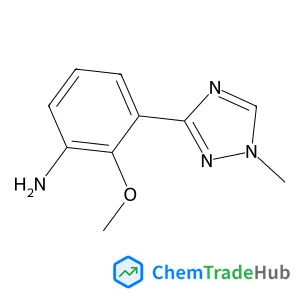
2-Methoxy-3-(1-methyl-1H-1,2,4-triazol-3-yl)aniline
CAS Number:
1609394-10-6
Molecular Formula:
C10H12N4O

Recommended Suppliers




Disclaimer
This page provides academic journal information for reference and research purposes only. We are not affiliated with any journal publishers and do not handle publication submissions. For publication-related inquiries, please contact the respective journal publishers directly.
If you notice any inaccuracies in the information displayed, please contact us at support@chemtradehub.com. We will promptly review and address your concerns.