













The palladium(ii)-catalyzed regioselective ortho-C–H bromination/iodination of arylacetamides with in situ generated imidic acid as the directing group: mechanistic exploration
Literature Information
Publication Date
2019-06-18
DOI
10.1039/C9OB01082C
Impact Factor
3.876
Authors
Yogesh Jaiswal, Yogesh Kumar, Amit Kumar
View Original
Abstract
In the present study, we report the palladium(II)-catalyzed regioselective ortho-C–H bromination/iodination of challenging arylacetamide derivatives using N-halosuccinimides as halogenating agents. Diverse arylacetamides underwent the regioselective ortho-bromination and iodination of aromatic C–H bonds in the presence of a reactive benzylic C(sp3)–H bond without installing any bulky auxiliaries via unfavorable six-membered metallacycles. Weak coordination, the use of ubiquitous primary amides for challenging C–H functionalization, the simple catalytic system and the wide substrate scope are the key features of this transformation. Further, the halogenated amide derivatives were transformed into a variety of valuable synthons. Detailed mechanistic studies revealed some interesting aspects concerning the reaction pathway. We present for the first time strong evidence for the formation of imidic acid (in situ) from primary amides under Brønsted acid conditions that eventually aids in the stabilization of palladacycles of amide derivatives and drives regioselective C–X bond formation.
Related Literature
Theoretical and experimental studies on the atmospheric degradation of 2-bromo-3,3,3-trifluoropropene
Weiwang Chen, Xiaomeng Zhou, Yajun Han
2015-07-08
Paper
DOI: 10.1039/C5CP01457C
Half-metallic and magnetic properties in nonmagnetic element embedded graphitic carbon nitride sheets
Bo Meng, Wen-zhi Xiao, Ling-ling Wang, Li Yue, Song Zhang, Hong-yun Zhang
2015-07-30
Paper
DOI: 10.1039/C5CP03794H
Finite pulse effects in CPMG pulse trains on paramagnetic materials
Michal Leskes, Clare P. Grey
2015-07-29
Paper
DOI: 10.1039/C5CP02331A
Reaction kinetics for the solid state synthesis of the AlH3/MgCl2 nano-composite by mechanical milling
C. W. Duan, L. X. Hu, Y. Sun, H. P. Zhou, H. Yu
2015-07-28
Paper
DOI: 10.1039/C5CP03768A
Charge-switchable gold nanoparticles for enhanced enzymatic thermostability
Shiv Shankar, Sarvesh K. Soni, P. R. Selvakannan, Jayant M. Khire, Suresh K. Bhargava, Vipul Bansal
2015-07-16
Paper
DOI: 10.1039/C5CP03021H
Phosphorylation promotes Al(iii) binding to proteins: GEGEGSGG as a case study
Rafael Grande-Aztatzi, Elena Formoso, Jon I. Mujika, Jesus M. Ugalde, Xabier Lopez
2016-02-03
Paper
DOI: 10.1039/C5CP06379E
A near field optical image of a gold surface: a luminescence study
A. Merlen, J. Plathier, A. Ruediger
2014-12-10
Paper
DOI: 10.1039/C4CP05000B
Predictions of the physicochemical properties of amino acid side chain analogs using molecular simulation
Alauddin Ahmed, Stanley I. Sandler
2016-01-12
Paper
DOI: 10.1039/C5CP05393E
Charge-transfer interactions between TCNQ and silver clusters Ag20 and Ag13
Jing Chen, Hanyu Zhang, Xianhu Liu, Chengqian Yuan, Meiye Jia, Zhixun Luo, Jiannian Yao
2016-01-26
Paper
DOI: 10.1039/C5CP06892D
Thermotropic interface and core relaxation dynamics of liquid crystals in silica glass nanochannels: a dielectric spectroscopy study
Sylwia Całus, Lech Borowik, Andriy V. Kityk, Manfred Eich, Mark Busch, Patrick Huber
2015-08-04
Paper
DOI: 10.1039/C5CP03039K
You might also like
Compound Q&A
What is 1-(2,4,6-Trifluorophenyl)ethanol (CAS: 1250113-83-7)?
1-(2,4,6-Trifluorophenyl)ethanol is an organic compound with the CAS number 1250...
1250113-83-71-(2,4,6-Trifluoroph...
Compound Q&A
Is 1-(2,4-Dimethoxybenzyl)-4-(hydroxymethyl)-2-pyrrolidinone (CAS: 919111-34-5) safe?
1-(2,4-Dimethoxybenzyl)-4-(hydroxymethyl)-2-pyrrolidinone (CAS: 919111-34-5) is ...
919111-34-51-(2,4-Dimethoxybenz...
Compound Q&A
What are the physical and chemical properties of (7S,15R)-6β,15-Diacetoxy-7α,20-epoxy-7-hydroxykaura-2,16-dien-1-one (CAS: 51419-51-3)?
(7S,15R)-6β,15-Diacetoxy-7α,20-epoxy-7-hydroxykaura-2,16-dien-1-one is a crystal...
51419-51-3(7S,15R)-6β,15-Diace...
Compound Q&A
What regulatory guidelines apply to rac-ethyl (1r,4r)-4-hydroxycyclohexane-1-carboxylate, trans (CAS: 3618-04-0)?
The compound rac-ethyl (1r,4r)-4-hydroxycyclohexane-1-carboxylate, trans (CAS: 3...
3618-04-0rac-ethyl (1r,4r)-4-...
Compound Q&A
What is the market or research trend for 2-(2,4-Difluorophenoxy)-3-nitropyridine (CAS: 175135-62-3)?
The market for 2-(2,4-Difluorophenoxy)-3-nitropyridine (CAS: 175135-62-3) is cur...
175135-62-32-(2,4-Difluoropheno...
Compound Q&A
What are the main uses of 6-Diazo-5-oxo-L-norleucine (CAS: 157-03-9)?
The main uses of 6-Diazo-5-oxo-L-norleucine (CAS: 157-03-9) include research in ...
157-03-96-Diazo-5-oxo-L-norl...
Compound Q&A
What precautions should be taken when handling 2-Aminoethyl-mono-amide-DOTA-tris(tBu ester) (CAS: 173308-19-5)?
When handling 2-Aminoethyl-mono-amide-DOTA-tris(tBu ester) (CAS: 173308-19-5), i...
173308-19-52-Aminoethyl-mono-am...
Compound Q&A
How is 5-Methylimidazo[1,2-a]pyridine-3-carbaldehyde (CAS: 178488-37-4) typically synthesized?
5-Methylimidazo[1,2-a]pyridine-3-carbaldehyde (CAS: 178488-37-4) can be synthesi...
178488-37-45-Methylimidazo[1,2-...
Compound Q&A
Are there alternatives to 2,4,6-Trihydroxyisophthalaldehyde (CAS: 4396-13-8) in synthesis?
There are alternative reagents that can be used in the synthesis of 2,4,6-Trihyd...
4396-13-82,4,6-Trihydroxyisop...
Compound Q&A
What is (2Z)-3-(5-Fluoro-1H-indol-3-yl)-2-sulfanylacrylic acid (CAS: 179461-52-0)?
(2Z)-3-(5-Fluoro-1H-indol-3-yl)-2-sulfanylacrylic acid is a chemical compound wi...
179461-52-0(2Z)-3-(5-Fluoro-1H-...
Source Journal
Organic & Biomolecular Chemistry

CiteScore:
3.4
Self-citation Rate:
10.3%
Articles per Year:
1041
Organic & Biomolecular Chemistry (OBC) publishes original and high impact research and reviews in organic chemistry. We welcome research that shows new or significantly improved protocols or methodologies in total synthesis, synthetic methodology or physical and theoretical organic chemistry as well as research that shows a significant advance in the organic chemistry or molecular design aspects of chemical biology, catalysis, supramolecular and macromolecular chemistry, theoretical chemistry, mechanism-oriented physical organic chemistry, medicinal chemistry or natural products. Articles published in the journal should report new work which makes a highly-significant impact in the field. Routine and incremental work is generally not suitable for publication in the journal. More details about key areas of our scope are below. In all cases authors should include in their article clear rationale for why their research has been carried out.
Recommended Compounds
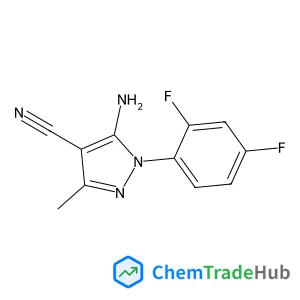
5-Amino-1-(2,4-difluorophenyl)-3-methyl-1H-pyrazole-4-carbonitrile
CAS Number:
1020057-92-4
Molecular Formula:
C11H8F2N4


Recommended Suppliers






Disclaimer
This page provides academic journal information for reference and research purposes only. We are not affiliated with any journal publishers and do not handle publication submissions. For publication-related inquiries, please contact the respective journal publishers directly.
If you notice any inaccuracies in the information displayed, please contact us at support@chemtradehub.com. We will promptly review and address your concerns.