













Predictions of the physicochemical properties of amino acid side chain analogs using molecular simulation
Literature Information
Publication Date
2016-01-12
DOI
10.1039/C5CP05393E
Impact Factor
3.676
Authors
Alauddin Ahmed, Stanley I. Sandler
View Original
Abstract
A candidate drug compound is released for clinical trails (in vivo activity) only if its physicochemical properties meet desirable bioavailability and partitioning criteria. Amino acid side chain analogs play vital role in the functionalities of protein and peptides and as such are important in drug discovery. We demonstrate here that the predictions of solvation free energies in water, in 1-octanol, and self-solvation free energies computed using force field-based expanded ensemble molecular dynamics simulation provide good accuracy compared to existing empirical and semi-empirical methods. These solvation free energies are then, as shown here, used for the prediction of a wide range of physicochemical properties important in the assessment of bioavailability and partitioning of compounds. In particular, we consider here the vapor pressure, the solubility in both water and 1-octanol, and the air–water, air–octanol, and octanol–water partition coefficients of amino acid side chain analogs computed from the solvation free energies. The calculated solvation free energies using different force fields are compared against each other and with available experimental data. The protocol here can also be used for a newly designed drug and other molecules where force field parameters and charges are obtained from density functional theory.
Related Literature
Determination of copolymerisation characteristics in the N-carboxy anhydride polymerisation of two amino acids
Mischa Zelzer
2013-05-07
Paper
DOI: 10.1039/C3PY00431G
Hyphenated separation techniques for complex polymers
Harald Pasch
2013-01-17
Review Article
DOI: 10.1039/C3PY21095B
Folate-conjugated poly(N-(2-hydroxypropyl)methacrylamide-co-methacrylic acid) nanohydrogels with pH/redox dual-stimuli response for controlled drug release
Yuan-Jia Pan, Dian Li, Sha Jin, Chuan Wei, Ke-Yi Wu, Jia Guo, Chang-Chun Wang
2013-03-27
Paper
DOI: 10.1039/C3PY00249G
Synthesis of linear amphiphilic tetrablock quaterpolymers with dual stimulus response through the combination of ATRP and RAFT by a click chemistry site transformation approach
Jiucun Chen, Mingzhu Liu, Honghong Gong, Guangjun Cui, Shaoyu Lü, Chunmei Gao, Feng Huang, Tongtong Chen, Xinyu Zhang, Zhen Liu
2012-12-17
Paper
DOI: 10.1039/C2PY20946B
SET-LRP synthesis of novel polyallene-based well-defined amphiphilic graft copolymers in acetone
Guolin Lu, Yongjun Li, Hao Guo, Weiyuan Du, Xiaoyu Huang
2013-03-05
Paper
DOI: 10.1039/C3PY00145H
One-pot controlled synthesis of double thermoresponsive N-vinylcaprolactam-based copolymers with tunable LCSTs
Anthony Kermagoret, Charles-André Fustin, Maxime Bourguignon, Christophe Detrembleur, Christine Jérôme, Antoine Debuigne
2013-02-18
Paper
DOI: 10.1039/C3PY00134B
Synthesis, self-assembly and (absence of) protein interactions of poly(glycerol methacrylate)–silicone macro-amphiphiles
Ghislaine Robert-Nicoud, Robert Evans, Cong-Duan Vo, Christopher J. Cadman
2013-04-03
Paper
DOI: 10.1039/C3PY00273J
Protecting-group-free synthesis of chain-end multifunctional polymers by combining ATRP with thiol–epoxy ‘click’ chemistry
Ikhlas Gadwal, Anzar Khan
2013-03-07
Communication
DOI: 10.1039/C3PY00136A
You might also like
Compound Q&A
What is 1-(2,4,6-Trifluorophenyl)ethanol (CAS: 1250113-83-7)?
1-(2,4,6-Trifluorophenyl)ethanol is an organic compound with the CAS number 1250...
1250113-83-71-(2,4,6-Trifluoroph...
Compound Q&A
Is 1-(2,4-Dimethoxybenzyl)-4-(hydroxymethyl)-2-pyrrolidinone (CAS: 919111-34-5) safe?
1-(2,4-Dimethoxybenzyl)-4-(hydroxymethyl)-2-pyrrolidinone (CAS: 919111-34-5) is ...
919111-34-51-(2,4-Dimethoxybenz...
Compound Q&A
What are the physical and chemical properties of (7S,15R)-6β,15-Diacetoxy-7α,20-epoxy-7-hydroxykaura-2,16-dien-1-one (CAS: 51419-51-3)?
(7S,15R)-6β,15-Diacetoxy-7α,20-epoxy-7-hydroxykaura-2,16-dien-1-one is a crystal...
51419-51-3(7S,15R)-6β,15-Diace...
Compound Q&A
What regulatory guidelines apply to rac-ethyl (1r,4r)-4-hydroxycyclohexane-1-carboxylate, trans (CAS: 3618-04-0)?
The compound rac-ethyl (1r,4r)-4-hydroxycyclohexane-1-carboxylate, trans (CAS: 3...
3618-04-0rac-ethyl (1r,4r)-4-...
Compound Q&A
What is the market or research trend for 2-(2,4-Difluorophenoxy)-3-nitropyridine (CAS: 175135-62-3)?
The market for 2-(2,4-Difluorophenoxy)-3-nitropyridine (CAS: 175135-62-3) is cur...
175135-62-32-(2,4-Difluoropheno...
Compound Q&A
What are the main uses of 6-Diazo-5-oxo-L-norleucine (CAS: 157-03-9)?
The main uses of 6-Diazo-5-oxo-L-norleucine (CAS: 157-03-9) include research in ...
157-03-96-Diazo-5-oxo-L-norl...
Compound Q&A
What precautions should be taken when handling 2-Aminoethyl-mono-amide-DOTA-tris(tBu ester) (CAS: 173308-19-5)?
When handling 2-Aminoethyl-mono-amide-DOTA-tris(tBu ester) (CAS: 173308-19-5), i...
173308-19-52-Aminoethyl-mono-am...
Compound Q&A
How is 5-Methylimidazo[1,2-a]pyridine-3-carbaldehyde (CAS: 178488-37-4) typically synthesized?
5-Methylimidazo[1,2-a]pyridine-3-carbaldehyde (CAS: 178488-37-4) can be synthesi...
178488-37-45-Methylimidazo[1,2-...
Compound Q&A
Are there alternatives to 2,4,6-Trihydroxyisophthalaldehyde (CAS: 4396-13-8) in synthesis?
There are alternative reagents that can be used in the synthesis of 2,4,6-Trihyd...
4396-13-82,4,6-Trihydroxyisop...
Compound Q&A
What is (2Z)-3-(5-Fluoro-1H-indol-3-yl)-2-sulfanylacrylic acid (CAS: 179461-52-0)?
(2Z)-3-(5-Fluoro-1H-indol-3-yl)-2-sulfanylacrylic acid is a chemical compound wi...
179461-52-0(2Z)-3-(5-Fluoro-1H-...
Source Journal
Physical Chemistry Chemical Physics

CiteScore:
5.5
Self-citation Rate:
10.3%
Articles per Year:
3036
Physical Chemistry Chemical Physics (PCCP) is an international journal co-owned by 19 physical chemistry and physics societies from around the world. This journal publishes original, cutting-edge research in physical chemistry, chemical physics and biophysical chemistry. To be suitable for publication in PCCP, articles must include significant innovation and/or insight into physical chemistry; this is the most important criterion that reviewers and Editors will judge against when evaluating submissions. The journal has a broad scope and welcomes contributions spanning experiment, theory, computation and data science. Topical coverage includes spectroscopy, dynamics, kinetics, statistical mechanics, thermodynamics, electrochemistry, catalysis, surface science, quantum mechanics, quantum computing and machine learning. Interdisciplinary research areas such as polymers and soft matter, materials, nanoscience, energy, surfaces/interfaces, and biophysical chemistry are welcomed if they demonstrate significant innovation and/or insight into physical chemistry. Joined experimental/theoretical studies are particularly appreciated when complementary and based on up-to-date approaches.
Recommended Compounds
![5-Bromo-1H-pyrrolo[2,3-b]pyridine structure](https://static.chemtradehub.com/structs/183/183208-35-7-2d72.webp "5-Bromo-1H-pyrrolo[2,3-b]pyridine structure")
![1,1',1'',1'''-[Disulfanediylbis(carbonothioylnitrilo)]tetraethane structure](https://static.chemtradehub.com/structs/97-/97-77-8-f3e4.webp "1,1',1'',1'''-[Disulfanediylbis(carbonothioylnitrilo)]tetraethane structure")
1,1',1'',1'''-[Disulfanediylbis(carbonothioylnitrilo)]tetraethane
CAS Number:
97-77-8
Molecular Formula:
C10H20N2S4
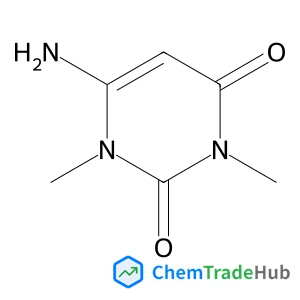
6-amino-1,3-dimethyl-1,2,3,4-tetrahydropyrimidine-2,4-dione
CAS Number:
6642-31-5
Molecular Formula:
C6H9N3O2
Recommended Suppliers





Disclaimer
This page provides academic journal information for reference and research purposes only. We are not affiliated with any journal publishers and do not handle publication submissions. For publication-related inquiries, please contact the respective journal publishers directly.
If you notice any inaccuracies in the information displayed, please contact us at support@chemtradehub.com. We will promptly review and address your concerns.