












Finite pulse effects in CPMG pulse trains on paramagnetic materials
Literature Information
Publication Date
2015-07-29
DOI
10.1039/C5CP02331A
Impact Factor
3.676
Authors
Michal Leskes, Clare P. Grey
View Original
Abstract
The Carr–Purcell–Meiboom–Gill (CPMG) sequence is commonly used in high resolution NMR spectroscopy and in magnetic resonance imaging for the measurement of transverse relaxation in systems that are subject to diffusion in internal or external gradients and is superior to the Hahn echo measurement, which is more sensitive to diffusion effects. Similarly, it can potentially be used to study dynamic processes in electrode materials for lithium ion batteries. Here we compare the 7Li signal decay curves obtained with the CPMG and Hahn echo sequences under static conditions (i.e., in the absence of magic angle spinning) in paramagnetic materials with varying transition metal ion concentrations. Our results indicate that under CPMG pulse trains the lifetime of the 7Li signal is substantially extended and is correlated with the strength of the electron–nuclear interaction. Numerical simulations and analytical calculations using Floquet theory suggest that the combination of large interactions and a train of finite pulses, results in a spin locking effect which significantly slows the signal's decay. While these effects complicate the interpretation of CPMG-based investigations of diffusion and chemical exchange in paramagnetic materials, they may provide a useful approach to extend the signal's lifetime in these often fast relaxing systems, enabling the use of correlation experiments. Furthermore, these results highlight the importance of developing a deeper understanding of the effects of the large paramagnetic interactions during multiple pulse experiments in order to extend the experimental arsenal available for static and in situ NMR investigations of paramagnetic materials.
Related Literature
Hybrid materials consisting of an all-conjugated polythiophene backbone and grafted hydrophilic poly(ethylene glycol) chains
Luminita Cianga, Luis J. del Valle, Ioan Cianga
2013-03-01
Paper
DOI: 10.1039/C3PY00029J
Synthesis of amidoxime functionalized cellulose derivatives as a reducing agent and stabilizer for preparing gold nanoparticles
Ruigang Liu, Hongliang Kang, Yunming Sun, Fengying Dong
2013-02-05
Paper
DOI: 10.1039/C3PY00052D
Linear and hyperbranched phosphorylcholine based homopolymers for blood biocompatibility
Manraj Jawanda, Benjamin F. L. Lai, Kazuhiko Ishihara, Ravin Narain
2013-03-13
Paper
DOI: 10.1039/C3PY00248A
Pyrroloindacenodithiophene polymers: the effect of molecular structure on OFET performance
Jenny E. Donaghey, Raja Shahid Ashraf, Thomas D. Anthopoulos, Scott E. Watkins, Kigook Song, Charlotte K. Williams, Iain McCulloch
2013-04-26
Paper
DOI: 10.1039/C3PY00335C
Polymerization of n-butyl acrylate with high concentration of a chain transfer agent (CBr4): detailed characterization and impact on branching
A. Agirre, J. I. Santos, A. Etxeberria, V. Sauerland, J. R. Leiza
2013-01-08
Paper
DOI: 10.1039/C2PY21123H
Rate enhanced nitroxide-mediated miniemulsion polymerization: effect of nitroxide water solubility
Yi Guo, Mary E. Tysoe, Per B. Zetterlund
2013-03-25
Paper
DOI: 10.1039/C3PY00305A
Inorganic nanoparticle synthesis in flow reactors – applications and future directions
Olga Długosz, Marcin Banach
2020-08-06
Review Article
DOI: 10.1039/D0RE00188K
You might also like
Compound Q&A
What is 1-(2,4,6-Trifluorophenyl)ethanol (CAS: 1250113-83-7)?
1-(2,4,6-Trifluorophenyl)ethanol is an organic compound with the CAS number 1250...
1250113-83-71-(2,4,6-Trifluoroph...
Compound Q&A
Is 1-(2,4-Dimethoxybenzyl)-4-(hydroxymethyl)-2-pyrrolidinone (CAS: 919111-34-5) safe?
1-(2,4-Dimethoxybenzyl)-4-(hydroxymethyl)-2-pyrrolidinone (CAS: 919111-34-5) is ...
919111-34-51-(2,4-Dimethoxybenz...
Compound Q&A
What are the physical and chemical properties of (7S,15R)-6β,15-Diacetoxy-7α,20-epoxy-7-hydroxykaura-2,16-dien-1-one (CAS: 51419-51-3)?
(7S,15R)-6β,15-Diacetoxy-7α,20-epoxy-7-hydroxykaura-2,16-dien-1-one is a crystal...
51419-51-3(7S,15R)-6β,15-Diace...
Compound Q&A
What regulatory guidelines apply to rac-ethyl (1r,4r)-4-hydroxycyclohexane-1-carboxylate, trans (CAS: 3618-04-0)?
The compound rac-ethyl (1r,4r)-4-hydroxycyclohexane-1-carboxylate, trans (CAS: 3...
3618-04-0rac-ethyl (1r,4r)-4-...
Compound Q&A
What is the market or research trend for 2-(2,4-Difluorophenoxy)-3-nitropyridine (CAS: 175135-62-3)?
The market for 2-(2,4-Difluorophenoxy)-3-nitropyridine (CAS: 175135-62-3) is cur...
175135-62-32-(2,4-Difluoropheno...
Compound Q&A
What are the main uses of 6-Diazo-5-oxo-L-norleucine (CAS: 157-03-9)?
The main uses of 6-Diazo-5-oxo-L-norleucine (CAS: 157-03-9) include research in ...
157-03-96-Diazo-5-oxo-L-norl...
Compound Q&A
What precautions should be taken when handling 2-Aminoethyl-mono-amide-DOTA-tris(tBu ester) (CAS: 173308-19-5)?
When handling 2-Aminoethyl-mono-amide-DOTA-tris(tBu ester) (CAS: 173308-19-5), i...
173308-19-52-Aminoethyl-mono-am...
Compound Q&A
How is 5-Methylimidazo[1,2-a]pyridine-3-carbaldehyde (CAS: 178488-37-4) typically synthesized?
5-Methylimidazo[1,2-a]pyridine-3-carbaldehyde (CAS: 178488-37-4) can be synthesi...
178488-37-45-Methylimidazo[1,2-...
Compound Q&A
Are there alternatives to 2,4,6-Trihydroxyisophthalaldehyde (CAS: 4396-13-8) in synthesis?
There are alternative reagents that can be used in the synthesis of 2,4,6-Trihyd...
4396-13-82,4,6-Trihydroxyisop...
Compound Q&A
What is (2Z)-3-(5-Fluoro-1H-indol-3-yl)-2-sulfanylacrylic acid (CAS: 179461-52-0)?
(2Z)-3-(5-Fluoro-1H-indol-3-yl)-2-sulfanylacrylic acid is a chemical compound wi...
179461-52-0(2Z)-3-(5-Fluoro-1H-...
Source Journal
Physical Chemistry Chemical Physics

CiteScore:
5.5
Self-citation Rate:
10.3%
Articles per Year:
3036
Physical Chemistry Chemical Physics (PCCP) is an international journal co-owned by 19 physical chemistry and physics societies from around the world. This journal publishes original, cutting-edge research in physical chemistry, chemical physics and biophysical chemistry. To be suitable for publication in PCCP, articles must include significant innovation and/or insight into physical chemistry; this is the most important criterion that reviewers and Editors will judge against when evaluating submissions. The journal has a broad scope and welcomes contributions spanning experiment, theory, computation and data science. Topical coverage includes spectroscopy, dynamics, kinetics, statistical mechanics, thermodynamics, electrochemistry, catalysis, surface science, quantum mechanics, quantum computing and machine learning. Interdisciplinary research areas such as polymers and soft matter, materials, nanoscience, energy, surfaces/interfaces, and biophysical chemistry are welcomed if they demonstrate significant innovation and/or insight into physical chemistry. Joined experimental/theoretical studies are particularly appreciated when complementary and based on up-to-date approaches.
Recommended Compounds

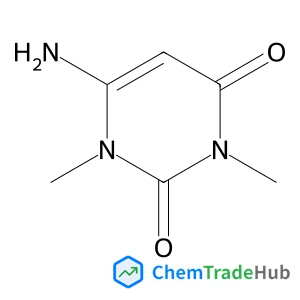
6-amino-1,3-dimethyl-1,2,3,4-tetrahydropyrimidine-2,4-dione
CAS Number:
6642-31-5
Molecular Formula:
C6H9N3O2


Recommended Suppliers





Disclaimer
This page provides academic journal information for reference and research purposes only. We are not affiliated with any journal publishers and do not handle publication submissions. For publication-related inquiries, please contact the respective journal publishers directly.
If you notice any inaccuracies in the information displayed, please contact us at support@chemtradehub.com. We will promptly review and address your concerns.