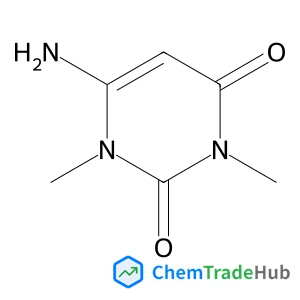
6-amino-1,3-dimethyl-1,2,3,4-tetrahydropyrimidine-2,4-dione
CAS Number:
6642-31-5
Molecular Formula:
C6H9N3O2
Hong-Zhang Wu, Sateesh Bandaru, Da Wang, Jin Liu, Zhenling Wang, Li-Li Li
Interfacial issues, such as the interfacial structure and the interdiffusion of atoms at the interface, are fundamental to the understanding of the ignition and reaction mechanisms of nanothermites. This study employs first-principle density functional theory to model Al/MoO3 by placing an Al adatom onto a unit cell of a MoO3(010) slab, and to probe the initiation of interfacial interactions of Al/MoO3 nanothermite by tracking the adsorption and subsurface-penetration of the Al adatom. The calculations show that the Al adatom can spontaneously go through the topmost atomic plane (TAP) of MoO3(010) and reach the 4-fold hollow adsorption-site located below the TAP, with this subsurface adsorption configuration being the most preferred one among all plausible adsorption configurations. Two other plausible configurations place the Al adatom at two bridge sites located above the TAP of MoO3(010) but the Al adatom can easily penetrate below this TAP to a relatively more stable adsorption configuration, with a small energy barrier of merely 0.2 eV. The evidence of subsurface penetration of Al implies that Al/MoO3 likely has an interface with intermixing of Al, Mo and O atoms. These results provide new insights on the interfacial interactions of Al/MoO3 and the ignition/combustion mechanisms of Al/MoO3 nanothermites.
Dae Sung Kim, Paul M. Forster, Ronan Le Toquin, Anthony K. Cheetham
DOI: 10.1039/B408535C
Ken Takazawa, Yasutaka Kitahama, Yasuyuki Kimura
DOI: 10.1039/B409690H
Evonne A. Baldauff
DOI: 10.1039/B406230B
Kenji Hara, Masashi Hasegawa, Yoshiyuki Kuwatani, Hideo Enozawa, Masahiko Iyoda
DOI: 10.1039/B407200F
Tadashi Narita, Hiroshi Hamana, Satoshi Hattori
DOI: 10.1039/B406116K
Hyun Jung Kim, Ki-Min Park, Seong Keun Kim, Kil Suk Kim, Dongho Kim, Hee-Joon Kim
DOI: 10.1039/B411482E
François Terrier, Régis Goumont, Taoufik Boubaker, Erwin Buncel
DOI: 10.1039/B410356D
Feng Li, Jingnan Cui, Rong Zhang
DOI: 10.1039/B408566C
Tadashi Kawamoto, Takehiko Mori, Hiroshi Moriyama, Yutaka Nishio, Koji Kajita
DOI: 10.1039/B409631B
David R. Kelly, Eva Caroff, Robert W. Flood, William Heal, Stanley M. Roberts
DOI: 10.1039/B404389H
1-(2,4,6-Trifluorophenyl)ethanol is an organic compound with the CAS number 1250...
1-(2,4-Dimethoxybenzyl)-4-(hydroxymethyl)-2-pyrrolidinone (CAS: 919111-34-5) is ...
(7S,15R)-6β,15-Diacetoxy-7α,20-epoxy-7-hydroxykaura-2,16-dien-1-one is a crystal...
The compound rac-ethyl (1r,4r)-4-hydroxycyclohexane-1-carboxylate, trans (CAS: 3...
The market for 2-(2,4-Difluorophenoxy)-3-nitropyridine (CAS: 175135-62-3) is cur...
The main uses of 6-Diazo-5-oxo-L-norleucine (CAS: 157-03-9) include research in ...
When handling 2-Aminoethyl-mono-amide-DOTA-tris(tBu ester) (CAS: 173308-19-5), i...
5-Methylimidazo[1,2-a]pyridine-3-carbaldehyde (CAS: 178488-37-4) can be synthesi...
There are alternative reagents that can be used in the synthesis of 2,4,6-Trihyd...
(2Z)-3-(5-Fluoro-1H-indol-3-yl)-2-sulfanylacrylic acid is a chemical compound wi...

Physical Chemistry Chemical Physics (PCCP) is an international journal co-owned by 19 physical chemistry and physics societies from around the world. This journal publishes original, cutting-edge research in physical chemistry, chemical physics and biophysical chemistry. To be suitable for publication in PCCP, articles must include significant innovation and/or insight into physical chemistry; this is the most important criterion that reviewers and Editors will judge against when evaluating submissions. The journal has a broad scope and welcomes contributions spanning experiment, theory, computation and data science. Topical coverage includes spectroscopy, dynamics, kinetics, statistical mechanics, thermodynamics, electrochemistry, catalysis, surface science, quantum mechanics, quantum computing and machine learning. Interdisciplinary research areas such as polymers and soft matter, materials, nanoscience, energy, surfaces/interfaces, and biophysical chemistry are welcomed if they demonstrate significant innovation and/or insight into physical chemistry. Joined experimental/theoretical studies are particularly appreciated when complementary and based on up-to-date approaches.